
philosophy
-
Zero: The Silent Singularity

How redefining 0 turns “undefined” into the origin of everything 1 A Calculator Error That Started It All I was balancing my checking account when I made the classic mistake: I typed 42 ÷ 0 and my calculator flashed ERROR. I laughed—division by zero is day‑one algebra. But the more I stared at that blinking screen, the more it felt… Continue reading
-
Exploring Positional Infinity vs. Cantor’s Cardinality
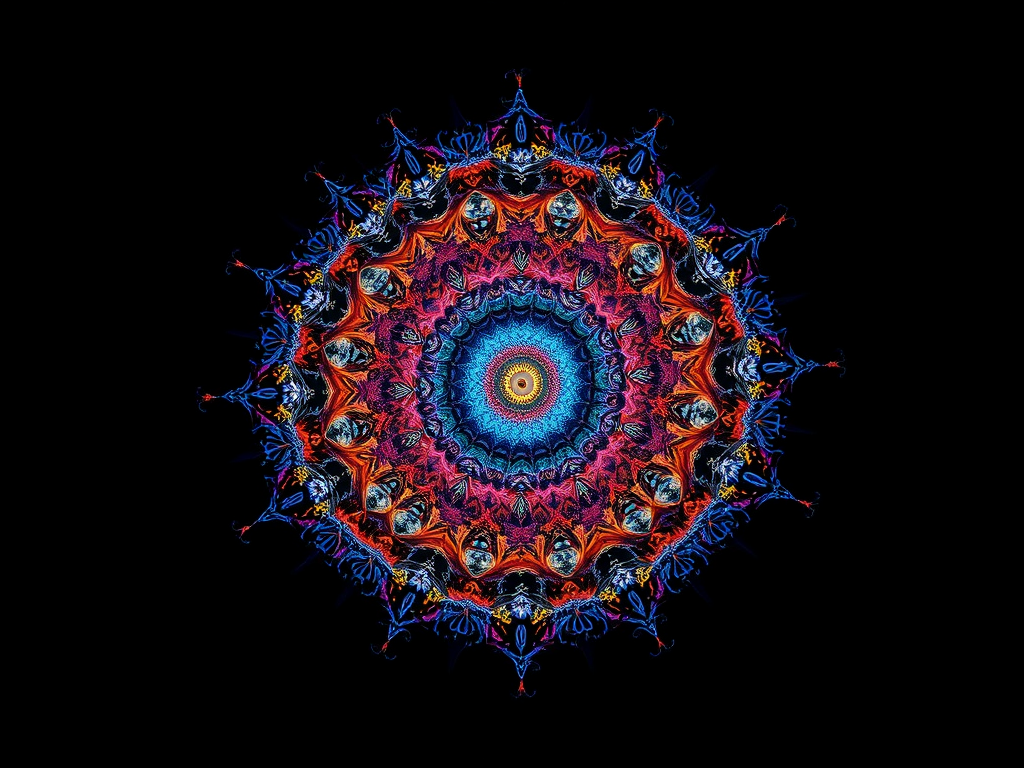
Imagine zooming endlessly into the intricate beauty of the Mandelbrot set. With every zoom, you discover ever more detailed and infinite patterns emerging at distinct positions. Here, the essence of infinity is positional—it arises from placement, not merely quantity. This intuitive imagery introduces us to a fundamental philosophical tension: is infinity about “how many,” or… Continue reading
-
Resolving the Paradox of Existence with DFDL Theory

The Ancient Puzzle of Existence “Which came first: the universe, or the laws that govern it?” Humanity has grappled with this timeless paradox, much like the chicken-and-egg conundrum. Traditional answers either invoke circular logic or endless regression. Yet, perhaps a fresh perspective is needed—one that bypasses the paradox altogether. Introducing the Deep Foundational Deterministic Law… Continue reading
-
Why the Arrow of Time Only Points Forward: The Energy Cost of Emergent Time Travel

Time travel has fascinated humans for generations. From whimsical adventures to philosophical quandaries, the idea of revisiting the past has fueled countless books, films, and thought experiments. But what if time travel, as we typically imagine it, is not only implausible — but fundamentally incompatible with how reality itself emerges? This essay explores why, under… Continue reading
-
Can We Harvest Gold from Particle Collisions?

Introduction: When Alchemy Meets Physics For centuries, alchemists dreamed of transmuting lead into gold. While their mystical pursuits ultimately laid the groundwork for modern chemistry, their core goal was never realized—until now, and only for a moment. In a recent experiment at CERN, scientists at the Large Hadron Collider (LHC) managed to create actual gold… Continue reading
-
Quantum Mechanics and Consciousness: Key Differences Explained

Introduction In recent discussions on the nature of consciousness and free will, the video featuring microprocessor pioneer Federico Faggin and philosopher Bernardo Kastrup presents a compelling argument that challenges conventional scientific views. Their position is deeply rooted in metaphysical idealism—asserting that consciousness is the fundamental fabric of reality, and everything, including the classical universe, emerges… Continue reading
-
The Fermi Paradox: Are We Alone in the Universe?

What if our observable universe isn’t just big—but fundamentally isolating? The idea of a “black domain” was popularized by Chinese science fiction author Liu Cixin in Death’s End, where civilizations create artificial regions of space where the speed of light is reduced to trap themselves from the outside universe—a desperate strategy for survival in a… Continue reading
-
Unlocking Quantum Technology Through Tryptophan

Inspired by groundbreaking research from the Quantum Biology Laboratory at Howard University (source). What if the future of quantum computing isn’t in superconducting chips cooled near absolute zero—but inside the humble amino acid tryptophan, already operating efficiently inside your brain? Recent discoveries suggest just that. Researchers led by Philip Kurian at Howard University have found… Continue reading
-
Satirical Look at Failing Companies

Disclaimer (Important!): This is AI generated content! This article is pure satire and entertainment. All company names and stock symbols have been fictionalized for comedic effect. Any resemblance to real businesses, past or present, is entirely coincidental. No factual claims are made about any real company’s financial health or strategies. Introduction: The Death End Nobody… Continue reading
 EssayBoard