
astronomy
-
The Gravity Well Is Not a Trap
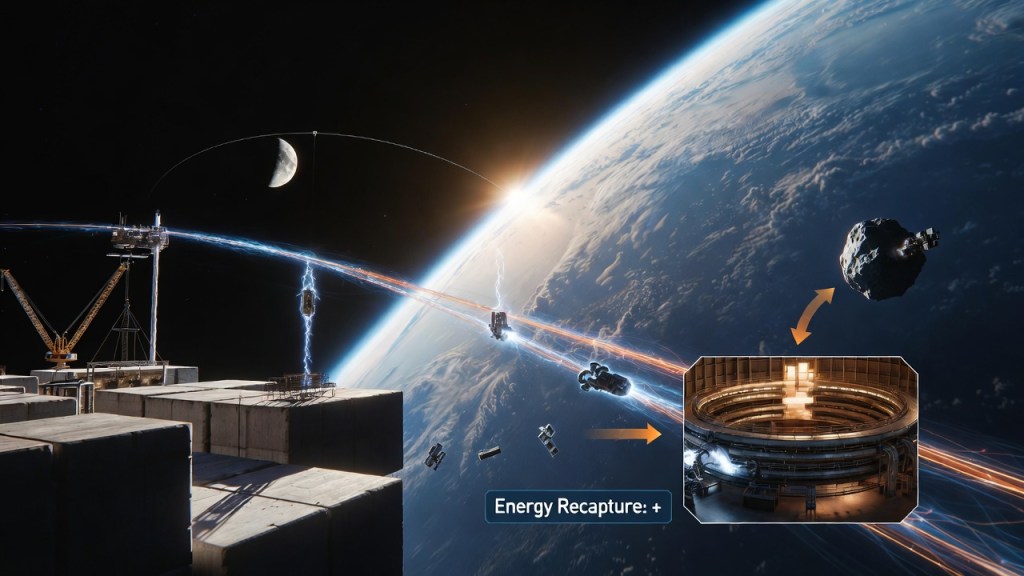
How Space Elevators, Lagrange Points, and Asteroid Mining Could Flip the Energy Economics of Space—And Why It’s Still a Long Shot Prologue: The Cargo Ship Paradox Imagine a cargo ship. It leaves Shanghai loaded with containers, burns thousands of tons of fuel crossing the Pacific, and arrives in Los Angeles. After unloading, it turns around… Continue reading
-
How Interstellar Discoveries Challenge Our Perspectives
We began, as we often do, by looking outward. A strange interstellar object passed through our Solar System. Its trajectory was unusual. Its behavior resisted easy intuition. It did not violate physics, but it strained the neat mental boxes we prefer to keep physics in. The correct scientific response followed: model it, normalize it, explain… Continue reading
-
Discovering Liquid Water on Mars: What It Means for Future Missions

Introduction – A Surprising Reservoir Beneath the Red Planet Mars has long been viewed as a dry, frozen desert. New radar observations from the European Space Agency’s Mars Express spacecraft have upended that picture by revealing a “colossal ocean” buried more than a mile beneath the Martian surface. This underground sea, comparable in area to all… Continue reading
-
The Fermi Paradox: Are We Alone in the Universe?

What if our observable universe isn’t just big—but fundamentally isolating? The idea of a “black domain” was popularized by Chinese science fiction author Liu Cixin in Death’s End, where civilizations create artificial regions of space where the speed of light is reduced to trap themselves from the outside universe—a desperate strategy for survival in a… Continue reading
-
Why Pluto Should Be Reclassified as a Planet
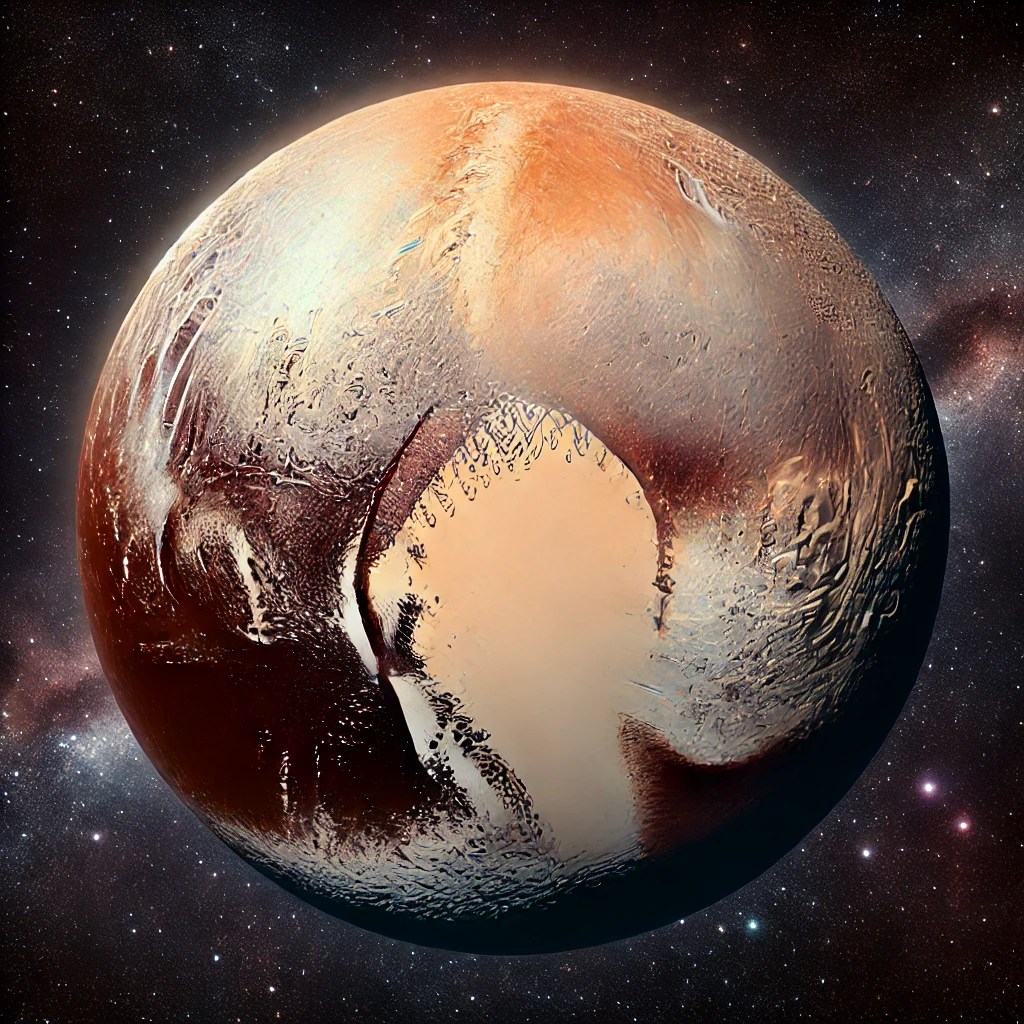
For over seven decades, Pluto held its rightful place as the ninth planet of our Solar System. That was until 2006, when the International Astronomical Union (IAU) controversially reclassified it as a “dwarf planet.” But was this demotion justified? Many scientists, astronomers, and space enthusiasts argue that Pluto should still be considered a planet. Here’s… Continue reading
-
Blob Universe Theory: A New Perspective on Cosmology
Introduction For decades, cosmologists have wrestled with the fate of the universe—proposing models like the Big Crunch, Heat Death, or infinite expansion. But what if these conventional theories miss a critical aspect of cosmic evolution? Imagine a universe that isn’t simply expanding or contracting but is, instead, a continuously evolving structure—much like a fluid, ever-morphing… Continue reading
-
Renting an Asteroid: The Ultimate Frontier in Real Estate

What if humanity’s next housing boom wasn’t on Earth, but in the asteroid belt? Picture this: each and every asteroid in our solar system being rented out as a living space. It’s a wild concept—part sci-fi, part economic revolution—but let’s explore what it might look like if the final frontier became the hottest real estate… Continue reading
-
Unveiling the Cosmic Waltz: A Journey Through Black Holes, Neutron Stars, and Galaxy Mergers

The universe is a vast, intricate dance floor where celestial bodies engage in dynamic, gravity-fueled choreography. In our latest Deep Dive podcast, we explore the mesmerizing dances of neutron stars, black holes, and galaxies, unraveling the mysteries of their origins, interactions, and the profound effects they have on the cosmos. Here’s a closer look at… Continue reading
 EssayBoard