
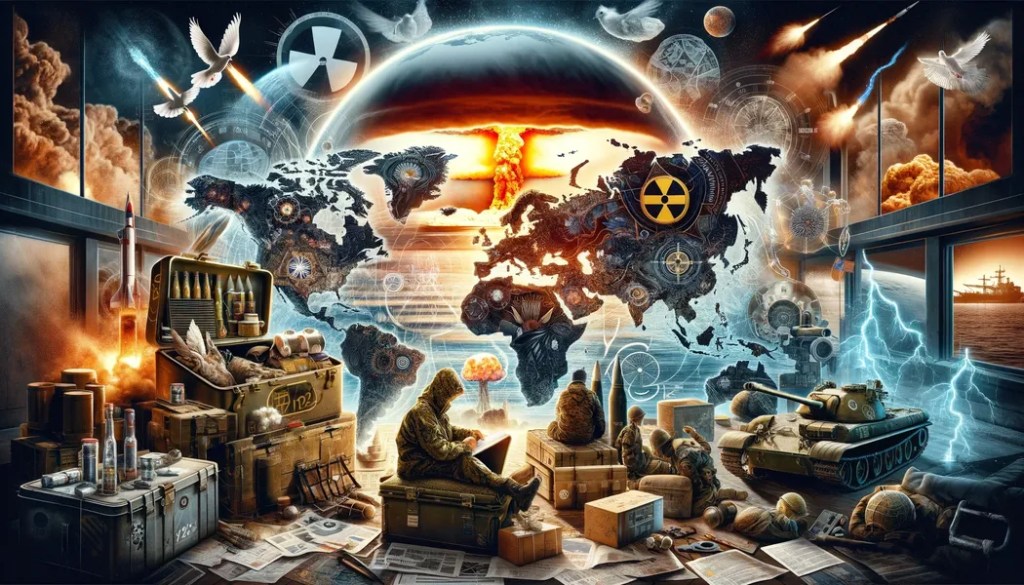
As global geopolitical tensions rise, the possibility of nuclear conflict—once a distant nightmare—has become a more immediate concern. The ongoing war in Ukraine, escalating turmoil in the Middle East, and the intensifying rivalry between China and the United States have contributed to a precarious international landscape. In this context, it is crucial to address a range of questions that can help individuals, communities, and policymakers better understand, prepare for, and potentially mitigate the risks associated with a nuclear war.
Geopolitical and Strategic Questions
1. What are the current geopolitical dynamics contributing to the heightened risk of nuclear conflict?
The risk of nuclear conflict is influenced by several key geopolitical dynamics. In Eastern Europe, Russia’s invasion of Ukraine has not only led to a devastating conventional war but also heightened the risk of nuclear escalation. Russia’s nuclear saber-rattling has underscored the fragility of peace in the region and the potential for miscalculation.
In the Middle East, longstanding conflicts and rivalries continue to pose significant risks. The ongoing civil wars in Syria and Yemen, coupled with tensions between Iran and its regional adversaries, create a volatile environment where nuclear proliferation could become a reality.
The most significant tension, however, lies between China and the United States. The rivalry between these two superpowers encompasses economic, technological, and military dimensions. Issues such as Taiwan’s status, territorial disputes in the South China Sea, and competition for global influence have the potential to escalate into a larger conflict, possibly involving nuclear weapons.
2. What diplomatic efforts are being made to de-escalate tensions, and how effective are they?
Diplomatic efforts to de-escalate tensions are ongoing, though their effectiveness varies. The Treaty on the Non-Proliferation of Nuclear Weapons (NPT) remains a cornerstone of global nuclear disarmament efforts. However, challenges such as North Korea’s nuclear program and the potential for new nuclear states in the Middle East complicate the picture.
Bilateral and multilateral negotiations play a crucial role in reducing tensions. For instance, the U.S. and Russia have engaged in various arms control agreements, such as the New START Treaty, which limits strategic nuclear arsenals. However, the recent suspension of this treaty by Russia has raised concerns about an arms race.
In the Asia-Pacific region, dialogue between the U.S. and China is crucial. Track II diplomacy—informal, non-governmental discussions—can complement official negotiations by fostering mutual understanding and trust. Additionally, regional organizations like the Association of Southeast Asian Nations (ASEAN) can facilitate dialogue and conflict resolution.
3. What are the potential triggers that could escalate into a full-scale nuclear war?
Several potential triggers could escalate current tensions into a full-scale nuclear war:
- Accidental Launches: Miscommunication or technical failures could lead to an unintended nuclear launch, especially in times of heightened alert.
- Cyber Attacks: Cyber operations targeting nuclear command and control systems could cause confusion or false alarms, leading to unintended escalations.
- Conventional Conflicts: Regional conflicts, particularly those involving nuclear-armed states or their allies, could escalate to the nuclear threshold.
- Political Provocations: Actions such as military exercises near sensitive areas or provocative political statements can heighten tensions and the risk of miscalculation.
Personal and Community Safety Questions
4. Where are the safest locations to live in case of a nuclear conflict?
In the event of a nuclear conflict, certain locations are generally considered safer due to their distance from primary targets and favorable environmental conditions. These locations typically include rural or remote areas, away from major cities, military bases, and critical infrastructure.
Factors to consider when identifying safe locations include:
- Distance from Major Targets: Living far from urban centers, military installations, and industrial hubs reduces the risk of immediate nuclear blasts and radiation exposure.
- Wind Patterns: Prevailing winds can carry radioactive fallout over long distances. Areas downwind from potential targets are at higher risk.
- Geographic Features: Mountains and other natural barriers can provide some protection from blast waves and fallout.
Some suggested locations in the United States include parts of the Midwest, the Rocky Mountain region, and areas with low population density in the Pacific Northwest. However, safety is relative, and no location is entirely risk-free.
5. What are the best practices for preparing a home or community shelter for nuclear fallout?
Preparing a shelter for nuclear fallout involves several key steps:
- Shielding: The primary goal is to create as much distance and material between you and the radioactive fallout as possible. Dense materials such as concrete, lead, and thick earth can provide effective shielding.
- Ventilation: While shielding is crucial, it’s also important to have a ventilation system that can filter out radioactive particles.
- Stockpiling Supplies: A well-prepared shelter should have at least two weeks’ worth of food, water, medical supplies, and other essentials. Non-perishable food, bottled water, and a first-aid kit are vital.
- Communication: Having a battery-powered or hand-crank radio can help you stay informed about the situation outside.
- Sanitation: Plan for waste disposal and hygiene. Include items such as plastic bags, bleach, and sanitation supplies.
6. What are the critical supplies and equipment needed to survive in a fallout shelter for an extended period?
Critical supplies and equipment for a fallout shelter include:
- Food and Water: At least a two-week supply per person. Consider non-perishable food items and water purification methods.
- Medical Supplies: First-aid kit, prescription medications, and basic medical equipment.
- Clothing and Bedding: Warm clothing, blankets, and sleeping bags.
- Tools and Equipment: Flashlights, batteries, a multi-tool, duct tape, and plastic sheeting.
- Communication Devices: A radio (preferably hand-crank or battery-powered) and a whistle.
- Sanitation Supplies: Toiletries, plastic bags, bleach, and sanitation wipes.
- Power Source: Batteries, a generator, or solar chargers.
Psychological and Social Questions
7. How can individuals and families mentally prepare for the possibility of a nuclear conflict?
Mental preparation is as important as physical preparation. Key strategies include:
- Education and Training: Learning about nuclear threats and survival strategies can reduce fear and increase confidence.
- Stress Management: Techniques such as mindfulness, meditation, and breathing exercises can help manage anxiety.
- Family Plans: Develop and practice family emergency plans, including communication and reunification strategies.
- Support Networks: Building strong relationships with neighbors and community members can provide emotional support and practical assistance.
- Professional Help: Seeking support from mental health professionals can be beneficial, especially for managing chronic anxiety or trauma.
8. What role does community planning and cooperation play in enhancing survival chances?
Community planning and cooperation are crucial for enhancing survival chances. Key elements include:
- Community Shelters: Establishing and maintaining communal fallout shelters can provide protection for those without access to private shelters.
- Resource Sharing: Coordinating the sharing of supplies, skills, and information can improve overall resilience.
- Emergency Drills: Regularly practicing emergency drills can ensure that community members know how to respond in a crisis.
- Communication Networks: Establishing reliable communication networks can help maintain order and coordination during and after a nuclear event.
- Local Government Involvement: Encouraging local governments to develop and implement comprehensive emergency preparedness plans can enhance community readiness.
Health and Environmental Questions
9. What are the immediate and long-term health impacts of nuclear fallout?
Immediate health impacts of nuclear fallout include:
- Acute Radiation Syndrome (ARS): High doses of radiation can cause ARS, characterized by nausea, vomiting, diarrhea, and, in severe cases, death.
- Burns and Injuries: Thermal radiation from a nuclear blast can cause severe burns and injuries.
Long-term health impacts include:
- Cancer: Exposure to radiation increases the risk of various cancers, particularly thyroid cancer, leukemia, and breast cancer.
- Genetic Damage: Radiation can cause genetic mutations, potentially affecting future generations.
- Chronic Illnesses: Long-term exposure to lower doses of radiation can lead to chronic health issues, including cardiovascular diseases and immune system disorders.
10. What environmental changes can be expected in the aftermath of a nuclear war?
Environmental changes following a nuclear war could be profound and far-reaching:
- Nuclear Winter: Large-scale nuclear exchanges could inject massive amounts of soot into the atmosphere, blocking sunlight and causing a significant drop in global temperatures. This phenomenon, known as nuclear winter, could lead to widespread crop failures and famine.
- Radiation Contamination: Fallout can contaminate soil, water sources, and the food supply, posing long-term health risks to humans and wildlife.
- Ecosystem Disruption: The immediate and long-term effects of radiation can severely disrupt ecosystems, leading to the loss of biodiversity and the collapse of food chains.
- Climate Change: The environmental impact of nuclear war could exacerbate existing climate change challenges, creating further instability.
Political and Economic Questions
11. How might a nuclear conflict affect global and local economies?
The economic impact of a nuclear conflict would be catastrophic:
- Global Trade Disruption: The destruction of infrastructure, loss of life, and geopolitical instability would severely disrupt global trade networks.
- Market Collapse: Financial markets would likely experience extreme volatility, with significant losses in stock values, currencies, and commodities.
- Resource Scarcity: The destruction of productive capacity and disruption of supply chains could lead to shortages of essential goods, driving up prices and exacerbating poverty.
- Reconstruction Costs: The cost of rebuilding damaged infrastructure and providing humanitarian aid would be immense, straining national and international resources.
- Long-Term Economic Decline: The economic fallout from a nuclear war could lead to long-term declines in productivity, investment, and economic growth.
12. What policies and measures can governments implement to mitigate the risks and consequences of nuclear war?
Governments can implement several policies and measures to mitigate the risks and consequences of nuclear war:
- Arms Control Agreements: Engaging in and upholding international arms control agreements can reduce the number of nuclear weapons and the likelihood of their use.
- Diplomatic Engagement: Sustained diplomatic efforts to resolve conflicts and reduce tensions between nuclear-armed states are essential.
- Emergency Preparedness: Developing comprehensive emergency preparedness plans, including public education, infrastructure improvements, and stockpiling essential supplies, can enhance resilience.
- Cybersecurity Measures: Protecting nuclear command and control systems from cyber threats is crucial for preventing accidental or unauthorized launches.
- International Cooperation: Collaborating with other nations and international organizations to promote nuclear disarmament and non-proliferation can help build a more secure world.
Technological and Security Questions
13. How reliable are current missile defense systems and other protective technologies?
Current missile defense systems and protective technologies vary in reliability:
- Missile Defense Systems: Systems like the U.S. Ground-based Midcourse Defense (GMD) and Aegis Ballistic Missile Defense are designed to intercept incoming missiles. While these systems have demonstrated some success in tests, their effectiveness in a real-world scenario, especially against a large-scale attack, remains uncertain.
- Early Warning Systems: Advanced early warning systems, including satellite-based sensors and radar networks, are critical for detecting and responding to missile launches. However, false alarms and misinterpretations can occur.
- Protective Technologies: Innovations in shelter construction, radiation detection, and medical countermeasures can enhance protection against nuclear threats. However, the widespread deployment and accessibility of these technologies are limited.
14. What are the potential cybersecurity risks related to nuclear command and control systems?
Cybersecurity risks related to nuclear command and control systems are significant:
- Hacking and Sabotage: Adversaries could attempt to hack into nuclear command and control systems to disrupt operations or launch unauthorized attacks.
- Malware and Viruses: Malicious software could compromise the integrity of these systems, leading to false alarms or operational failures.
- Insider Threats: Individuals with access to sensitive information could exploit vulnerabilities for personal or political motives.
- System Complexity: The complexity and interconnectedness of modern nuclear command and control systems create multiple points of vulnerability.
- Mitigation Measures: Robust cybersecurity protocols, regular system audits, and redundancy measures are essential to protect these critical systems.
Ethical and Moral Questions
15. What are the ethical implications of nuclear deterrence and the potential use of nuclear weapons?
The ethical implications of nuclear deterrence and the potential use of nuclear weapons are profound and complex:
- Moral Responsibility: The catastrophic humanitarian and environmental consequences of nuclear war raise serious moral questions about the justification for maintaining and potentially using nuclear arsenals.
- Deterrence Dilemma: While nuclear deterrence aims to prevent war through the threat of retaliation, it also perpetuates a cycle of fear and mistrust among nations.
- Disarmament Efforts: The pursuit of nuclear disarmament is often seen as a moral imperative to prevent the unimaginable suffering that would result from nuclear conflict.
- Civilian Impact: The indiscriminate nature of nuclear weapons, which would cause massive civilian casualties and long-term environmental damage, challenges the ethical acceptability of their use.
Conclusion
As the world faces the increasing risk of nuclear conflict, it is crucial to address these critical questions. By understanding the geopolitical dynamics, preparing for potential fallout, fostering mental resilience, and advocating for effective policies, individuals, communities, and governments can better navigate this challenging landscape. While the threat of nuclear war is daunting, informed preparation and proactive measures can enhance our collective ability to prevent and respond to this existential risk.

 EssayBoard
Leave a comment