
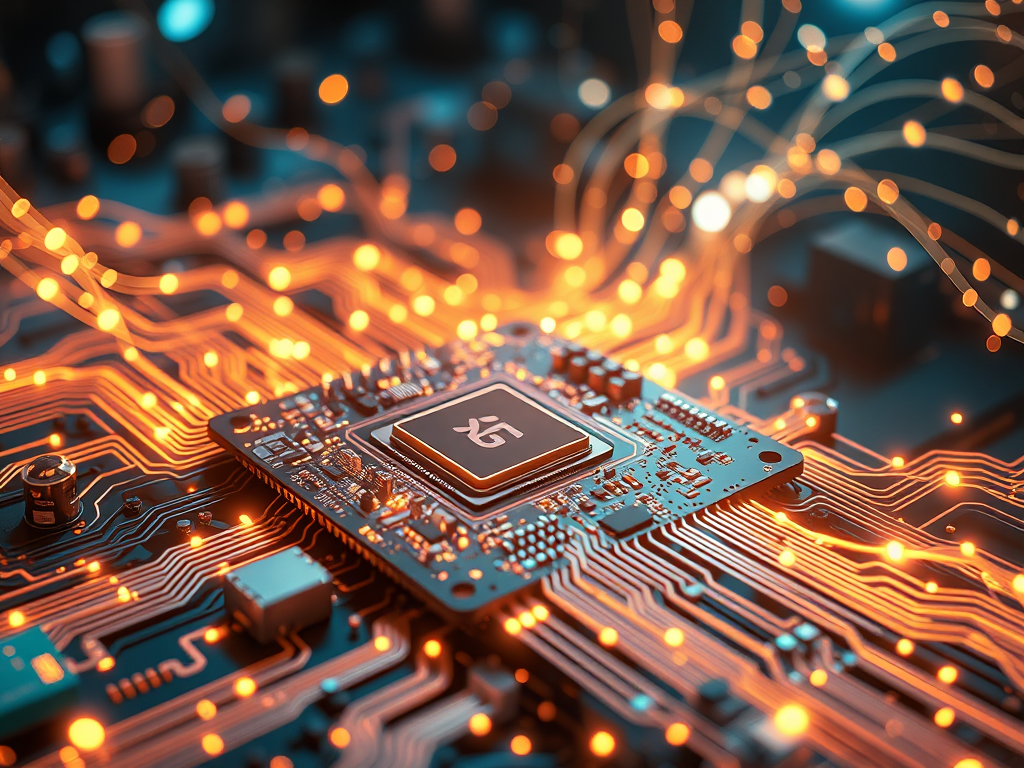
Introduction: Echoes from the Silicon Dawn
The trajectory of quantum computing is beginning to mirror the early arc of classical computing — not in perfect replay, but in poetic rhyme. Much like the vacuum tubes and room-sized mainframes of the 1940s laid the groundwork for the modern digital world, today’s ion traps and neutral atoms hum with the latent promise of a new computational era.
But there’s a catch.
Even if we perfect quantum hardware — even if we achieve fault-tolerant, room-temperature systems with millions of qubits — quantum computing will remain useless without meaningful algorithms. The machinery may exist. But unless we learn to speak its native language, the orchestra stays silent.
I. The Blueprint Unfolding Again
Hardware First: Building Before Believing
In the classical age, hardware led the dance. The ENIAC wasn’t born with an operating system. It was a tangle of wires and vacuum tubes capable of arithmetic, but little else. Only years later did compilers, high-level languages, and operating systems emerge to give it a voice.
Quantum computing is playing a similar tune. We’ve seen astonishing progress in fidelity and scalability:
- Oxford’s 2025 single-qubit fidelity record (0.000015% error rate) shows that physical systems are finally becoming trustworthy.
- Quantinuum and others are scaling up two-qubit gate fidelity to commercially viable thresholds.
- Researchers are linking quantum processors via entangled interfaces — a whisper of tomorrow’s quantum internet.
Still, like ENIAC, these machines are functionally mute without instruction sets worthy of their architecture.
Software Emerges Second: The Need for Native Algorithms
Quantum machines don’t run classical software faster. They require entirely new logic — software built not on binary determinism, but on the fuzzy, entangled logic of quantum states.
Today, most usable quantum algorithms are low-level, specialized, and few in number:
- Shor’s algorithm breaks encryption, but only when scaled far beyond current capacity.
- Grover’s algorithm offers quadratic search speedups — useful but limited.
- Quantum simulation algorithms (like VQE) show promise in chemistry, but are domain-specific and error-sensitive.
We are, essentially, at the assembly-language stage of quantum programming. The quantum equivalents of Unix, TCP/IP, and cloud-native APIs have not yet been born. Without them, quantum hardware risks becoming a marvel with no mission.
II. The Invisible Bottleneck: Algorithmic Scarcity
Why Quantum Hardware Alone Isn’t Enough
The seductive narrative of “quantum supremacy” — that quantum machines will instantly outperform classical ones — obscures a deeper truth: only specific classes of problems offer meaningful quantum advantage.
A 1-million-qubit machine won’t improve your spreadsheet, won’t make social media run smoother, and won’t magically revolutionize AI. Quantum computers excel only where nature herself is quantum: drug discovery, cryptography, material simulation, and select optimization problems.
And even in those spaces, algorithms are bottlenecked by:
- Error sensitivity: Quantum states are fragile; every step must be ultra-precise.
- Noise models: Current machines require complex error correction, limiting circuit depth.
- Lack of abstraction layers: Developers must still think in gates and rotations, not problems and solutions.
Unless we develop quantum-native software paradigms, the dream remains distant — no matter how advanced the hardware becomes.
III. The Future in Layers: Toward Quantum Ubiquity
The classical world didn’t become useful with transistors alone. It took layers:
- Hardware → Operating Systems → Programming Languages → Networks → Cloud Infrastructure → Applications.
Quantum will follow suit:
- Stable, error-corrected quantum hardware (we’re approaching this).
- Logical qubit frameworks and quantum compilers (under development).
- Quantum operating systems that abstract physical quirks.
- Quantum networks for entangled communication across machines.
- User-friendly frameworks that allow developers to focus on goals, not gates.
- Breakthrough algorithms that justify quantum’s existence in the real world.
We’re likely at Step 1.5 today. Hardware is maturing. Algorithms are embryonic. Tooling is in its infancy. But the rhyme with classical computing’s evolution gives us confidence that layered progress is not only possible, but probable.
IV. Conclusion: The Silence Between the Notes
The most profound lesson from the history of computing is that hardware is potential, but software is realization.
Quantum machines are beginning to hum with that same raw potential. But like their classical ancestors, they await a reason to exist — a purpose encoded in algorithms that can transform physics into insight, entanglement into application.
We are not merely building machines. We are building a new computational language. And until we learn how to use it fluently, quantum computing will remain what it is today: a whisper of the future, waiting for its voice.
Further Reading & Exploration
- Oxford’s Fidelity Record (2025): [Link to Physical Review Letters article]
- Quantum Algorithm Research: MIT, QuEra, Harvard progress on magic state distillation.
- Quantum Software Initiatives: Qiskit (IBM), Cirq (Google), Xanadu’s PennyLane.
- Quantum Internet Projects: DARPA, Delft University, and entanglement networks.
Disclaimer: This is AI generated content!


 EssayBoard
Leave a reply to satyam rastogi Cancel reply