
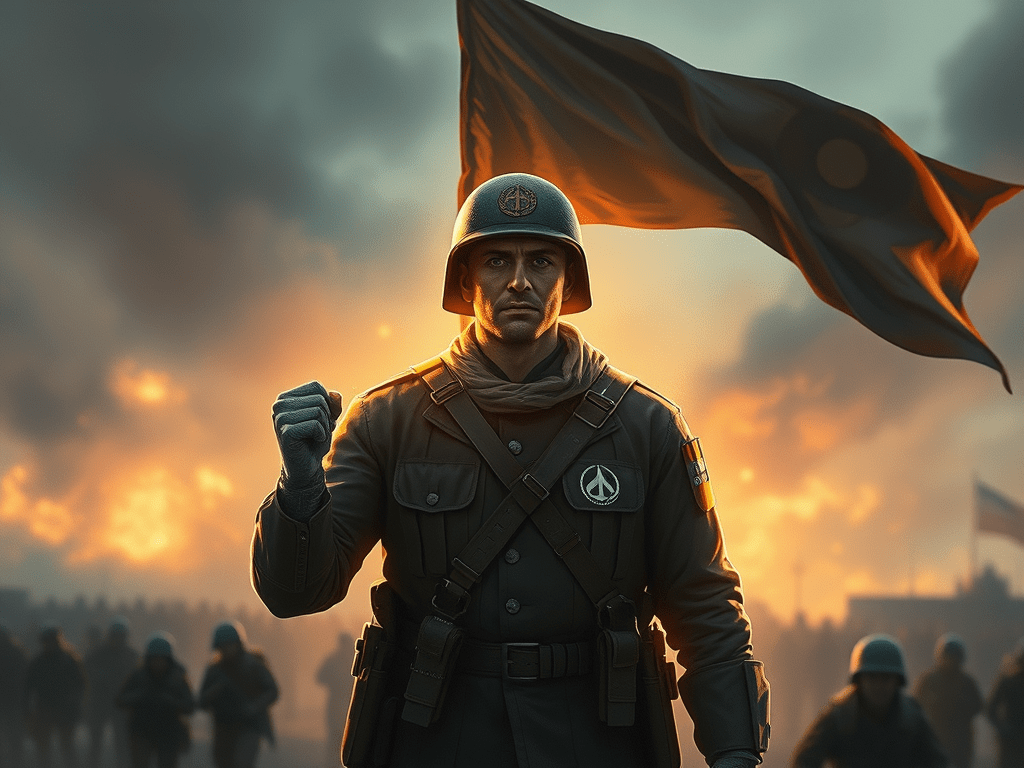
In a world bristling with drones, cyberweapons, and AI-driven missiles, it’s easy to think that sheer technological power will define the next great war. But if World War III breaks out and stays below the nuclear threshold, the key to victory may not be who has the most firepower, but who can sustain a just cause, rally allies, and keep their people united over time.
The forgotten truth is this: morality and soft power win wars when the guns fall silent and the dust refuses to settle.
The Hidden Edge in Modern War
Morality in war refers to more than just the absence of war crimes. It’s about being seen—domestically and globally—as having a legitimate, righteous cause. Soft power is the ability to influence others through cultural appeal, political values, and diplomacy rather than coercion.
These two elements are not luxuries. In a prolonged non-nuclear war, they become force multipliers.
WWI: Moral Positioning and National Unity
In World War I, Britain positioned itself as a defender of small nations (Belgium in particular), using moral framing to mobilize not just its own people but also its dominions and colonies. Posters, speeches, and narratives emphasized “King and Country,” duty, and honor.
While propaganda existed on both sides, Britain’s relatively successful balance of moral narrative and voluntary enlistment (especially early on) stood in contrast to more coercive or cynical messaging from the Central Powers, where morale began to collapse as the war dragged on.
WWII: Morality in Action
World War II offers even clearer lessons:
1. The Allies Had Moral Clarity
The U.S. framed the war around the Four Freedoms: freedom of speech, freedom of worship, freedom from want, and freedom from fear. This vision turned the war into a fight for a better world. Roosevelt’s fireside chats weren’t just PR—they were moral anchoring for a weary but determined public.
2. Nazi Propaganda Backfired
The Third Reich’s total propaganda state replaced honest reporting with delusions of invincibility. This created an environment where real strategic mistakes couldn’t be challenged, and smart generals were sidelined. Morale on the front crumbled when soldiers realized the truth differed drastically from what they were told.
3. Civil Resistance Was Fueled by Soft Power
The BBC’s truthful broadcasts to occupied Europe, the support of underground resistance networks, and the cultural appeal of American music and films kept the idea of liberation alive, even under occupation.
Other Historical Echoes
- American Civil War: Lincoln’s Emancipation Proclamation turned a political war into a moral crusade and helped prevent European powers from siding with the Confederacy.
- Vietnam: Despite overwhelming firepower, the U.S. failed to maintain global or domestic moral legitimacy, leading to a drawn-out and politically unsustainable conflict.
- Gulf War (1991): A short, successful conventional war, in part because it was framed clearly as a defense of an invaded sovereign state—Kuwait.
Why This Matters in WWIII
Let’s say WWIII erupts—not with nukes, but as a prolonged, high-tech, conventional war. Here’s why morality and soft power would be decisive:
1. Sustained Resilience
Morality gives people a reason to endure rationing, personal sacrifice, and fear. It also makes it easier to attract talented individuals and boosts both military and civilian recruitment efforts, as people are more willing to serve and contribute to a cause they believe is just.. A population that believes its government is fighting a just war will work harder, fight longer, and suffer more without giving up.
2. Stronger Alliances
Nations align more easily when the cause feels righteous. A morally strong image also helps attract skilled immigrants, experts, and innovators who are drawn to contribute to a society perceived as just and principled.. Shared moral purpose builds trust and shared burden. A country seen as reckless or self-serving will find itself isolated.
3. Global Information Warfare
In the social media age, every civilian death, every destroyed hospital, every lie gets broadcast worldwide in seconds. Truth-based soft power is more potent than ever—and so is the backlash from losing the moral high ground.
4. Internal Stability
Nations that rely on fear, division, and over-propaganda rot from within. Corruption and infighting follow. Morality keeps institutions intact and prevents decay.
The Path Forward: Preparing for the Right Kind of War
If the U.S. or any great power wants to win a future war without going nuclear, it must invest now in:
- Ethical immigration and integration to bolster human capital.
- Truthful public communication to maintain trust and morale.
- Human-centered AI and tech policies that reinforce—not undermine—moral legitimacy.
- Cultural diplomacy and education to build a coalition of values, not just weapons.
Final Thought
Guns may win battles. But morality wins wars.
In a world where destruction can be automated, it’s morality that keeps humanity grounded. The next great war—if it comes—won’t be won by robots or bombs alone. It’ll be won by those who can lead with purpose, inspire sacrifice, and rebuild from the ashes with their soul intact.
Let’s hope we never need to prove this. But if we do, let’s be ready—with strength, yes—but more importantly, with honor.
🧠 Sun Tzu — The Art of War
- “Treat your men as you would your own beloved sons. And they will follow you into the deepest valley.”
→ Highlights the importance of moral leadership to earn loyalty. - “The moral law causes the people to be in complete accord with their ruler, so that they will follow him regardless of their lives, undismayed by any danger.”
→ From Chapter 1, “Laying Plans.” Sun Tzu opens his entire book by listing “moral law” (道, Dao) as the first of five key factors in war. - “If your opponent is of choleric temper, seek to irritate him.”
→ While more tactical, this reveals how understanding emotion and morality (or the lack of it) in leadership can be manipulated strategically.
🧠 Zhuge Liang — The General’s House Instructions (誡子書) & Memorials
- “The wise man does not seek fame; the noble man does not pursue wealth. He cultivates his virtue quietly, and his actions follow righteousness.”
→ From his letter to his son, reflecting Zhuge Liang’s belief that morality is the core of personal and national strength. - “Do not indulge in pleasure, do not seek fame, do not act without integrity, and do not make decisions without considering morality.”
→ A leadership doctrine Zhuge Liang lived by — emphasizing that character precedes power. - “The foundation of a state is morality. If morality collapses, the people scatter, and the state falls.”
→ Attributed to Zhuge Liang’s teachings and echoed throughout his strategies for the Shu Han state.
Disclaimer:
This is AI generated content! This blog post represents a strategic and philosophical analysis intended for educational and reflective purposes. It does not advocate for war, conflict, or any specific government policy. Historical references and speculative scenarios are used to explore the importance of morality and soft power in the context of conventional warfare. All opinions expressed are those of the author and are not affiliated with any institution, government, or political entity. Readers are encouraged to approach this content critically and consider multiple perspectives when reflecting on complex global issues.

 EssayBoard
Leave a comment