
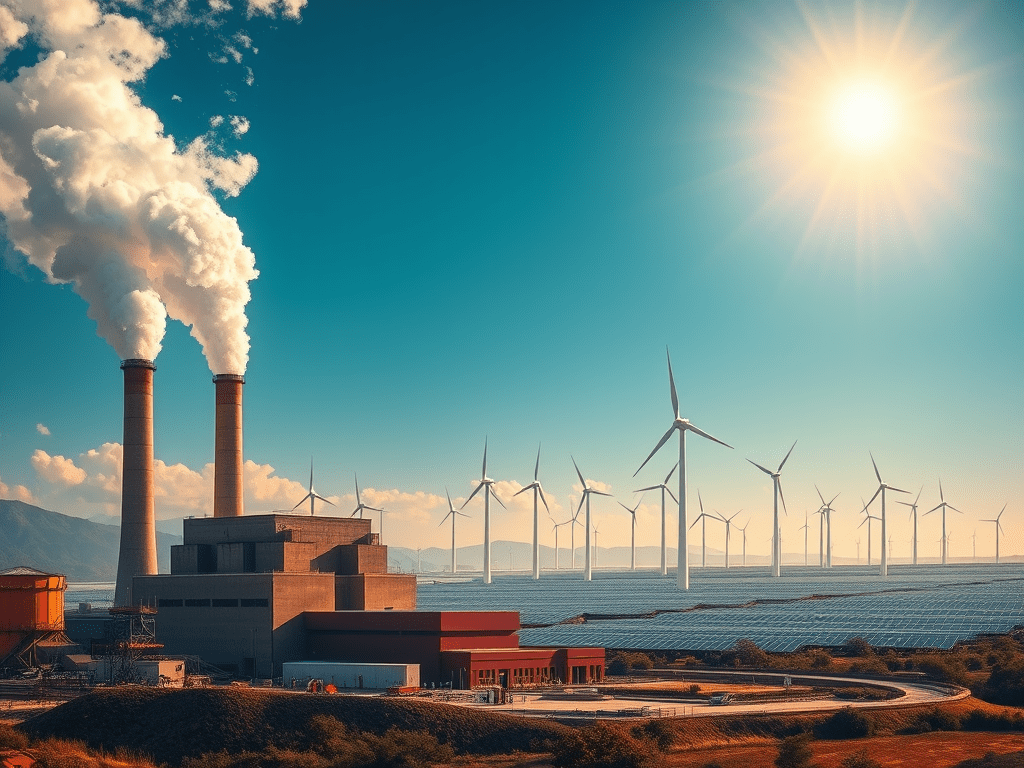
China, the world’s largest energy consumer and greenhouse gas emitter, is undergoing a dramatic transformation in its energy sector. The country’s current energy policies and rapid adoption of renewables signal a pivotal shift toward sustainability, with significant implications for the global energy market and the environment. Here’s a closer look at where China stands today, its plans for 2030, and its ambitions for 2060.
The Current Energy Picture: Coal and Renewables Side-by-Side
China has historically relied on coal as the backbone of its energy system. As of 2024, coal accounts for nearly 60% of China’s electricity generation. However, the narrative is changing:
- Coal Power Plants:
- Approvals for new coal power plants have plummeted, with an 83% decrease in new coal capacity approvals reported in the first half of 2024.
- Despite this, existing coal-fired plants continue to operate, meeting the demands of a growing economy and energy-intensive industries.
- Many coal plants are running at a loss due to the increasing share of renewables on the grid.
- Renewable Energy Boom:
- In the first three quarters of 2024, China installed a staggering 210 GW of renewable energy, with solar power leading the charge (161 GW).
- Renewables accounted for 86% of new power capacity added to China’s grid this year, outpacing fossil fuels.
- The nation is investing heavily in battery storage to stabilize its grid and manage renewable energy intermittency.
- Economic and Environmental Drivers:
- The Chinese government is tackling air pollution and health risks associated with coal. Studies have linked coal plant emissions to millions of premature deaths globally.
- Coal’s declining profitability is accelerating the shift, with renewable energy now cheaper to build and operate than many coal power plants.
Impact on Coal Exporters: The Case of Australia
China’s transition away from coal has profound implications for coal-exporting nations, particularly Australia, one of the world’s largest suppliers of high-quality thermal coal. While the immediate demand for coal persists due to China’s operational fleet of coal power plants, the long-term outlook signals a significant challenge for exporters.
- Short-Term Stability:
- Older coal-fired power plants in China remain operational, requiring consistent coal supplies. This ensures a baseline demand for Australian coal, at least until these plants are decommissioned.
- As coal remains a critical energy source during peak demand periods or grid stress, Australia’s coal exports to China may stay steady in the near term.
- Shift in Purchasing Patterns:
- China has increasingly focused on sourcing domestic coal or diversifying its import sources, which could gradually reduce its reliance on Australian coal.
- Long-Term Challenges:
- As China retires older coal power plants and expands its renewable energy capacity, the demand for imported coal is expected to decline significantly by the 2030s.
- By 2060, as China aims for carbon neutrality, the role of coal in its energy mix will be negligible, leading to an eventual cessation of coal imports.
- Opportunities Amidst Challenges:
- Australia has the potential to pivot toward exporting green energy solutions, including hydrogen and advanced renewable energy technologies.
- Leveraging its natural resources and expertise, Australia could position itself as a leader in the global renewable energy supply chain.
- Domestically, Australia may accelerate its energy transition to reduce dependence on fossil fuel exports and foster a green economy.
The 2030 Milestone: Peaking Carbon Emissions
China has pledged to peak its carbon emissions by 2030, marking a turning point in its energy strategy. Here’s what to expect:
- Renewables Take Center Stage:
- China has already surpassed its 2030 target of 1,200 GW of installed wind and solar capacity, achieving this milestone six years ahead of schedule.
- Renewables will dominate new power additions, with continued emphasis on solar, wind, and battery storage.
- Coal’s Role in Decline:
- While coal will remain part of the energy mix, its share is expected to drop significantly. Older, inefficient coal plants may face retirement as cleaner technologies take over.
- Energy security concerns and peak demand periods may still necessitate some coal use, but dependency will continue to wane.
- Energy Efficiency and Diversification:
- Investments in nuclear power, hydropower, and green hydrogen will complement the growth of renewables.
- Technological advancements in energy storage and grid management will ensure stability and efficiency.
The 2060 Vision: Carbon Neutrality
China’s commitment to achieving carbon neutrality by 2060 represents a bold and transformative goal. The path to this target involves several key strategies:
- Phasing Out Fossil Fuels:
- By 2060, coal and other fossil fuels are expected to be nearly phased out, replaced by a renewable-dominated energy system.
- Retrofitting existing infrastructure and decommissioning remaining coal plants will be critical milestones.
- Scaling Up Innovation:
- Continued advancements in renewable energy technology, battery efficiency, and carbon capture will play a pivotal role.
- Large-scale adoption of green hydrogen and other zero-emission fuels will further reduce dependency on fossil fuels.
- Global Leadership:
- China’s energy transition will reinforce its position as a leader in clean energy technology, influencing global markets and setting a benchmark for other nations.
- As the world’s largest producer of solar panels, wind turbines, and batteries, China will drive innovation and cost reductions in these sectors.
Implications for the Global Energy Landscape
China’s energy transformation has profound implications:
- Coal-Exporting Nations:
- Countries like Australia, which heavily depend on coal exports to China, face a shrinking market as China phases out coal. Diversification into other sectors will be essential.
- Global Climate Goals:
- China’s transition is vital for global efforts to limit climate change. Its progress will set the tone for other major emitters.
- Economic Opportunities:
- The renewable energy boom offers economic opportunities, from job creation in clean energy industries to advancements in green technology.
Conclusion
China’s energy strategy reflects a delicate balancing act: sustaining economic growth while addressing environmental and public health challenges. The nation’s rapid adoption of renewables and its ambitious carbon neutrality target underscore a commitment to long-term sustainability. While coal still plays a significant role today, the writing is on the wall: the future belongs to clean energy.
As we approach 2030 and beyond, the world will watch closely as China redefines what’s possible in the energy sector—proving that even the largest carbon emitter can pivot toward a greener, healthier future. For coal-exporting nations like Australia, the clock is ticking to adapt to this seismic shift and embrace the opportunities of a renewable energy-driven global economy.

 EssayBoard
Leave a comment