
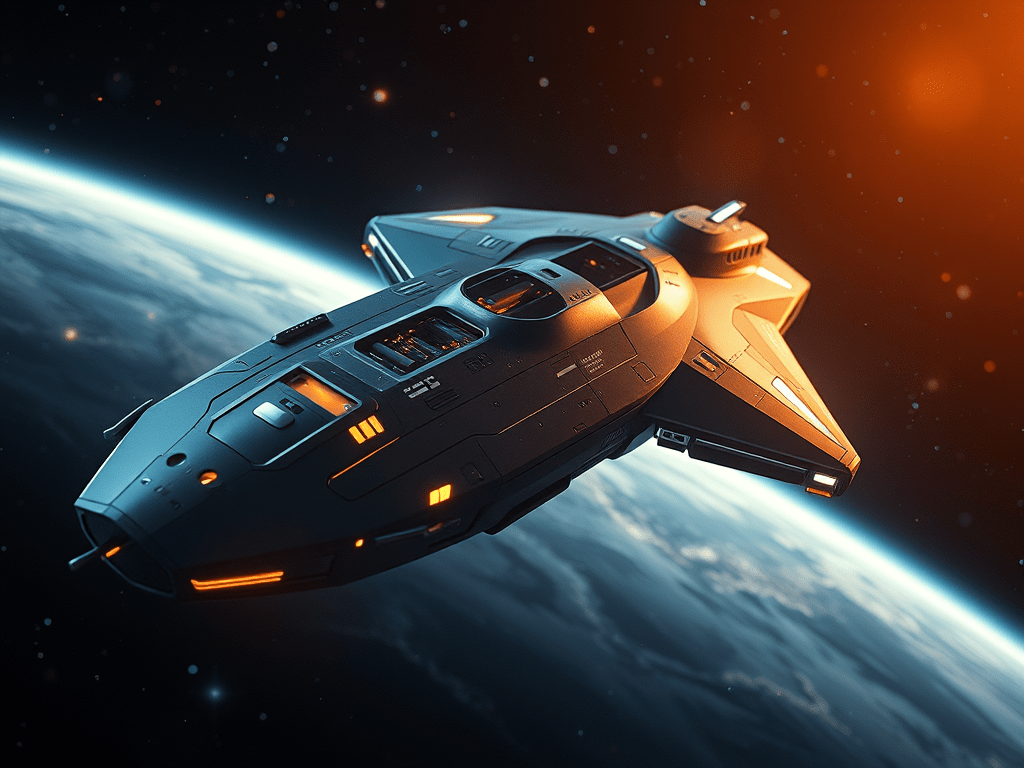
Ever dreamed of humanity building a spaceship capable of interstellar travel? It’s a concept straight out of science fiction, but the lines between fantasy and reality are starting to blur. In our latest Deep Dive podcast episode, we explore the fascinating intersection where cutting-edge technology meets the imaginative world of sci-fi.
To journey to the stars, we’d need technology far beyond our current capabilities. Think of self-repairing spaceships that use AI and nanotechnology to fix themselves in real-time, all while traveling immense distances at mind-boggling speeds. It might sound like something out of Star Trek, but these ideas are grounded in real scientific principles. Researchers are exploring advanced materials like graphene and carbon nanotubes that could withstand the extreme conditions of deep space. And, AI is rapidly advancing, potentially allowing for the kind of autonomous systems needed for these futuristic vessels.
We also discuss innovative propulsion technologies, such as nuclear fusion and antimatter reactions, which may one day become the engines driving our starships. These concepts mirror today’s experimental reactors, though on a much larger and more powerful scale.
But interstellar travel isn’t just about advanced technology; it’s also about human ingenuity and our unquenchable desire to explore the cosmos. Even with the most sophisticated AI systems, human intuition, creativity, and adaptability remain irreplaceable. In the end, the future of space travel may lie in a partnership between humans and machines, working together to solve challenges and uncover the mysteries of the universe.
Curious to know more about how these sci-fi concepts could become a reality? Tune in to our podcast episode and take a journey beyond the stars. The future is waiting!

 EssayBoard
Leave a comment