
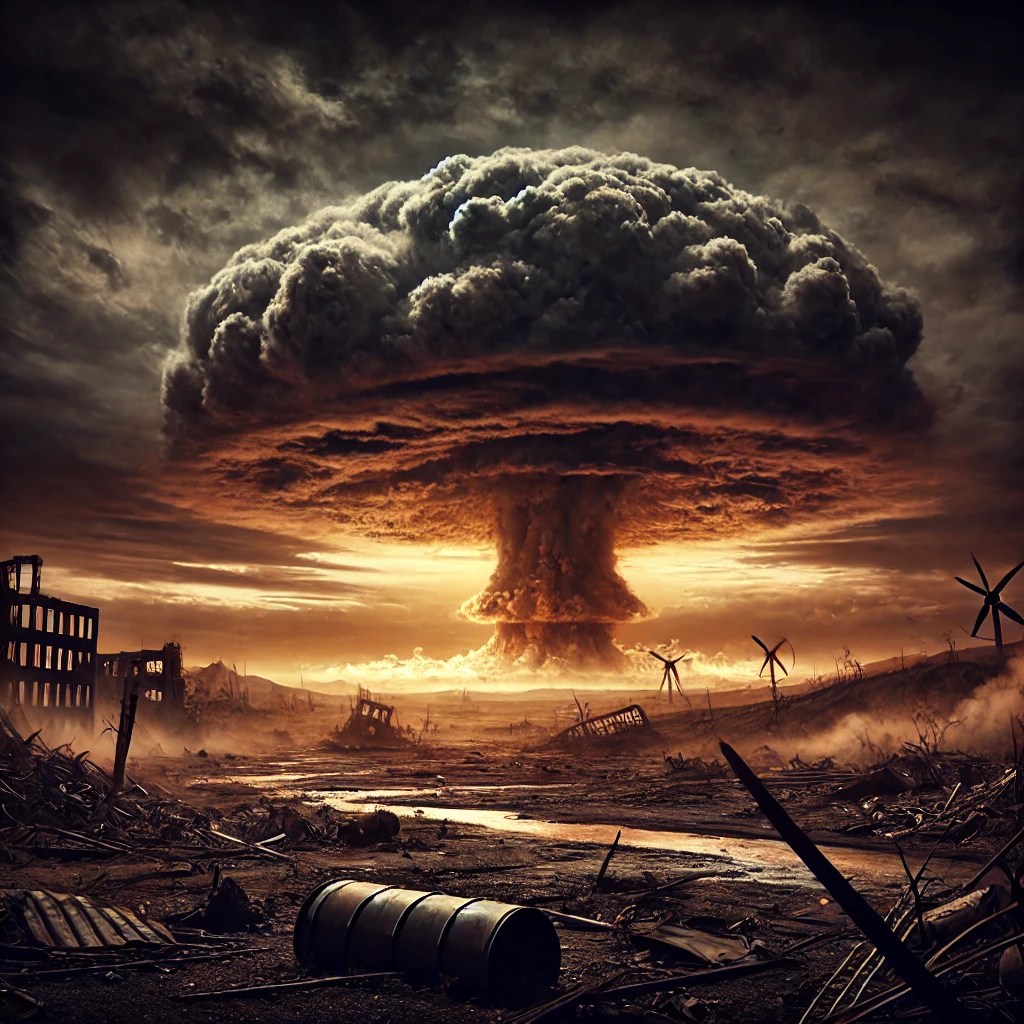
The All-In Summit 2024 hosted a riveting discussion between two of the most influential thinkers in geopolitics: John Mearsheimer, a renowned political scientist, and Jeffrey Sachs, a leading economist. The debate centered around the United States’ relationship with China and the potential for nuclear war—a topic that has become increasingly relevant in today’s volatile global landscape. While both scholars agree on the catastrophic consequences of nuclear war, they sharply disagree on whether China poses a genuine threat to the United States. This disagreement forms the crux of a broader debate on how the U.S. should navigate its future in a multipolar world.
Mearsheimer’s Realist Perspective: China as a Threat
John Mearsheimer, a proponent of the realist school of thought in international relations, views the world as an anarchic system where states must prioritize their survival above all else. From this perspective, power is the ultimate currency, and any state that threatens the existing balance of power becomes a potential adversary. In Mearsheimer’s eyes, China’s rapid economic growth and military expansion signal its ambition to become a regional hegemon in Asia, akin to the United States’ dominance in the Western Hemisphere.
Mearsheimer argues that China’s pursuit of regional hegemony poses a direct threat to U.S. interests. He believes that as China gains more power, it will seek to push the United States out of Asia, thereby challenging the U.S.’s global dominance. Mearsheimer points to historical precedents, where the U.S. confronted and neutralized other aspiring regional hegemons, such as Nazi Germany and the Soviet Union, to maintain its strategic superiority.
According to Mearsheimer, allowing China to establish itself as a regional hegemon would grant it the freedom to “roam” and project its power globally, much like the U.S. does today. This, he argues, would inevitably lead to intense security competition between the two powers, increasing the likelihood of conflict. To prevent this scenario, Mearsheimer advocates for a robust U.S. strategy to contain China, similar to the Cold War-era containment of the Soviet Union. In his view, failure to contain China could lead to a world where the U.S. is no longer the dominant global power, with dire consequences for its national security.
Sachs’s Counterargument: China as an Economic Partner, Not a Threat
In stark contrast to Mearsheimer, Jeffrey Sachs offers a more optimistic and economically driven perspective. As an economist, Sachs views international relations through the lens of global trade, interdependence, and mutual benefit. He argues that China is not a threat to the United States but rather an essential partner in the global economy. Sachs believes that the economic rise of China has been beneficial not only for China itself but also for the United States and the world at large.
Sachs contends that the U.S. strategy of containment and confrontation with China is misguided and counterproductive. He points out that China’s military expansion, particularly its naval buildup, is a rational response to U.S. policies that have sought to encircle China through control of key maritime choke points. Instead of viewing China as an adversary, Sachs suggests that the U.S. should engage with China diplomatically and economically, recognizing that both countries have much to gain from cooperation.
Moreover, Sachs warns that the current U.S. approach to China could lead to a dangerous escalation, potentially resulting in World War III. He emphasizes that the U.S. must avoid provoking China, particularly over sensitive issues like Taiwan, which could easily spiral into a full-scale conflict. Sachs argues that the U.S. should respect China’s regional ambitions to a degree and seek to manage, rather than suppress, China’s rise.
For Sachs, the greatest threat to global security is not China’s growing power but the possibility of nuclear war. He criticizes the U.S.’s power-seeking behavior, arguing that it is unnecessary and perilous in the nuclear age. Sachs believes that the U.S. should adopt a more prudent and restrained foreign policy, focusing on de-escalation and conflict prevention rather than trying to maintain its unchallenged dominance at all costs.
The Common Ground: The Shared Fear of Nuclear War
Despite their differing views on China, both Mearsheimer and Sachs converge on the issue of nuclear war. They agree that the prospect of a nuclear conflict is the most significant threat to global security today. Mearsheimer acknowledges the risk of nuclear war but sees it as an inevitable consequence of great power competition. In contrast, Sachs argues that nuclear war is a preventable catastrophe that can be avoided through smarter, more restrained policies.
Sachs is particularly alarmed by the current trajectory of U.S. foreign policy, which he believes is pushing the world closer to a nuclear confrontation. He criticizes the U.S. for its aggressive stance toward both Russia and China, warning that such behavior increases the likelihood of miscalculations and unintended escalations. For Sachs, the key to avoiding nuclear war is to step back from the brink, engage in diplomacy, and recognize that security does not have to be a zero-sum game.
Mearsheimer, while sharing Sachs’s concern about nuclear war, is more fatalistic. He argues that the anarchic nature of the international system makes security competition inevitable, and with it, the risk of war. Mearsheimer hopes that war can be avoided through careful management of this competition, as was the case during the Cold War, but he is less optimistic about the prospects for long-term peace.
How Close Are We to Nuclear War?
The disagreement between Mearsheimer and Sachs on how to handle China reflects a broader debate about the direction of U.S. foreign policy. While Sachs’s call for restraint and diplomacy offers a hopeful path forward, the reality of international politics, as Mearsheimer describes it, suggests that the world may be on a more dangerous trajectory.
The risk of nuclear war today is arguably higher than it has been since the Cold War. The ongoing conflict in Ukraine, the U.S.-China rivalry, and the instability in the Middle East all contribute to a highly volatile global environment. The fact that multiple great powers possess nuclear weapons only adds to the danger, as any major conflict could quickly escalate into a nuclear exchange.
Mearsheimer’s prediction that we are in an “iron cage” of great power rivalry implies that the risk of nuclear war will remain as long as the current international system persists. Sachs, on the other hand, believes that there is still time to change course, but only if the U.S. and other powers recognize the futility of seeking dominance in a nuclear-armed world.
In conclusion, while the exact likelihood of nuclear war is difficult to quantify, the tensions highlighted by Mearsheimer and Sachs suggest that the risk is real and growing. As global powers continue to jockey for position, the potential for miscalculation and escalation remains ever-present. The path forward requires careful navigation, a recognition of the dangers at hand, and a commitment to avoiding the unthinkable.
Final Thoughts
As the world stands on the precipice of potential disaster, the debate between Mearsheimer and Sachs serves as a crucial reminder of the stakes involved. Whether through containment or cooperation, the choices made by global leaders in the coming years will determine whether we move toward a more peaceful world or inch closer to the brink of nuclear war. The time to act is now, and the path chosen will shape the future of humanity.

 EssayBoard
Leave a comment