
economics
-
Why 2029-2031 is America’s True Economic Risk

Why the Real Crisis Isn’t 2026 — It’s 2029–2031** There’s a quiet split forming in macro circles. On one side, the doomsayers like Michael Burry and Hussman swear the market will crack by 2026 or 2027 — a “great reversion” after years of excess. On the other side, veteran strategist Charles Clough argues the opposite:we’re… Continue reading
-
Revolutionizing UBI: The Automation-Dividend Model Explained

Imagine waking up each month to a deposit in your account. It covers your essentials, frees you from financial anxiety, and presents an intriguing option: spend the money now, or reinvest it for compounded future wealth. This isn’t a distant dream—it’s a carefully designed, tech-powered Universal Basic Income (UBI). Traditional UBI Models: Why They Fall… Continue reading
-
Revamping Social Security: UBI and Automation Solutions

The clock is ticking on Social Security. By 2034, the trust fund that supports millions of retirees is expected to run dry, triggering automatic benefit cuts that could reduce payouts by nearly a quarter. At the same time, artificial intelligence and automation threaten to upend the labor market, with millions of jobs at risk. Add… Continue reading
-
Bond Yields and the Dollar: A Financial Paradox

In an ideal world, when investors flee from equities and pour money into U.S. Treasuries as a safe haven, the increased demand for dollars should drive the currency higher. Yet, in today’s market, we see a perplexing contradiction: the dollar is weakening while bond yields remain low—even as inflation is picking up. This unusual dynamic… Continue reading
-
Stagflation Ahead: What Schiff Warns About

Source: Peter Schiff: Tariffs & The Coming Economic Collapse Introduction In a recent interview titled “Peter Schiff: Tariffs & the Coming Economic Collapse,” Peter Schiff laid out a stark warning: For those who follow Peter Schiff, none of this is particularly new—he’s been sounding alarms about a “coming collapse” for years. But this time, the… Continue reading
-
The Future of Prices in an Automated Economy
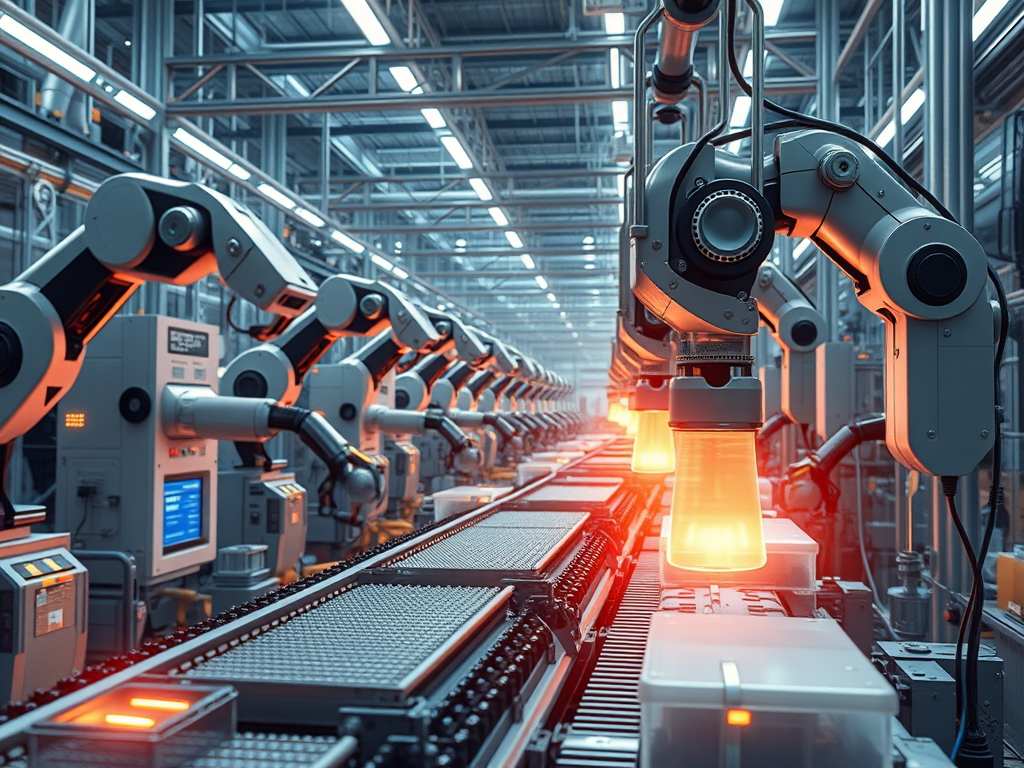
1. Labor Costs Vanish When Machines Take Over Traditionally, rising labor costs have been a major driver of inflation. Wages go up → businesses pass costs on to consumers → prices climb across the board. But in a fully automated economy: That alone chips away at one of the fundamental pillars of inflation. 2. Production… Continue reading
-
Navigating the Future: U.S. Response to Titanium Supply Challenges

Over the past year, China has placed several critical materials under export restrictions, particularly those with dual-use applications—metals essential for both civilian and military industries. This began with gallium, germanium, and antimony, followed by tungsten. Now, there is growing concern that titanium may be next. Titanium is an indispensable material in aerospace, defense, and—crucially—the robotics… Continue reading
-
The Case for UBI as Economic Stimulus Amidst National Debt

Disclaimer: This article was generated with the assistance of AI and is for informational and discussion purposes only. While efforts have been made to ensure accuracy, mistakes, miscalculations, or oversimplifications may be present. Economic and financial topics are complex, and interpretations may vary. This content should not be taken as financial, economic, or policy advice.… Continue reading
-
Tariffs, Inflation, and a Possible Deflationary Spiral

In recent months, a growing number of contrarian voices have argued that the interplay of tariffs and inflation could eventually trigger a deflationary spiral—one that might punish corporate profiteers and overvalued stocks while finally relieving the pressure on everyday consumers. But how plausible is this scenario? Let’s dive into the research, historical context, and current… Continue reading
 EssayBoard