
Disclaimer: This article is an AI written content. This article explores a speculative concept inspired by ongoing discussions in quantum physics. While grounded in established science and real proposals, the idea of using deep-space probes to test entanglement at interstellar scales remains untested and theoretical. It is not intended as scientific advice or endorsement of any mission, and readers should consult peer-reviewed sources for the latest developments. Quantum mechanics is a rapidly evolving field, and no experiment has yet disproven the theory’s predictions.
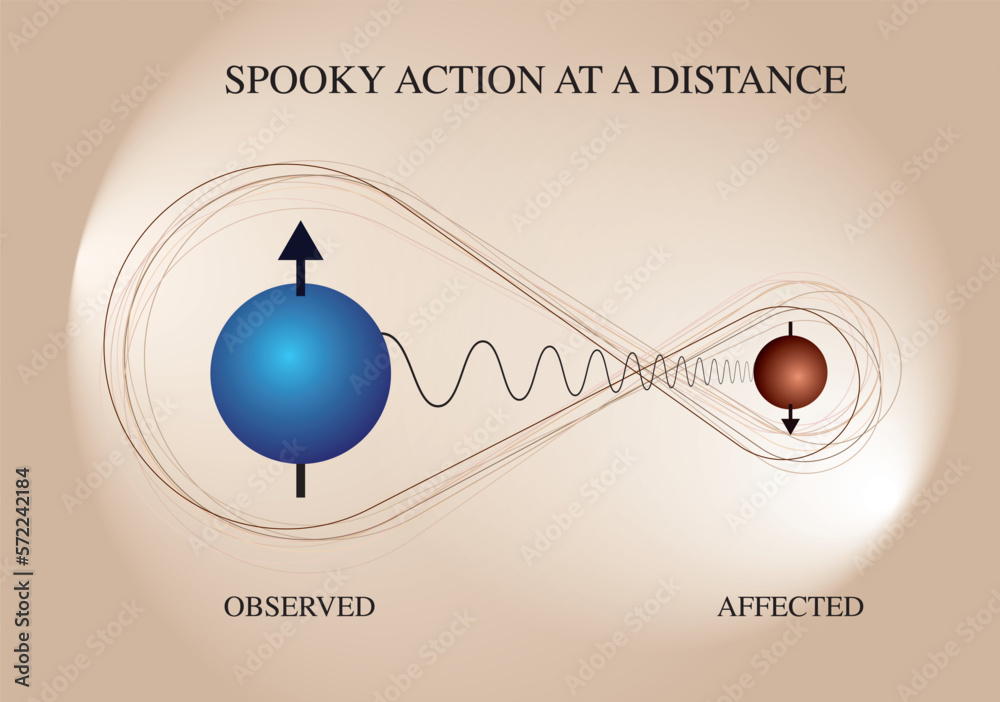
Imagine two particles, separated by billions of kilometers across the void of space, yet somehow linked in a way that defies our everyday intuition. Change one, and the other reacts instantly—no signals, no delay, just pure correlation. This is quantum entanglement, famously dubbed “spooky action at a distance” by Albert Einstein, who was so unsettled by it that he questioned the completeness of quantum mechanics itself. For the average reader, think of it like a pair of magical dice: No matter how far apart you roll them, they always land on matching numbers, as if the universe is cheating probability.
But what if we could push this weirdness to its absolute edge? What if we loaded a space probe—like a modern Voyager—with entangled particles and sent it hurtling out of our solar system, checking if that spooky link holds up at distances we’ve never tested? This probing idea, born from curious conversations between the blog owner of Essayboard.com and the X’s Grok AI about the frontiers of physics, could either confirm quantum mechanics’ bold claim of unlimited range or uncover cracks in our understanding of reality. It’s a thought experiment with real potential, blending backyard wonder with cutting-edge science. Let’s dive in, starting simple and ramping up for the quantum enthusiasts.
Quantum Entanglement 101: The Basics for Everyone
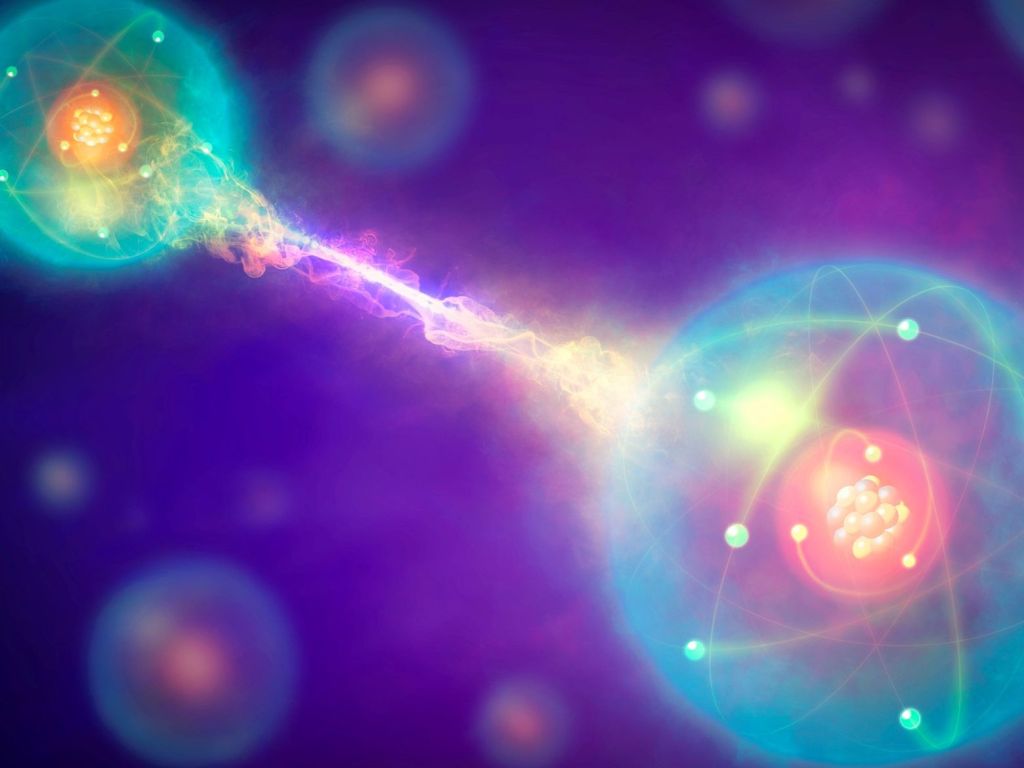
At its core, entanglement happens when two or more particles become intertwined during creation or interaction, sharing a quantum state. Measure one particle’s property—like its spin (a quantum version of rotation)—and the other’s is instantly determined, even if they’re light-years apart. This isn’t sci-fi; it’s been proven in labs worldwide since the 1970s, starting with pioneering work by John Clauser and others who tested Bell’s inequalities to rule out hidden classical explanations.
For the tech-savvy, these tests involve violating inequalities like CHSH (Clauser-Horne-Shimony-Holt), where correlations exceed what local realism allows. No faster-than-light communication occurs—relativity is safe—but the non-locality is mind-bending. Everyday folks might wonder: Why care? Well, entanglement powers quantum computing (for unbreakable encryption) and could enable ultra-secure space communications.
Current Experiments: From Earth Labs to Orbit
Scientists have already stretched entanglement impressively, but always within human reach. The record? China’s Micius satellite in 2017 beamed entangled photons to ground stations 1,200 kilometers apart, smashing previous marks and kickstarting a “quantum space race.” More recently, NASA’s SEAQUE (Space Entanglement and Annealing QUantum Experiment) on the International Space Station has tested entanglement in microgravity, sharing results at the 2025 APS Global Physics Summit that confirm robust photon generation despite space’s harsh radiation and vibrations. These setups use lasers to create pairs, beam one to a distant detector, and verify correlations—proving the link holds over orbital distances.
For physics nerds: SEAQUE focuses on entanglement swapping, where photons from separate sources get linked via interference, enabling relay networks. It’s a precursor to quantum repeaters, which combat decoherence (the quantum killer where environment interactions collapse states). No distance decay observed yet, aligning with quantum field theory’s predictions.
Yet, as one X post from a retro gaming enthusiast mused in a thread about future tech, we might need probes that “grow like algae on distant planetary surfaces” to truly probe deep space, battling radiation’s “pitiless indifference.” That’s where the probing idea shines.
The Big Idea: Deep-Space Probes as Quantum Limit-Testers
Here’s the crux: Equip a probe escaping our solar system with one half of an entangled pair (say, photons or qubits in a quantum memory), while keeping the other on Earth. As the probe ventures billions of kilometers away—past Mars, Jupiter, even the heliopause—perform measurements and compare results via classical radio signals (which take hours or days to return). If correlations hold, entanglement is truly unlimited. If they falter? We might discover a cutoff, perhaps tied to quantum gravity or spacetime’s fabric.
This isn’t entirely new; proposals like the 2008 Space-QUEST aimed to test entanglement from the ISS to ground, evolving into broader quantum networking ideas. A 2021 paper suggests satellite-borne quantum memories for global repeaters, boosting rates by orders of magnitude. NASA’s Deep Space Quantum Link eyes lunar baselines, probing gravitational effects— a step toward Martian tests.
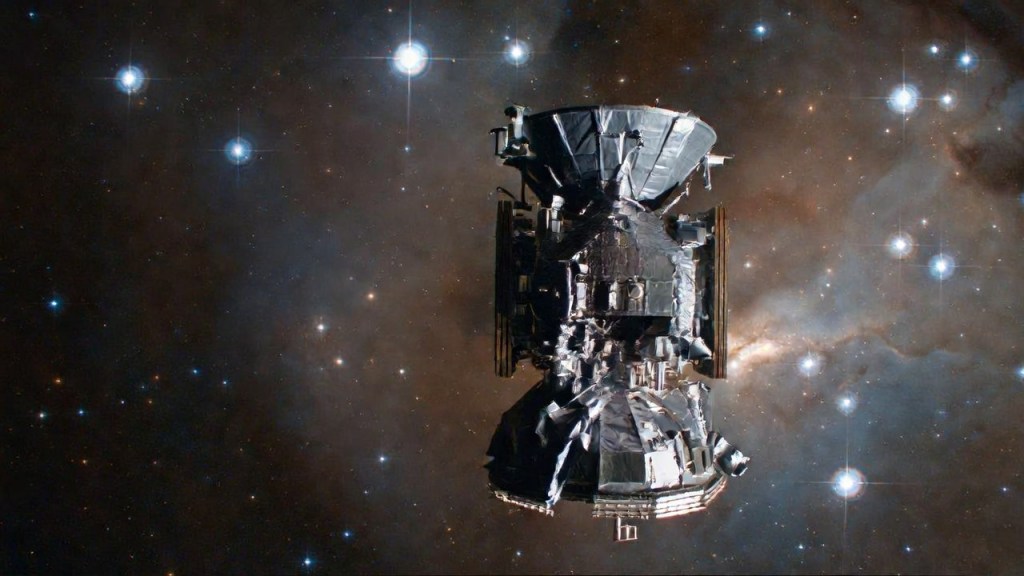
For average readers: Picture Voyager 1, now 24 billion km away, but with a quantum twist. It could answer if the universe’s “spooky” glue weakens over cosmic voids. Techies might appreciate the engineering: Room-temperature qubits (emerging now) could survive without cryogenics, protected by error-correction codes against cosmic rays.
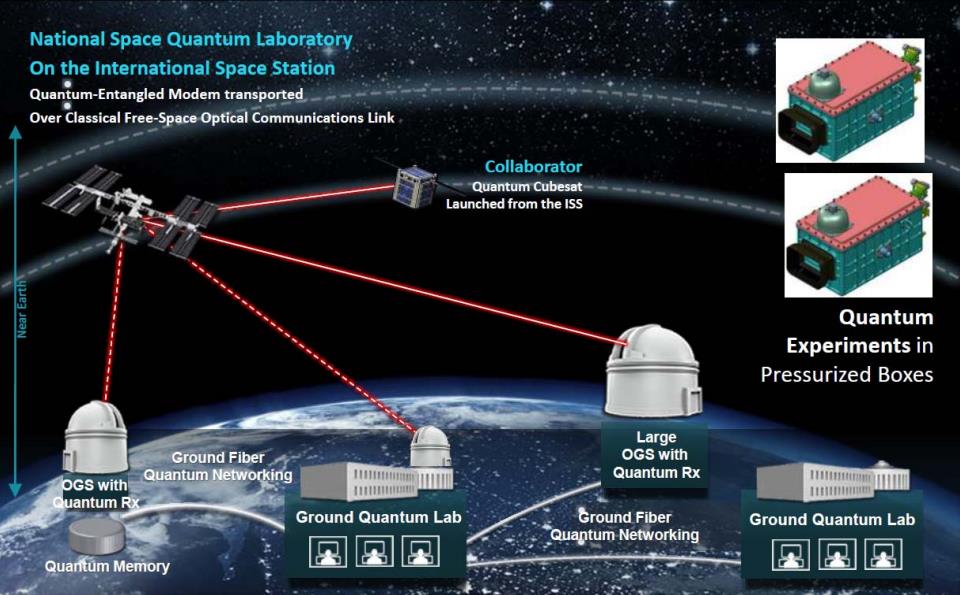
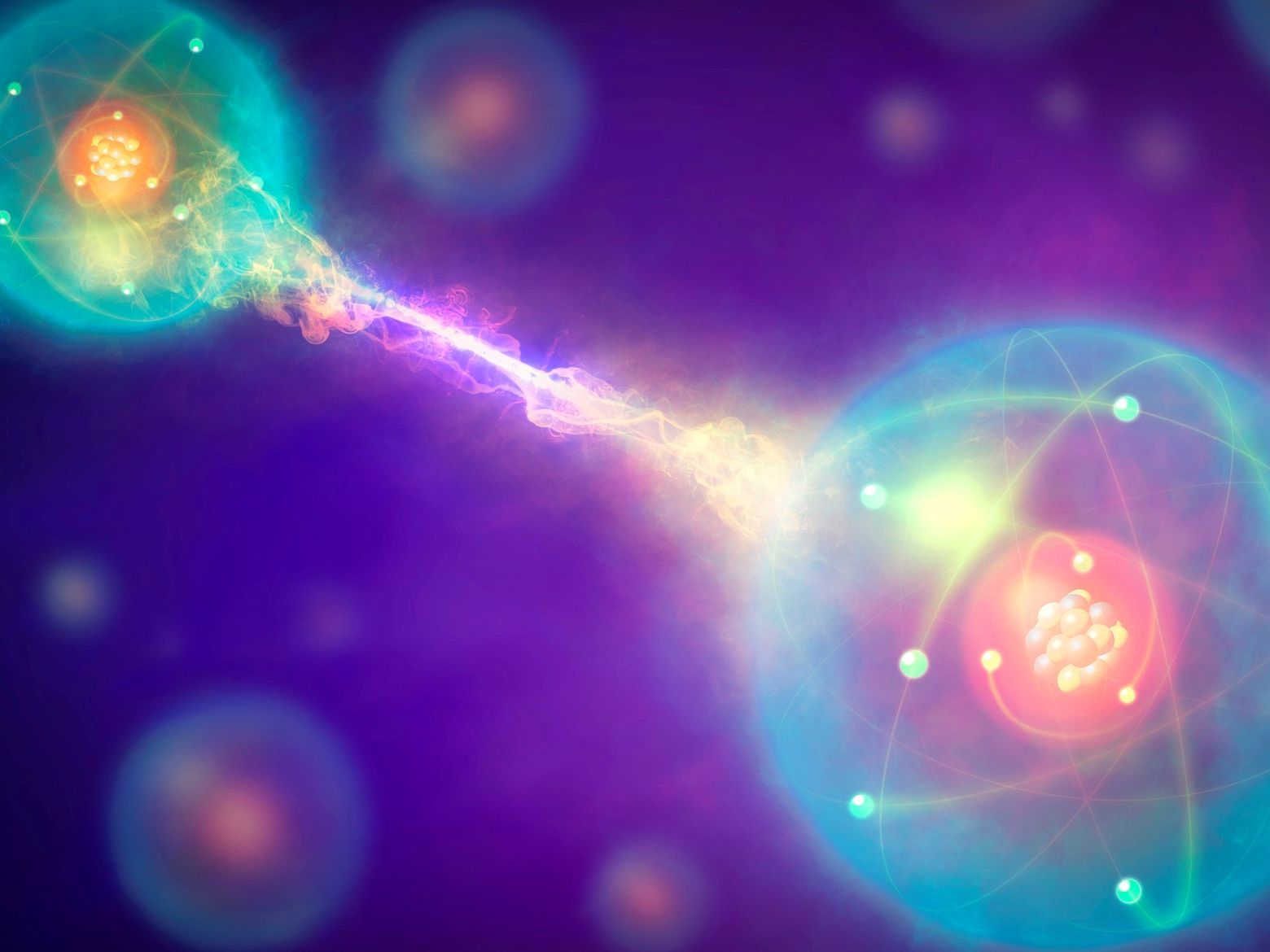
Image source: bigthink.com
Challenges and What Ifs: The Roadblocks and Revelations
Real talk: Decoherence is the enemy. Space is brutal—radiation flips qubits, vibrations shake setups. Proposals address this with diamond-based memories or photonic systems, but scaling to interstellar? We’re talking decades, billions in funding, and missions prioritizing other science.
If it works and no limit appears, it reinforces quantum mechanics’ weirdness, perhaps enabling interstellar quantum networks or even SETI twists (entangled signals from aliens?). But if a breakdown emerges—say, at planetary scales—it could unify quantum theory with gravity, hinting at quantized spacetime. Recent collider work at CERN and RHIC has spotted entanglement in quarks, extending it to high energies, but space adds relativity’s curveball.
For experts: Imagine testing Bell inequalities at relativistic separations, probing if entanglement survives event horizons or quantum foam. A failure might support loop quantum gravity, with implications for black hole information paradoxes.
Wrapping Up: A Call to the Stars
This probing idea isn’t just idle speculation—it’s a blueprint for the next quantum leap, inspired by skeptics questioning why we accept “unlimited” without cosmic proof. As tech advances, from SEAQUE’s shoebox payloads to proposed deep-space quantum labs, we might soon send our spookiest questions into the void. Whether it confirms the infinite or reveals boundaries, it’s a reminder: The universe is stranger than we think, and exploring it unites the curious—from backyard stargazers to lab-coated theorists. Keep questioning; the answers might entangle us all.

 EssayBoard
Leave a comment