
Why invention isn’t enough, why EVs + AI + robotics define the next platform, and why openness—not isolation—is the winning strategy in a multipolar world.
Disclaimer
This is an AI written article! This article reflects a strategic, analytical viewpoint, not a prediction or a prescription. It is written to explore long-term technological, economic, and geopolitical dynamics through historical analogy and systems thinking.
Nothing in this article constitutes financial, investment, legal, policy, or national-security advice. The views expressed are not endorsements of any government, company, or political agenda, nor are they arguments for isolationism or unconditional globalization.
All comparisons (including references to historical eras such as the 1990s, Sputnik, or prior industrial shifts) are illustrative, not literal forecasts. Outcomes depend on policy choices, coordination, execution, and unpredictable human factors.
The intent of this piece is to stimulate thoughtful discussion about priorities, incentives, and system-level design — not to assign blame, forecast winners with certainty, or promote technological determinism.
Executive Summary
The next decade looks like 1995—but it isn’t a rerun. Back then, the United States won not because it invented everything, but because it absorbed, standardized, and deployed technology faster than anyone else. Today, the platform shift is physical as well as digital: AI + EVs + robotics + smart infrastructure. China is integrating fast. The U.S. still leads in capital, talent, productivity, and innovation—but risks under-platforming if it hesitates, fragments standards, or clings to legacy excellence.
The choice isn’t EVs vs. ICE or copying vs. inventing. The choice is system-building vs. comfort. Winners copy what works, improve it, standardize it, and scale—while continuing to invent. That’s how platforms are captured.
1) 1995 Wasn’t About Invention—It Was About Absorption
Windows 95 didn’t win because it was perfect. It won because it:
- Standardized behavior
- Simplified interfaces
- Scaled usage
- Became boring—and therefore default
The U.S. won the 1990s by turning ideas into lived systems. Today’s equivalent isn’t an app. It’s a city-level operating system.
2) The New Platform Is Physical + Digital
The emerging stack:
- AI (coordination logic)
- EVs (software-defined mobility)
- Robotics (labor substitution)
- Smart infrastructure (energy, curb space, logistics)
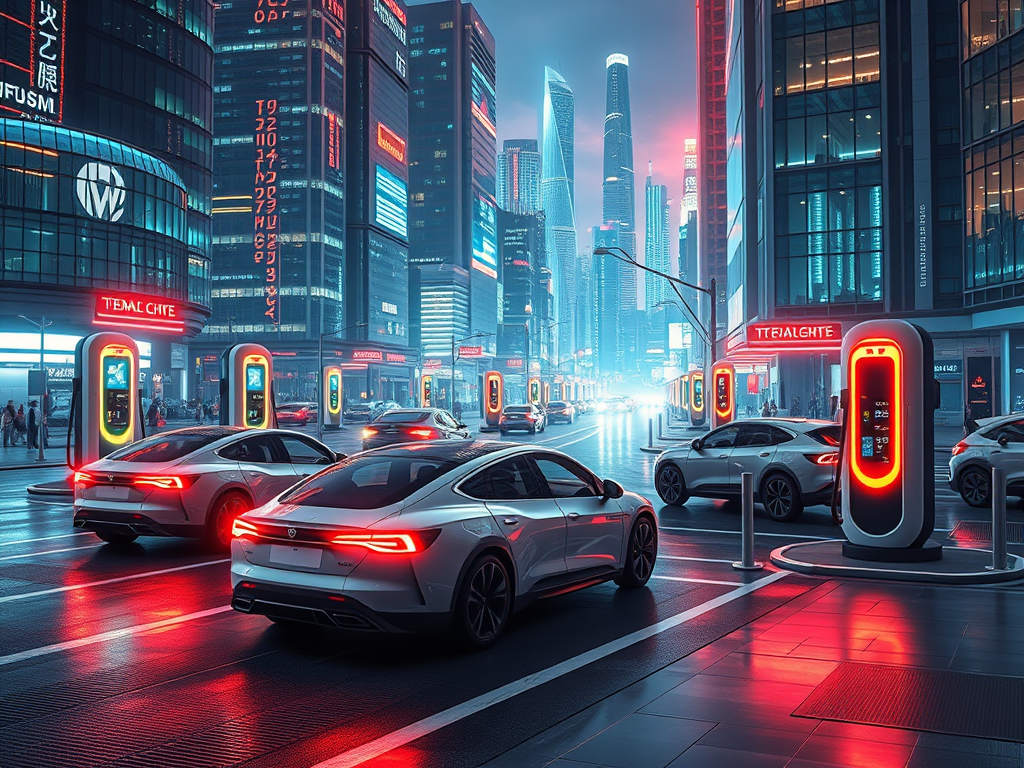
EVs are robots on wheels. Autonomy needs predictable energy, docking, and data. Robotics needs structured environments. This is why the future organizes around EV hubs, not gas stations.
3) EV Hubs Beat Gas Stations Because They’re System Nodes
Gas stations were transactional artifacts of a mechanical era. EV hubs are civic nodes:
- Charging integrated with retail, rest, food, and green space
- AI-managed load balancing
- Robot-friendly maintenance and delivery
- Human–machine coexistence by design
This isn’t about waiting 30 minutes. It’s about turning time into value and space into a platform.
4) Why ICE Holds the U.S. Back—Because It’s Too Good
Internal combustion isn’t bad; it’s finished. Its excellence freezes redesign:
- No forcing function for smart grids
- No push to rework curbs and zoning
- No urgency for autonomy
EVs force uncomfortable but productive change. ICE allows procrastination. In platform shifts, procrastination is loss.
5) Multipolar Doesn’t Mean Collapse—It Means Standards Matter More
A multipolar world raises hedging and redundancy costs. It rewards system builders:
- Gold can rise alongside stocks (hedging, not panic)
- Oil can lag as efficiency improves
- Growth continues, but smarter
The real danger isn’t economic weakness; it’s coordination failure.
6) “They Just Copy Us” Is Not a Strategy
Every winner copied:
- Rome copied Greece
- Britain copied Dutch finance
- The U.S. copied European science—then standardized it
Copying is learning at machine speed. Refusing to copy is pride tax. The correct posture is: copy what works, improve it, standardize it, deploy it faster—while inventing at the frontier.
7) Inventors vs. the Edison Class
History pays for use, not origin. Inventors often lose; system builders win:
- Control interfaces
- Set standards
- Own distribution
The risk today: the U.S. invents while others integrate. That flips the 1995 script.
8) Wireless Charging, Autonomy, and the Endgame
Wireless charging isn’t a gadget; it’s an autonomy enabler:
- Static pads at hubs and depots
- Semi-dynamic zones in logistics
- Selective dynamic corridors
As charging becomes ambient, batteries shrink, fleets scale, and robotics accelerate.
9) What a U.S. “Sputnik Moment” Looks Like—Without Centralization
We don’t need one giant program. We need permissionless coordination:
- City-level sandboxes
- Open standards for charging, autonomy, data
- Fleet-first deployments
- Capital aligned to infrastructure, not nostalgia
Alignment beats unanimity.
10) The Choice
- Isolation: defend ICE, fragment standards, invent without absorption
- Engaged competition: go EV, go smart city, copy ruthlessly, standardize boldly
The world is moving regardless. Opting out is worse than competing.
Conclusion
This can still be America’s moment—but only if we remember how we won last time. The future belongs to whoever makes the new world boring first. Invent. Copy. Standardize. Scale. Stay open.
That’s not weakness. That’s how platforms are captured.

 EssayBoard
Leave a comment