
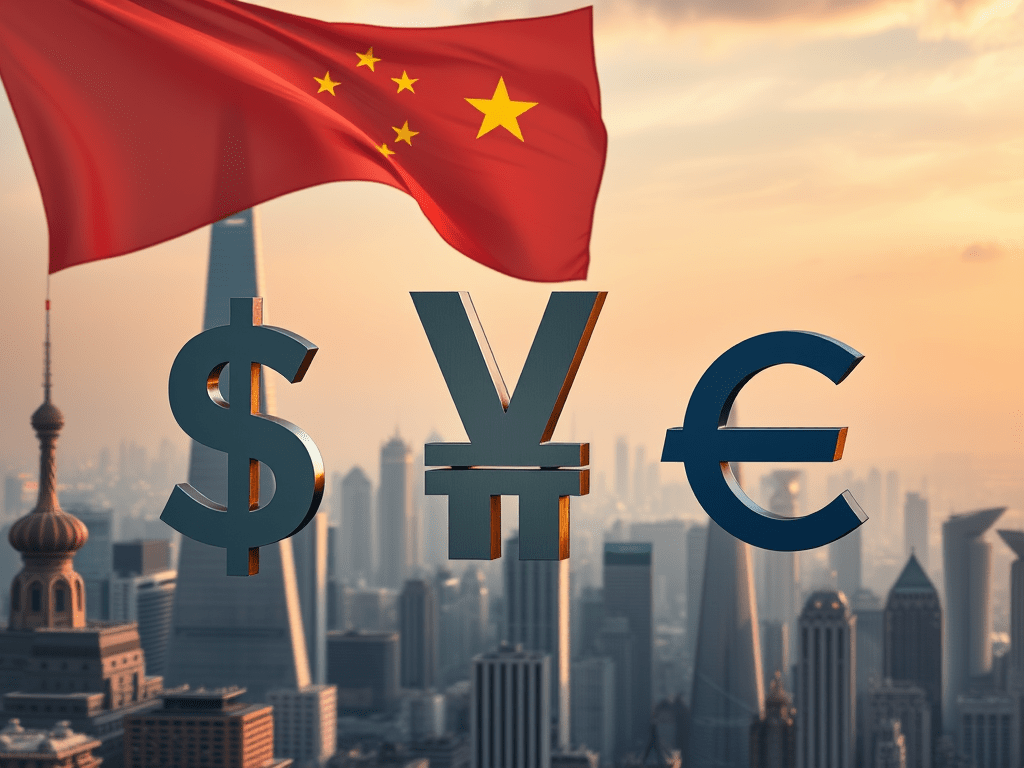
The recent headlines scream tariffs, trade wars, and economic tension, as President Trump hikes tariffs significantly, intensifying the friction between global powers. Behind the noise, a quieter yet potentially far more significant story unfolds: Is China carefully reshaping—not replacing—the U.S. dollar?
China’s long-term strategy might not be to demolish the dollar but to resize it, reducing American dominance while promoting its own digital currency, the digital yuan (e-CNY), as a reliable alternative.
Why China Needs the Dollar (Just a Bit Smaller)
Contrary to popular belief, China does not benefit from a collapsing dollar. With approximately $800 billion in U.S. Treasury bonds and massive dollar-based trade flows, an abrupt collapse would devastate its own economy. Moreover, if the dollar falls, the euro and yen might gain, creating new rivals aligned with Western powers, not China.
Instead, China prefers a more subtle goal: a multipolar financial world where the dollar remains significant but no longer dominant, with the e-CNY comfortably positioned just above the euro and yen.
China’s Strategic Playbook
China’s methodical approach relies on four pillars:
- Digital Yuan Infrastructure: By rolling out e-CNY across Belt and Road initiatives and BRICS partnerships, China positions its currency as an efficient, cost-effective alternative.
- Leveraging U.S. Missteps: Every U.S. tariff or sanction inadvertently promotes the digital yuan as a safer and friendlier choice.
- Organic, Not Forced Adoption: China offers incentives like low fees, transaction reversibility, and state guarantees, making adoption appealing without coercion.
- Careful Narrative Management: China frames e-CNY as optional and respectful of sovereignty, avoiding the backlash that comes with being the sole currency superpower.
Washington’s Quiet Countermoves
The U.S. response, although subtle, is already happening in real-time:
- Public Reassurance: Officials frequently reaffirm dollar strength and reliability.
- Fast-Tracking FedCoin: The U.S. accelerates research and pilots for its own digital currency, FedCoin.
- Tightening Cryptocurrency Regulations: Crackdowns on stablecoins and crypto exchanges seek to maintain financial dominance.
- Information Warfare: Highlighting potential surveillance and control issues with e-CNY to discourage adoption.
- Diplomatic Maneuvering: Offering strategic trade and security incentives to countries tempted by China’s digital currency.
The Irony: U.S. Actions Might Accelerate China’s Goal
The harder the U.S. pushes tariffs and sanctions, the more resentment grows, fueling demand for the digital yuan. Each U.S. punitive action is a free advertisement for China’s alternative.
Three Scenarios for the Coming Decade
- Stall Scenario: The U.S. successfully manages its response; the digital yuan remains a niche player.
- Goldilocks Scenario (Likely): The dollar’s role decreases slowly, and the e-CNY gradually becomes a credible alternative.
- Slip Scenario: Aggressive U.S. actions or economic shocks rapidly diminish dollar influence, allowing e-CNY to rise significantly.
Signals to Watch
Stay alert to:
- Rapid e-CNY adoption in global energy markets.
- Launch of formal BRICS digital payment networks.
- New U.S. regulations targeting digital currencies.
Implications for Investors and Businesses
Investors should diversify currency risks, businesses must prepare for dual currency operations, and policymakers need balanced strategies to preserve economic stability and influence.
Conclusion: A Gradual Shift, Not a Revolution
China’s objective is not to collapse but to recalibrate the global financial system, positioning its digital yuan as a trusted option. This subtle yet powerful strategy is already shaping our economic future.
Disclaimer: This is AI written article. This article is intended for informational purposes only and should not be considered financial or investment advice. Readers are encouraged to conduct independent research or seek professional consultation before making financial decisions.

 EssayBoard
Leave a comment