
A Glimpse into 2140
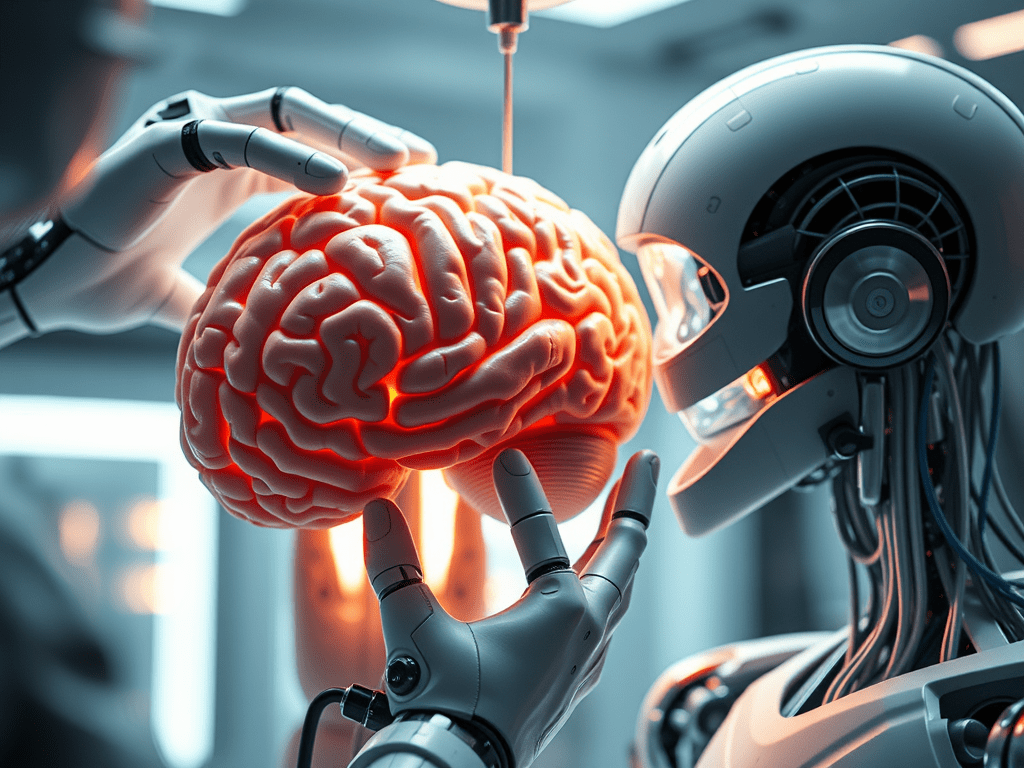
Picture the year 2140. Families still gather around dinner tables, children play outside, and the human experience seems largely unchanged—at least on the surface. Yet, a transformative option awaits those who wish to surpass the biological limits of humanity. After a life fully lived in their original flesh and blood, many individuals choose to undergo a remarkable rite of passage known as the Shelling Ceremony, where their living brain is transplanted into a synthetic body so lifelike it is indistinguishable from a biological one.
This futuristic vision is not merely imaginative fiction; it’s a speculative exploration deeply rooted in the cutting-edge scientific progress unfolding today.
Today’s Foundations: The Scientific Breakthroughs of the 2020s
The road to this hypothetical future is being paved right now by astonishing breakthroughs across multiple scientific domains:
Brain-on-a-Chip Innovations: Cortical Labs’ groundbreaking CL-1 merges living human neurons with silicon chips, enabling biological neural networks to learn simple tasks such as playing the game Pong. This represents the very early stages of hybrid biological-digital intelligence, bridging natural adaptability with digital processing power.
Organoid Intelligence (OI): Lab-grown brain organoids—miniaturized, functioning replicas of human brain tissues—are now capable of learning and adapting to stimuli. This emerging form of biological computing hints at the incredible possibilities of harnessing living neurons for computational tasks far beyond today’s silicon-based systems.
Brain-Computer Interfaces (BCIs): Innovative companies such as Neuralink, Synchron, and Paradromics are actively developing implants that directly interface with human brain activity. These technologies have moved beyond basic cursor control to capturing complex thoughts, emotions, and sensations, opening the possibility of comprehensive mind-recording and digital integration.
Synthetic Biology & Advanced Robotics: Scientists are achieving stunning progress in bioengineering, successfully grafting living human skin onto robotic frameworks, and developing synthetic muscle tissue capable of realistic and fluid movements. These advancements are blurring the lines between biological and artificial life, setting the stage for bodies indistinguishable from natural human form.
Detailed Roadmap: The Journey to Functional Immortality
Achieving immortality through technology is a bold vision unfolding in sequential but overlapping stages:
1. Copy – Mapping Consciousness: Detailed, high-resolution mapping of the human brain will be perfected to record memories, personality traits, and cognitive patterns, allowing long-term preservation of individual identity.
2. Cultivate – Growing Neural Wetware: Human neurons will be cultivated into organoids and interconnected with advanced computing systems, creating living biological processors capable of complex cognitive tasks.
3. Co-Run – Hybrid Cognitive Systems: Integrating biological neurons with sophisticated AI, allowing real-time “mind rehearsals” and seamless augmentation of human intelligence by artificial enhancements, bridging the gap between the biological and digital realms.
4. Cut-Over – Brain Transplantation or Gradual Transition: Perfecting the surgical transplantation of the living brain into synthetic shells or incrementally replacing biological neural networks with synthetic counterparts, ensuring continuity of consciousness and identity.
5. Re-Shell – Perfect Synthetic Bodies: Producing advanced synthetic bodies that emulate every aspect of human biology so convincingly that the difference between biological and synthetic becomes invisible, granting enhanced strength, resilience, and longevity.
Living Beyond Biological Limits
Life after the Shelling Ceremony preserves the core essence of humanity—emotions, memories, identity—but in a vastly improved synthetic shell. Individuals experience life with extraordinary resilience, enhanced cognitive abilities, and unprecedented physical capabilities. The profound implication is a society where no one can readily distinguish who remains purely biological and who has transcended into a synthetic form.
Navigating Existential Challenges
Despite these transformative possibilities, profound ethical and existential questions inevitably arise:
- Will multiple copies of the same mind coexist peacefully, or will they become rivals?
- Could advanced synthetic bodies be susceptible to hacking and manipulation?
- What ethical considerations arise from maintaining brains outside their original bodies?
- How does humanity cope when even synthetic immortality confronts universal entropy and cosmic extinction?
Conclusion: Humanity Redefined
Ultimately, if consciousness is indeed a pattern, biology becomes just the first chapter in the story of human evolution. Future generations may view their biological beginnings as merely a temporary phase, choosing immortality in synthetic shells indistinguishable from their original forms. This speculative future compels us to reexamine what it truly means to be human.
Disclaimer: This is AI generated content. This piece is speculative and intended for inspirational and exploratory purposes only. It does not represent scientific consensus or offer medical, ethical, or investment advice.

 EssayBoard
Leave a comment