
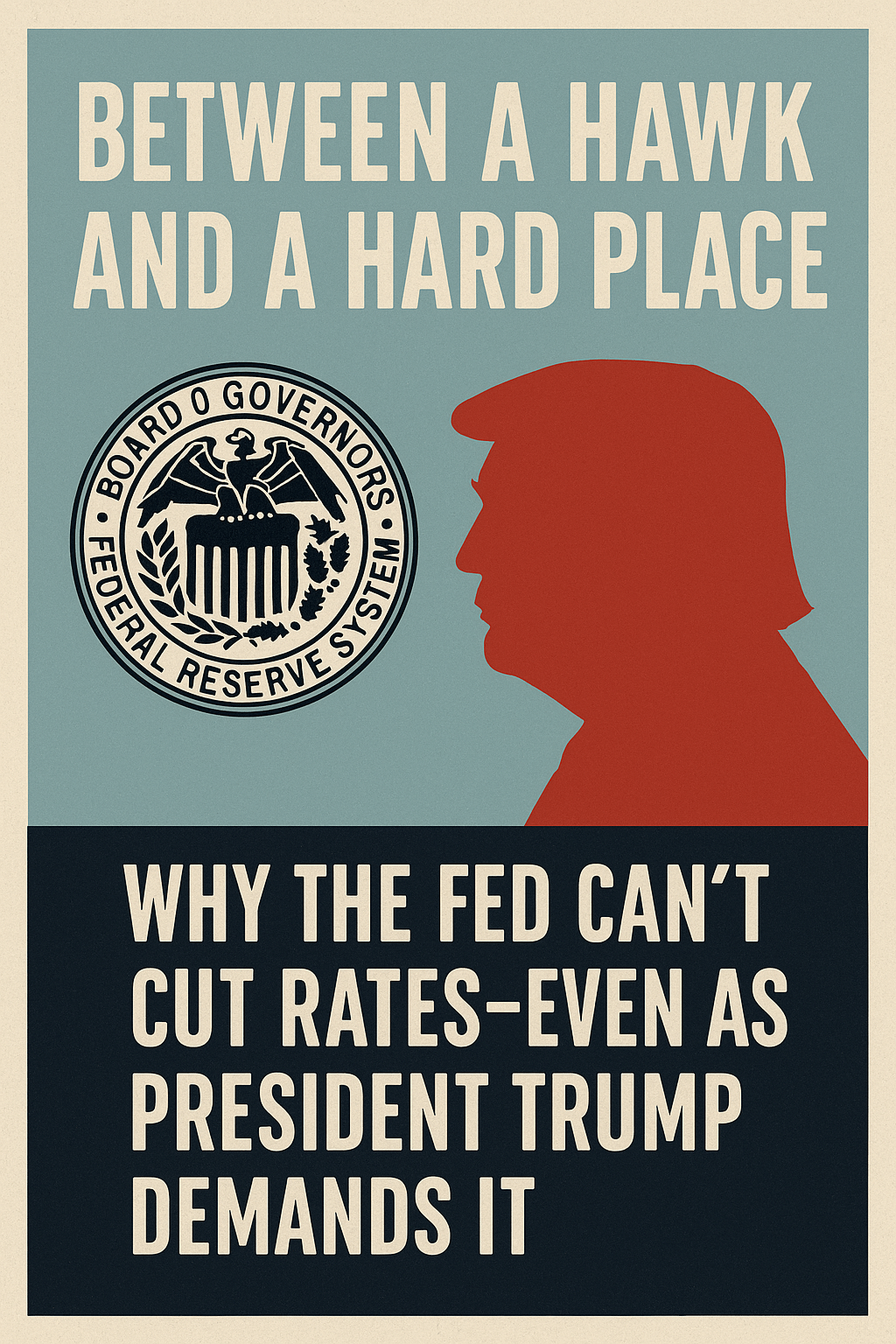
In the spotlight of U.S. economic debate, one loud question echoes: Why doesn’t the Federal Reserve just cut interest rates? President Trump has been vocally urging rate cuts to spur growth and soothe markets. Yet, the Fed stands firm, maintaining the federal funds rate between 4.25% and 4.50%, while the 10-year Treasury yield hovers near 4.47%.
Under normal circumstances, investors demand a significant premium for locking money away for 10 years versus overnight borrowing costs—usually 1.5% to 2% higher—reflecting inflation risk, uncertainty, and opportunity cost. The current narrow gap between the fed funds rate and the 10-year yield is unusual and signals complex forces at work.
This compression partly stems from the Federal Reserve’s massive prior purchases of long-term Treasuries through quantitative easing (QE), which suppressed yields artificially. Simultaneously, geopolitical factors—like China and other foreign holders quietly unwinding their Treasury and mortgage-backed securities (MBS) positions—are pushing yields upward from the other side. The tug-of-war between these forces means the 10-year yield is neither a pure market signal nor fully reflective of rising risks.
In short, the Fed is trapped between trying to manage inflation, financial stability, and global political-economic tensions, making the yield curve a complicated and somewhat distorted indicator.
Inflation & Tariffs—The Supply-Side Vice
The inflation the U.S. faces today is unlike the demand-driven surges of past decades. Instead, it’s fueled by persistent tariffs and fractured global supply chains. Escalating trade wars and reshoring efforts have created structural inflation pressures that don’t respond well to rate cuts. Lowering borrowing costs won’t ease bottlenecks or reduce input costs, and premature easing risks re-anchoring inflation expectations well above the Fed’s 3% comfort zone.
The Balance-Sheet Time-Bomb
The Federal Reserve’s balance sheet remains heavily loaded, with over $5 trillion in long-term Treasuries and more than $2 trillion in mortgage-backed securities (MBS). Through ongoing quantitative tightening (QT), the Fed allows these securities to mature without reinvesting, effectively releasing a significant amount of bonds back into the market. This increased supply puts downward pressure on bond prices, causing yields to rise. These rising yields have strained vulnerable banks—a risk vividly exposed during the Silicon Valley Bank (SVB) collapse. SVB suffered substantial unrealized losses on its large holdings of long-duration Treasuries and MBS, which lost value as interest rates climbed sharply. When a sudden surge of deposit withdrawals occurred, SVB was forced to sell these now-depreciated assets at a loss, triggering a liquidity crisis that led to its failure. If the Fed were to cut rates while simultaneously accelerating QT, the surge in yields could intensify, further pressuring the housing market and regional banks with similar bond portfolios. On the other hand, cutting rates without slowing QT risks rekindling inflation fears, leaving the Fed caught between two difficult and potentially dangerous options.
Foreign Buyers Have One Foot Out the Door
The 2024 Moody’s downgrade to AA+ shattered the sacred “risk-free” premise of U.S. debt, sowing doubt among global investors. The freezing of Russian reserves set a precedent, signaling that dollar assets can be weaponized, prompting quiet unwinding by China and exposing demographic and fiscal strains in Japan. This erosion of foreign appetite means fewer buyers will support Treasury auctions, leaving the Fed as the buyer of last resort — a precarious position indeed.
Political Optics & Fed Independence
History teaches us that credibility in central banking often requires unpopular decisions. Paul Volcker’s aggressive tightening in the 1980s tamed inflation but drew heavy criticism. If the Fed caves now, bowing to political pressure, it risks losing independence and market trust. Global investors will wonder if the dollar is managed by technocrats or tweets — a critical litmus test for continued confidence in U.S. financial leadership.
The Yield-Curve Head-Fake
The near-flat yield curve today is often interpreted as a recession warning. Yet, it’s partially a legacy of Fed intervention through quantitative easing, suppressing long-term yields artificially. Using this curve as a simple recession predictor in today’s distorted market can mislead investors. If the Fed cuts rates prematurely, the yield curve could snap steeply, triggering shocks far more sudden than the slow flattening suggests.
Cascading “What-Ifs”
| Trigger | First-Order Shock | Second-Order Domino Effect |
|---|---|---|
| Rapid Fed rate cut | Bond rally followed by inflation | Foreign sell-off of Treasuries |
| Faster Quantitative Tightening | Bank unrealized losses trigger runs | Emergency QE restart, credibility loss |
| Fiscal stimulus + rate cuts | Dollar sell-off | Import-price inflation causing stagflation |
Each scenario carries significant systemic risk, underscoring the fragile balance the Fed must maintain.
The Fed’s Narrow Path Forward
To navigate these turbulent waters, the Fed must:
- Maintain rates until core inflation drops below 2.5% and wage growth cools sustainably.
- Limit QT to a pace consistent with natural runoff from pension funds and money market demand.
- Communicate conditional easing tied to:
- Reduction in tariff-driven supply pressures.
- Continued foreign demand for U.S. debt.
- Demonstrated resilience in bank capital ratios.
- Keep emergency liquidity facilities ready to address any regional banking disturbances swiftly.
Conclusion
The Federal Reserve isn’t ignoring President Trump’s calls for rate cuts because it’s stubborn or disconnected. It’s because cutting rates today would risk detonating a complex minefield of inflationary pressures, balance-sheet vulnerabilities, geopolitical shifts, and eroding global trust. Until tariffs ease, fiscal trajectories stabilize, and confidence is rebuilt, standing still is the Fed’s smartest and safest move.
Disclaimer:
This is AI generated content. This blog post is intended for informational and educational purposes only and does not constitute financial, investment, legal, or professional advice. The views expressed are solely those of AI and do not represent the opinions of any affiliated organizations or institutions. Investing and financial markets involve risks, including the loss of principal. Readers should conduct their own research and consult with a qualified financial advisor before making any investment decisions. The information provided is based on current market conditions and is subject to change without notice. Neither the author nor the publisher assumes any liability for any direct or indirect loss or damage arising from the use of this content.

 EssayBoard
Leave a comment