
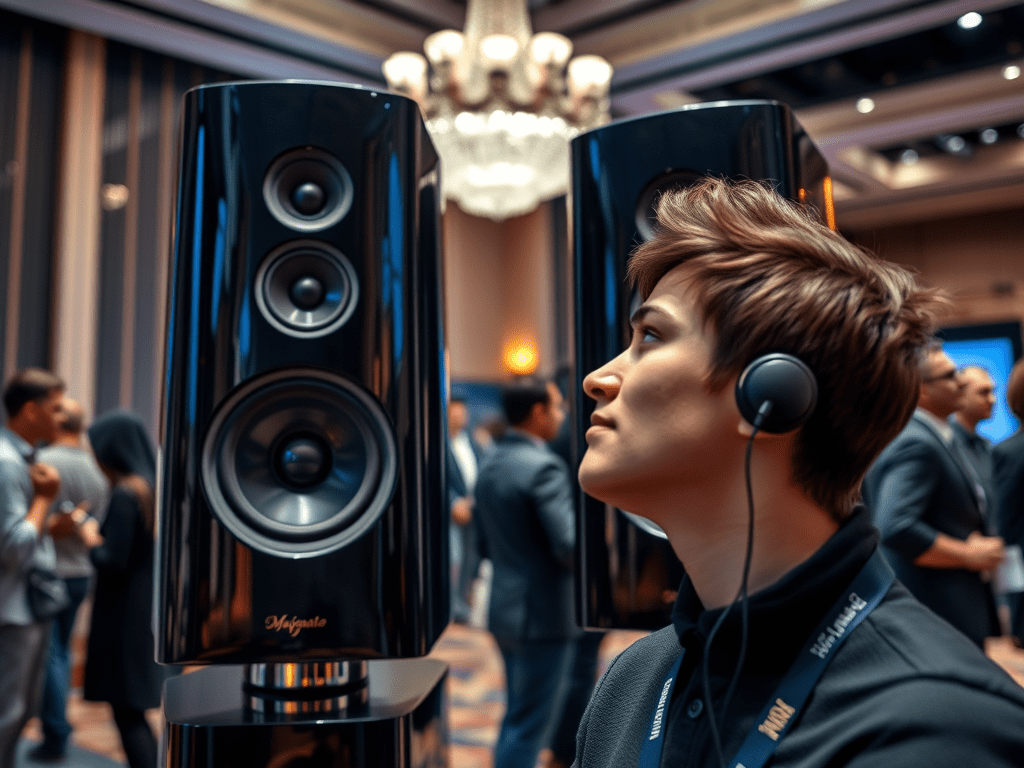
In a shocking turn of events this weekend at the annual XPON High-End Audio Expo, where systems regularly cost more than the GDP of some small countries, attendees were treated to the unveiling of the Majestico X9 speakers. Weighing a modest 1,000 pounds each and retailing at an eye-watering $750,000 per speaker, they promise to deliver the purest sound ever produced by human ingenuity—assuming your home floors have been structurally engineered to withstand their weight.
“The clarity was like nothing I’d ever experienced,” said attendee Gary Simmons, who listened to the system while awkwardly clutching a $14 bottle of convention center water. “But about halfway through the demonstration, I realized I’d forgotten to take my kid to soccer practice. That thought was crystal clear, too.”
Indeed, the Majestico X9—constructed from aerospace-grade aluminum, carbon fiber, and possibly fragments of the Rosetta Stone—claims to transport listeners directly into the recording studio with artists like the Beetones or Beethooven. Early reviewers described the experience as “so real you can smell Paul McCarnaby’s cologne.” However, financial experts warn that potential buyers may smell only buyer’s remorse upon realizing they’ve just spent a small fortune on something incapable of making them love music more than they did yesterday.
Real-world resale examples illustrate the stark reality of luxury audio depreciation. A quick online search reveals listings of gently used $200,000 SoundOrbit turntables now struggling to sell for less than the price of a mid-tier used sedan, highlighting an unspoken yet harsh audiophile truth: your investment depreciates faster than last year’s PinePhone.
Moreover, advancements from less exorbitantly priced competitors—like Arum Canvas, Notifier, and BassChampion from China—consistently demonstrate that “good enough” audio can be achieved for pennies on the dollar. As one anonymous industry insider put it, “Unless your ears can literally hear the difference between gold-plated oxygen-free copper cables and well-made generic copper cables, you might as well admit you’re paying extra for ego, not audio.”
Yet, despite clear signs that ultra-high-end audio gear suffers from diminishing returns, the allure remains. Like art collectors or wine connoisseurs, these audiophiles chase the elusive dragon of sonic perfection. For some, the journey brings genuine joy; for others, a hollow void where their savings once were.
In the end, perhaps the most absurd truth was summed up perfectly by Simmons as he left the event: “I’m heading home to listen to my Spotify playlist on PearPods. At least those fit comfortably in my ears—and my budget.”
Disclaimer: This is a satirical article intended for entertainment purposes only. Any resemblance to real people, companies, or products is purely coincidental. All brand names and characters referenced in this piece are fictionalized parodies. We are not targeting, criticizing, or making factual claims about any real companies or individuals. Actual experiences with high-end audio equipment may vary dramatically. No judgments are intended toward individuals who choose to spend their money as they see fit. After all, sound—like beauty—is in the ear of the beholder.

 EssayBoard
Leave a comment