
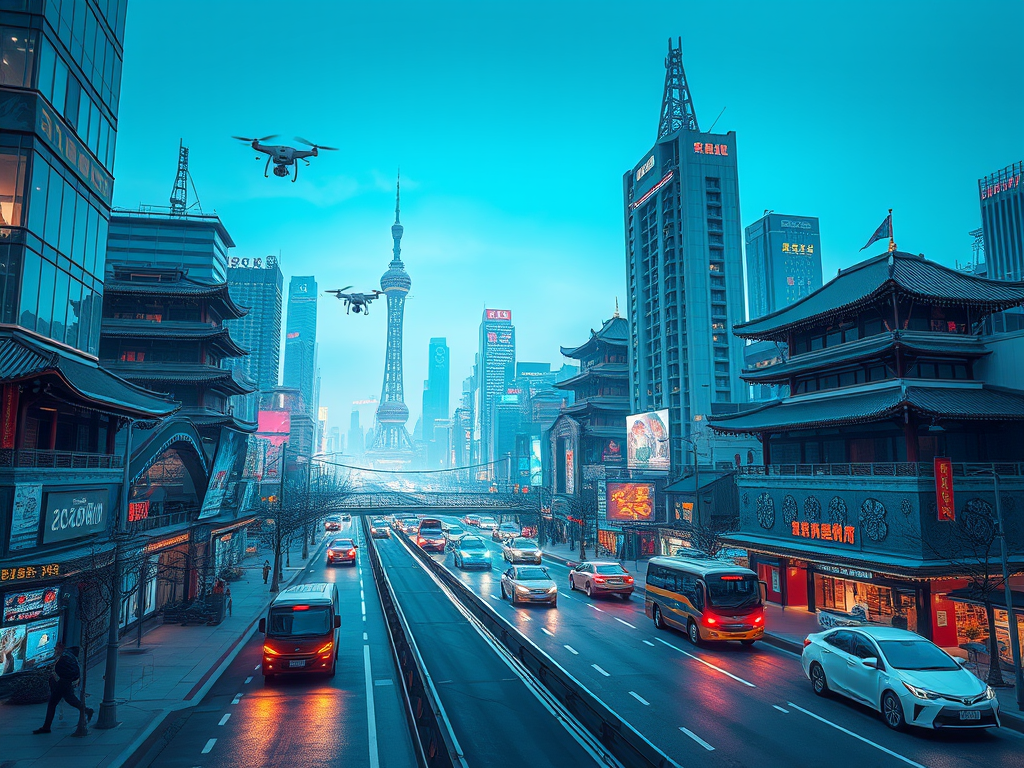
For decades, Silicon Valley has been the global epicenter of technological revolutions—from the rise of personal computers to the advent of the internet and the smartphone era. Companies like Apple, Google, and Microsoft have redefined entire industries and set the pace for global innovation. However, as artificial intelligence (AI) emerges as the next transformative wave, a significant shift appears to be underway. The next revolutionary AI company might not come from the U.S.—it could well emerge from China.
China’s AI Boom: A New Silicon Valley?
China’s rapid advancements in AI research, semiconductor development, and state-led tech initiatives have positioned the country as a formidable player in the global AI race. Unlike the early days of Silicon Valley—where innovation was predominantly driven by private enterprise—China’s AI growth is fueled by a unique blend of corporate ambition and strategic government planning. This integrated approach is helping China build an AI ecosystem that is both vast and deeply connected to national priorities.
1. Brain Drain & Talent Migration
Historically, the U.S. has attracted the world’s top AI researchers. However, recent geopolitical tensions, more restrictive visa policies, and shifting economic incentives have altered that landscape. Increasingly, many experts who once flocked to U.S. tech giants are now choosing to remain in, or even return to, China.
- Case in Point: Companies like DeepSeek AI are emerging as examples of homegrown talent and innovation, reportedly developing language models that, in certain tasks, rival—or even outperform—the early previews of global leaders like GPT-4.
- Nuance: While not all talent is leaving Silicon Valley, these trends suggest a growing consolidation of AI expertise within China, bolstered by both public and private sector support.
2. Government-Backed AI Development
The Chinese government has identified AI as a strategic priority, allocating billions of dollars to support research, semiconductor production, and cloud infrastructure. This state-backed approach enables rapid scaling and deep integration of AI technologies into national infrastructure.
- Advantages:
- Rapid Resource Deployment: Large-scale investments and coordinated national policies help accelerate AI research and deployment.
- Ecosystem Integration: AI is woven into the fabric of public services, urban development, and industrial processes.
- Considerations:
- Centralized Priorities: While this model can fast-track innovation, it might also limit the scope of research to areas aligned with government objectives rather than market-driven consumer needs.
3. AI in Everyday Life
China’s AI integration extends across multiple industries, making advanced technology a part of daily life:
- Baidu: Leveraging AI in search and smart assistants to rival Western counterparts.
- Alibaba & Tencent: Employing AI in e-commerce, finance, and social media, reaching billions of users.
- Smart Cities & Beyond: From AI-driven public transportation to advanced surveillance systems, Chinese cities are increasingly transformed by integrated AI solutions.
This widespread adoption demonstrates that AI isn’t confined to high-tech labs but is actively reshaping everyday experiences.
4. Where Could the Next “Apple of AI” Emerge?
If we are to identify a company that could redefine an entire industry—much like Apple did for consumer electronics—several promising avenues in China stand out:
a. AI Hardware: China’s Answer to Nvidia?
China is investing heavily in developing its own AI chips to reduce reliance on U.S.-based companies like Nvidia and AMD. Firms such as Huawei, SMIC, and Biren Technology are making strides in creating domestic AI accelerators.
- Potential Impact: A breakthrough in chip technology could establish a domestic semiconductor giant, positioning China as a central player in the global AI supply chain.
b. AI Assistants & Smart Wearables: The Next iPhone Moment
While AI has already transformed smartphones, the next leap may come from AI-powered wearables—smart glasses and other innovative devices that blend digital and physical experiences.
- Competitive Landscape: Although global giants like Meta and Apple are investing in this space, Chinese companies like Xiaomi, Huawei, and ByteDance are also pushing the envelope. A breakthrough consumer device could ignite a trillion-dollar industry.
c. AI-Powered Automation & Robotics
China’s advancements in robotics and automation—exemplified by companies such as DJI (in drones) and UBTech (in humanoid robots)—highlight its potential to revolutionize manufacturing and logistics.
- Parallel with Tesla: Just as Tesla redefined the automotive industry with a focus on sustainable technology, a Chinese company specializing in AI-driven automation could become a transformative force across multiple sectors.
5. Challenges & Risks: Can China’s AI Companies Dominate Globally?
Despite these impressive advancements, several significant hurdles remain:
- Export Restrictions: U.S. semiconductor sanctions and export controls limit China’s access to advanced chip technologies, potentially slowing progress in critical areas.
- Geopolitical Risks: Global markets might hesitate to adopt Chinese AI solutions amid ongoing concerns about data security, privacy, and political influence.
- Branding and Trust: While companies like Apple and Google have built strong international reputations, many Chinese AI firms remain primarily domestically focused. Building a globally trusted brand will be a crucial step in achieving worldwide dominance.
6. Investment Opportunities: How Can Investors Get Exposure to China’s AI Boom?
For investors, gaining exposure to China’s AI revolution is both an opportunity and a challenge. Despite market restrictions and geopolitical risks, several publicly traded companies provide indirect access to this burgeoning field:
- Baidu (BIDU): A leader in AI-powered search, autonomous driving, and smart assistants.
- Alibaba (BABA): Dominant in AI-driven cloud computing, logistics, and e-commerce.
- Tencent (TCEHY): A major player in AI-enhanced gaming, social media, and financial services.
- TSMC (TSM): A critical supplier of AI hardware, serving both Chinese and global tech companies.
- ASML (ASML): A key supplier in the semiconductor manufacturing process, essential to the global AI ecosystem.
Investors should note that while the potential for growth is substantial, so are the associated risks due to geopolitical and regulatory uncertainties.
Final Thoughts: The Global AI Landscape is Evolving
The next Apple of AI might not emerge from Silicon Valley; it could be nurtured in the innovation hubs of Shenzhen, Beijing, or Shanghai. China’s robust state-backed initiatives, combined with a rapidly evolving tech ecosystem, create a compelling case for its leading role in the future of AI. At the same time, global competition remains fierce, and the path to international dominance will require overcoming challenges related to technology access, market trust, and geopolitical tensions.
The ongoing AI revolution is a story of many chapters—one that will likely feature groundbreaking innovations from multiple corners of the world. For investors, innovators, and tech enthusiasts alike, watching China’s AI ecosystem evolve could offer early insights into the next big breakthrough in our increasingly interconnected world.
So, will the next AI giant be born in China, or will it come from a more traditional tech hub? Only time—and continued innovation—will tell.

 EssayBoard
Leave a comment