
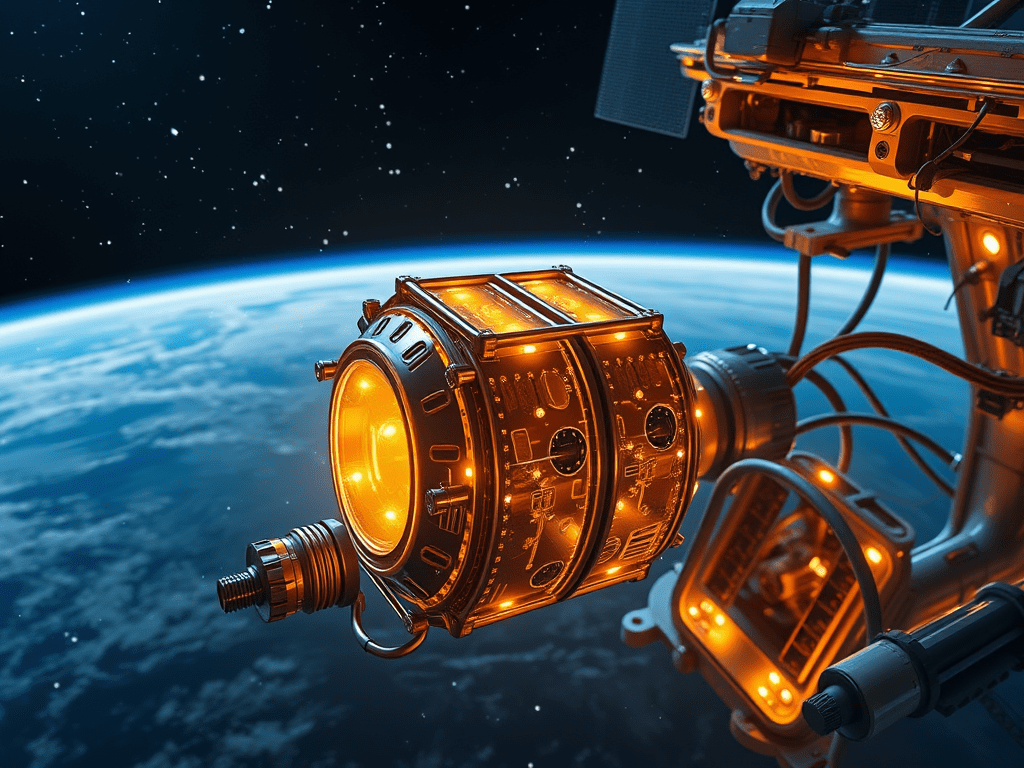
Space exploration has always pushed humanity to innovate, but China’s latest achievement aboard the Tiangong Space Station might be one of the most groundbreaking yet. By developing and successfully testing artificial photosynthesis in space, Chinese scientists have introduced a game-changing technology that promises to transform the way we approach long-term missions, lunar bases, and potentially life on Mars.
Let’s dive into the innovative processes behind this technology, its revolutionary features, and why this could be a cornerstone of future space exploration.
The Innovative Process: How Artificial Photosynthesis Works
Artificial photosynthesis mimics the process plants use to convert sunlight, carbon dioxide, and water into energy, but with a futuristic twist. Instead of relying on chlorophyll and leaves, Chinese scientists have designed advanced semiconductor catalysts that achieve similar results under space conditions.
Here’s how the process works:
- Inputs: Carbon dioxide (exhaled by astronauts) and water (a vital resource carried onboard or recycled).
- Semiconductor Catalysts: These catalysts, embedded in a compact, drawer-shaped apparatus, use light or electricity to trigger a chemical reaction. This splits water into oxygen and other useful compounds like ethylene (a hydrocarbon that can be used as rocket fuel).
- Microgravity Optimization: The system is engineered to function in microgravity, overcoming challenges like controlling gas and liquid flows in space.
- Energy Efficiency: Unlike traditional methods, this system operates at room temperature and pressure, drastically reducing energy consumption.
Revolutionary Features Compared to Traditional Methods
1. Efficiency
- Artificial Photosynthesis: Operates at lower temperatures and pressures, requiring far less energy than traditional systems.
- Electrolysis (Traditional Method): The standard for producing oxygen in space, but it consumes about one-third of the energy allocated to life support systems on the International Space Station (ISS).
2. Versatility
- Artificial photosynthesis produces multiple outputs: oxygen for breathing, ethylene for rocket fuel, and even other chemicals like methane or formic acid for future applications.
- Electrolysis, while efficient at producing oxygen, offers no byproducts except hydrogen, which must be carefully stored or discarded.
3. Adaptability
- The artificial photosynthesis system is designed for in-orbit upgrades, allowing scientists to experiment with new catalysts or adjust outputs depending on mission needs.
- Traditional electrolysis systems are more rigid and optimized solely for oxygen production.
Why This is a Game-Changer
This technology’s implications for space exploration are profound. Here’s why:
- Sustainability in Space:
- Missions to the Moon, Mars, or beyond require sustainable life-support systems. This technology reduces reliance on Earth for oxygen or fuel resupply, paving the way for self-sufficient outposts.
- Cost-Effectiveness:
- Launching payloads like oxygen tanks or fuel is expensive. Producing these resources directly in space drastically cuts costs and allows for more versatile mission planning.
- Boosting Exploration Range:
- Refueling spacecraft mid-mission becomes feasible. Imagine a lunar outpost that produces its own fuel for journeys to Mars or deeper into the solar system.
- Potential on Earth:
- Beyond space, this technology could revolutionize industries on Earth. By producing oxygen and hydrocarbons more efficiently, it could aid in clean energy production, carbon capture, and sustainable fuel synthesis.
Future Applications: Where Could This Lead?
- Lunar Bases:
- Artificial photosynthesis could become the backbone of life-support systems for permanent lunar colonies. It could produce oxygen from recycled CO₂ and water sourced from lunar ice.
- Mars Missions:
- Mars’ thin atmosphere is mostly carbon dioxide, making it a perfect resource for oxygen production. Combined with ice deposits, this system could support long-term human presence on Mars.
- Deep-Space Exploration:
- For interplanetary missions, the ability to create oxygen and fuel on the go extends mission duration and range significantly.
- Earth-Based Solutions:
- On Earth, this system could help in urban areas with high CO₂ levels, converting waste emissions into usable fuel and breathable air.
Can the U.S. Catch Up?
The United States, through NASA and private companies like SpaceX, has long been a leader in space innovation. While the U.S. has focused on oxygen production through electrolysis (e.g., on the ISS), this Chinese advancement shows a more versatile and energy-efficient approach. Could the U.S. replicate or leapfrog this technology?
- Replication: The U.S. could adapt the same concept of artificial photosynthesis, leveraging its strong semiconductor and materials science industries to develop competitive systems.
- Collaboration: International partnerships (e.g., NASA’s Artemis program) could benefit from integrating this technology into future lunar or Martian missions.
- Private Sector: Companies like SpaceX and Blue Origin are poised to integrate cutting-edge technologies. They could adapt artificial photosynthesis for commercial missions and deep-space exploration.
My Two Cents
China’s artificial photosynthesis system represents a paradigm shift in space exploration. It’s not just about producing oxygen; it’s about creating self-sustaining ecosystems that turn waste (CO₂) into life-sustaining resources and rocket fuel. This aligns perfectly with humanity’s goals of colonizing the Moon, Mars, and beyond.
For the U.S., this is both a wake-up call and an opportunity. While the U.S. has traditionally led in space technology, this breakthrough underscores the need to innovate faster and embrace versatile solutions. Whether through competition or collaboration, technologies like this will define the future of space exploration.
The big takeaway? The next phase of space exploration won’t just be about reaching new frontiers—it will be about thriving there. With artificial photosynthesis, the dream of humans becoming a multi-planetary species feels closer than ever.


 EssayBoard
Leave a comment