
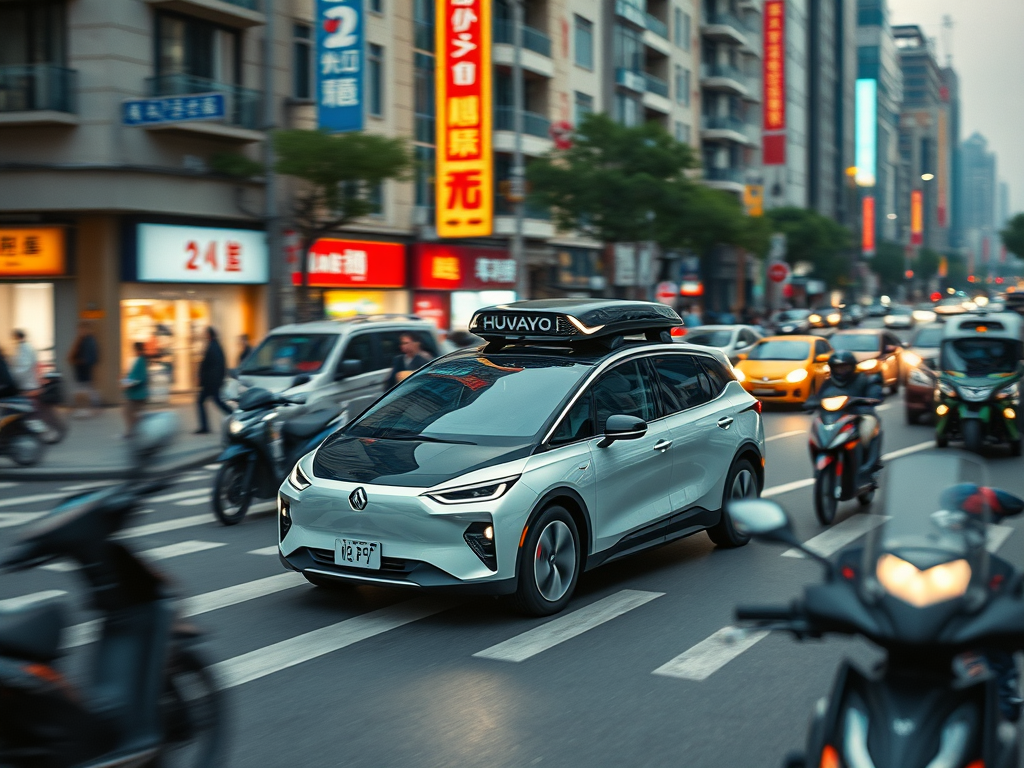
In recent years, China has become a hotbed of innovation in the automotive sector, particularly in the realm of autonomous driving technology. At the forefront of this wave of innovation is Huawei, the tech giant traditionally known for its prowess in telecommunications. Huawei, in collaboration with automotive partners like Changan and battery powerhouse CATL, has developed the Qiankun 3.0 system—a breakthrough that has caught the attention of the global automotive industry. As these advancements unfold, it’s clear that non-Chinese carmakers have reason to be concerned about their competitive standing. The rapid pace of development in China’s autonomous driving field signals a shift that could leave Western automakers scrambling to keep up.
Setting the Standard: Huawei’s Qiankun 3.0
The recent unveiling and test drive of Huawei’s Qiankun 3.0 system in Kunming offered a glimpse into what the future of autonomous driving might look like. The system was tested in an Avatar 1-2 vehicle, navigating a complex urban environment filled with unpredictable traffic situations, including unmarked roads, scooters weaving through traffic, and chaotic intersections. The Qiankun 3.0 system handled these challenges with confidence and agility, traits that have often eluded even the most advanced Western autonomous driving systems.
The test, conducted by the Inside China Auto YouTube channel, demonstrated the system’s capability to handle a range of scenarios with minimal human intervention. The presenter remarked that the system was the most confident and responsive they had tested in China, outperforming competitors like Xpeng’s XNGP. This is no small feat, considering that China’s urban driving conditions are among the most challenging in the world. For non-Chinese carmakers, the implication is clear: to compete, they must not only match but exceed the capabilities of systems like Qiankun 3.0, which have been tailored to excel in such demanding environments.
Why This Matters: The Importance of Local Adaptation
One of the key strengths of Huawei’s Qiankun 3.0 system is its ability to adapt to the unique driving conditions found in China. Unlike Tesla’s FSD, which has been primarily trained on American roads, Huawei’s system is designed to navigate the often chaotic and unpredictable nature of Chinese traffic. For instance, during the test drive, the system effectively managed complex junctions, negotiated with aggressive drivers, and responded to erratic behavior from other road users—all while maintaining a smooth and controlled driving experience.
This level of local adaptation is something that non-Chinese carmakers have struggled to achieve. The challenge lies not only in the technological development but also in understanding and integrating into the local infrastructure and driving culture. As a result, Western automakers may find themselves at a disadvantage, as their systems, which may perform admirably in Western contexts, could falter in the dynamic and rapidly evolving Chinese market.
The Strategic Partnership Model: A Game Changer
Another aspect of concern for non-Chinese carmakers is the strategic partnership model that has become prevalent in China. The collaboration between Huawei, Changan, and CATL exemplifies a powerful alliance that leverages each partner’s strengths—Huawei’s expertise in technology and software, Changan’s automotive manufacturing capabilities, and CATL’s leadership in battery technology. This integrated approach allows for faster development cycles, seamless integration of new technologies, and a more robust product offering.
Such partnerships are not as common in the West, where automotive and tech companies often operate in silos or engage in limited, project-based collaborations. The holistic nature of Chinese partnerships means that they can bring new technologies to market more quickly and effectively, leaving Western automakers struggling to keep up with the pace of innovation. For non-Chinese carmakers, the message is clear: adapt to this new collaborative model or risk being left behind.
Autonomy and Confidence: The Huawei Advantage
During the test drive in Kunming, Huawei’s Qiankun 3.0 system demonstrated a level of confidence that sets it apart from other systems. It navigated complex road conditions, including construction zones, temporary road barriers, and erratically behaving pedestrians and vehicles. The system’s ability to make quick, confident decisions in such environments is a significant advancement. It managed situations like negotiating a roundabout where many other systems would hesitate or require human intervention. This performance reflects a maturity in Huawei’s technology that is poised to challenge even the most established players in the autonomous driving space.
The presenter noted that while there were a few instances where human intervention was necessary—such as at unmarked junctions or during sudden road condition changes—the overall performance was exceptionally high. This capability is particularly concerning for non-Chinese carmakers because it shows that Huawei’s system is not just a concept or a lab prototype but a functional, deployable technology that is already outperforming existing solutions in real-world conditions.
The Bigger Picture: Implications for the Global Market
The implications of Huawei’s progress extend far beyond China’s borders. As the company refines and scales its technology, it is likely to seek entry into international markets, posing a direct challenge to established brands like Tesla, Waymo, and traditional automakers dabbling in autonomous tech. Given the competitive pricing and the level of sophistication already displayed by the Qiankun 3.0 system, it’s conceivable that Huawei could undercut its competitors while offering superior technology—an unsettling prospect for non-Chinese carmakers who have invested billions into their autonomous driving R&D.
Moreover, the rapid pace at which Huawei and its partners are developing these technologies suggests that the gap between Chinese and Western autonomous driving capabilities could close much faster than many industry experts have anticipated. This acceleration is particularly troubling for non-Chinese carmakers because it threatens to erode their technological leadership, which has been a cornerstone of their competitive strategy for years.
Looking Ahead: The Need for a Response
For non-Chinese carmakers, the message is clear: complacency is not an option. The advancements made by Huawei and its partners represent a significant threat to the established order in the global automotive industry. To remain competitive, Western automakers must not only innovate faster but also rethink their approach to collaboration and market adaptation.
This means investing more in understanding the unique challenges of markets like China and developing solutions that are tailored to these environments. It also means forging deeper partnerships with tech companies and other stakeholders to accelerate the development and deployment of new technologies. Failure to do so could result in a scenario where non-Chinese carmakers are not just playing catch-up but are left behind altogether.
Conclusion: A New Era of Competition
The partnership between Huawei, Changan, and CATL is more than just a collaboration—it is a signal of China’s intent to lead in the future of autonomous driving. The Qiankun 3.0 system represents a significant leap forward in capability and confidence, setting a high bar for competitors worldwide. As non-Chinese carmakers watch these developments unfold, they must grapple with the reality that the center of gravity in the autonomous driving space may be shifting eastward.
In this new era of competition, the stakes are higher than ever. For non-Chinese carmakers, the challenge is not just to keep pace but to redefine the terms of the race. As Huawei and its partners continue to push the boundaries of what is possible, the global automotive industry is poised for a period of profound transformation. The question now is not whether non-Chinese carmakers can catch up, but whether they can keep up with the relentless pace of innovation emerging from China.

 EssayBoard
Leave a comment