
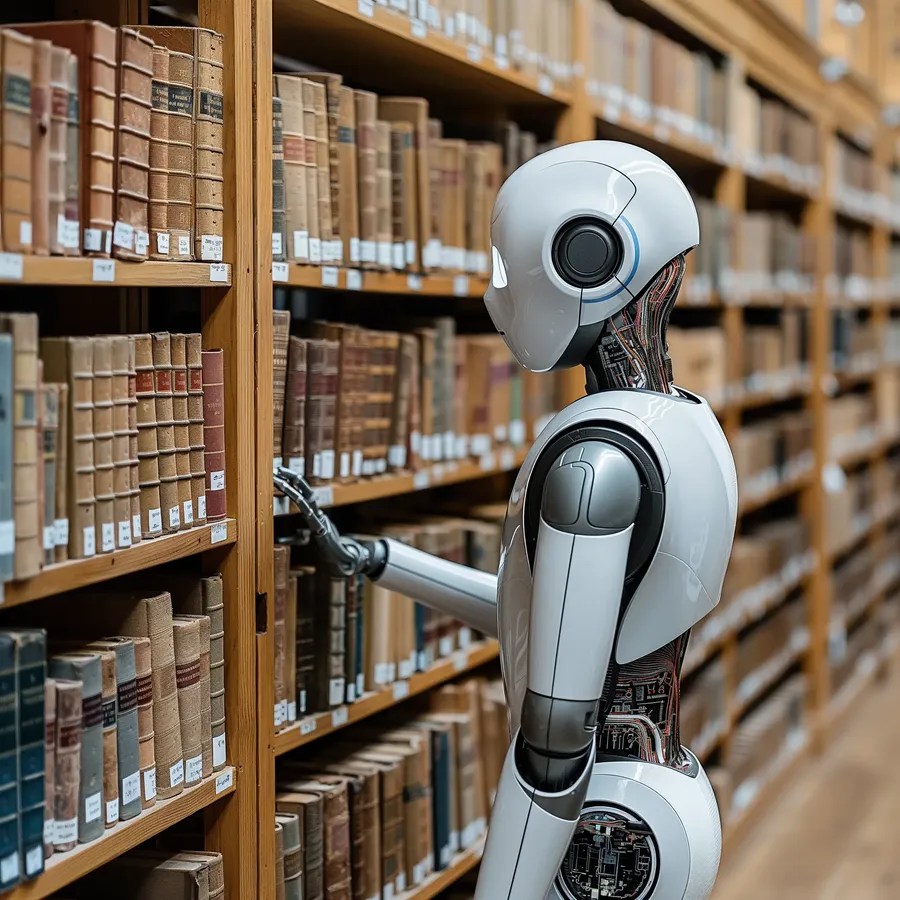
In the rapidly evolving landscape of artificial intelligence, a groundbreaking technology emerges, casting a vibrant glow on the horizon of knowledge extraction and utilization. Known as Retrieval-Augmented Generation (RAG), this innovative AI model marries the depth of understanding with the precision of information retrieval, creating a hybrid system that is transforming how we interact with data.
At its core, RAG AI operates on a two-pronged approach. Firstly, it dives into vast oceans of structured and unstructured data, retrieving relevant information like a skilled archivist in a labyrinthine library of the digital age. This retrieval process is not merely about fetching data but understanding the context in which information is sought. It’s akin to having an intelligent agent who not only knows where everything is stored but also understands the significance of each piece of information.
Once the relevant data is harnessed, the second phase begins—the generation. Here, RAG AI seamlessly integrates the retrieved data with advanced language models, crafting responses that are not just accurate but contextually enriched. Imagine conversing with a sage who, in real-time, pulls from the collective knowledge of the world, providing insights that are both precise and profoundly tailored to the nuances of the query.
This dynamic interplay between retrieval and generation makes RAG AI an exceptional tool across various domains. In research, it serves as an indefatigable research assistant, capable of sifting through countless documents to provide researchers with the most relevant citations and summaries. For businesses, it acts as an insightful consultant, pulling industry reports and market data to offer strategic advice that is data-driven and timely.
The elegance of RAG AI lies not just in its functionality but in its potential to democratize information. It breaks down the barriers that often segregate specialized knowledge, making it accessible to anyone with a question. Whether it’s a student in a remote village looking for the latest in scientific research or a small business owner in a bustling city trying to understand market trends, RAG AI extends its capabilities to all, ensuring that information is no longer a privilege but a universally accessible resource.
A Comparative Analysis: Unveiling the Advantages of RAG AI in Contrast to Traditional and Contemporary AI Technologies
In the ever-evolving landscape of artificial intelligence, conducting a comparative analysis between Retrieval-Augmented Generation (RAG) AI and traditional or contemporary AI models offers valuable insights into the unique contributions and potential improvements offered by RAG. By juxtaposing RAG AI with existing paradigms, we can elucidate its advantages, limitations, and distinctive features, thus providing a clearer picture of its transformative potential in the field of AI.
1. Enhanced Contextual Understanding:
Traditional AI models often struggle to comprehend the nuanced context of user queries or tasks, leading to generic or irrelevant responses. In contrast, RAG AI excels in contextual understanding by integrating retrieval capabilities with advanced language models. This dynamic interplay allows RAG to retrieve and generate responses tailored to the specific context of the query, thereby enhancing the relevance and accuracy of AI-generated content.
2. Dynamic Adaptability:
Contemporary AI technologies, such as deep learning models, exhibit remarkable capabilities in learning patterns from large datasets. However, they often lack adaptability to evolving information landscapes or user requirements. RAG AI addresses this limitation through its dynamic retrieval mechanism, which enables real-time access to external knowledge sources. By continuously updating its retrieval database, RAG remains responsive to changes in information relevance and user preferences, thereby ensuring adaptive and up-to-date responses.
3. Integration of External Knowledge:
While traditional AI models rely primarily on pre-trained data embedded during the training phase, RAG AI augments its knowledge base with external sources in real-time. This integration of external knowledge enhances the depth and breadth of information accessible to the AI system, enabling more comprehensive and insightful responses. Whether accessing domain-specific databases or the vast repository of the internet, RAG leverages external knowledge to enrich its understanding and generate contextually relevant content.
4. Contextual Embedding and Synthesis:
In contrast to traditional retrieval systems that often rely on keyword matching, RAG AI employs advanced techniques such as dense retrieval and sequence-to-sequence models. These mechanisms enable RAG to capture deeper semantic meanings and seamlessly integrate retrieved information into the context of the ongoing task. By preserving coherence and syntactic correctness, RAG generates responses that are not only relevant but also contextually enriched, thereby enhancing the overall user experience.
Technical Insights into RAG AI: A Closer Look at its Core Mechanisms
Retrieval-Augmented Generation (RAG) AI represents a sophisticated blend of natural language processing techniques and retrieval-based learning, crafting a framework that enhances the functionality and applicability of AI systems. This section delves into the technical backbone of RAG AI, exploring how it integrates with existing AI systems, the unique machine learning models it employs, and the specific challenges it addresses in retrieval and generation.
Integration with Existing AI Systems
RAG AI primarily enhances traditional language models by integrating retrieval capabilities directly into the generation process. This integration allows RAG AI to leverage external knowledge bases dynamically, contrasting sharply with traditional models that rely solely on pre-trained information embedded during the training phase. For instance, when integrated with a language model like GPT (Generative Pre-trained Transformer), RAG can augment its responses with up-to-date, relevant information fetched in real-time from various databases or the internet.
Unique Machine Learning Models
The architecture of RAG AI combines transformer-based language models with a neural retriever. The neural retriever is typically built on a dense vector space model where documents and queries are encoded into high-dimensional vectors. These vectors are then used to compute similarities, allowing the system to retrieve the most relevant documents for any given query. The uniqueness of RAG lies in its ability to seamlessly stitch the retrieved information into the context of the ongoing task, enabling the generation of responses that are both contextually aware and richly informative.
Key components of RAG AI include:
- Dense Retrieval: Unlike traditional retrieval systems that rely on keyword matching, RAG uses dense retrieval techniques to understand the semantic content of both the questions and the documents. This approach uses deep learning to create embeddings that capture deeper meanings beyond mere keywords.
- Sequence-to-Sequence Models: For generating responses, RAG employs sequence-to-sequence models which transform the input query and retrieved documents into a coherent answer. This process involves complex mechanisms of attention and contextual understanding, ensuring that the generated responses are not only relevant but also syntactically and semantically correct.
Addressing Challenges in Retrieval and Generation
RAG AI tackles several challenges inherent in both the retrieval and generation aspects of AI:
- Relevance of Information: Ensuring that the retrieved information is highly relevant to the query is paramount. RAG addresses this by using advanced similarity measures and continuously updating its retrieval database to include recent information, which helps maintain the accuracy and relevancy of responses.
- Seamless Integration of Retrieved Data: Incorporating external data into a generated response without losing coherence is challenging. RAG AI uses advanced contextual embedding techniques to blend the retrieved information smoothly with the generated content.
- Scalability and Efficiency: Handling large volumes of data and delivering responses in real-time requires efficient algorithms. RAG utilizes optimized indexing and query processing techniques to maintain high performance even as the dataset grows.
By bridging the gap between retrieval accuracy and generative flexibility, RAG AI not only enhances the depth and breadth of AI-generated content but also pushes the boundaries of what AI systems can achieve in complex information environments. This hybrid model stands as a testament to the ongoing evolution in the field of artificial intelligence, promising more dynamic, knowledgeable, and contextually aware AI systems.
Unveiling the Brilliance of NotebookLM: Bringing RAG to the Masses
In the rapidly evolving landscape of artificial intelligence, a groundbreaking technology emerges from the laboratories of Google, casting a vibrant glow on the horizon of knowledge extraction and utilization. Known as NotebookLM, this experimental offering from Google Labs reimagines the traditional notetaking software, leveraging the power of language models to transform how people interact with information.
At its core, NotebookLM operates on a similar two-pronged approach as Retrieval-Augmented Generation (RAG) AI. Firstly, it harnesses the power of language models to understand and synthesize information from multiple sources, akin to a virtual research assistant with access to an extensive library of knowledge. This process isn’t just about collecting data but about distilling insights from the vast sea of information available.
Once the relevant information is synthesized, the second phase begins—the generation. NotebookLM seamlessly integrates the synthesized knowledge with advanced language models, crafting responses that are not only accurate but also contextually enriched. It’s like having a knowledgeable companion who can provide summaries, explanations, and even brainstorm new ideas based on the sources you’ve selected.
This dynamic interplay between synthesis and generation makes NotebookLM an exceptional tool for a wide range of users. From students looking to understand complex topics to professionals seeking insights for their projects, NotebookLM democratizes access to synthesized information, making it accessible to anyone with a question or a need for insight.
Technical Insights into NotebookLM: RAG for Everyone
NotebookLM represents a sophisticated blend of natural language processing techniques and retrieval-based learning, similar to the core mechanisms of RAG AI. Let’s delve into the technical backbone of NotebookLM and explore how it brings RAG capabilities to the masses.
Integration with Existing Notetaking Software
NotebookLM enhances traditional notetaking software by integrating language model capabilities directly into the synthesis and generation process. Unlike traditional note-taking tools, NotebookLM leverages language models to automatically generate summaries, explanations, and new ideas based on the content you upload. This integration allows users to ground the language model in their notes and sources, creating a personalized AI assistant versed in the information relevant to them.
Unique Machine Learning Models
The architecture of NotebookLM combines transformer-based language models with retrieval capabilities, similar to RAG AI. The language model processes the uploaded content, while the retrieval component ensures that the synthesized information is relevant and accurate. This hybrid approach enables NotebookLM to generate responses that are contextually aware and richly informative, enhancing the depth and breadth of AI-generated content for everyone.
Key components of NotebookLM include:
- Source Grounding: NotebookLM allows users to ground the language model in their notes and sources, creating a personalized AI assistant versed in the information relevant to them. This ensures that the generated responses are tailored to the user’s specific needs and preferences.
- Automatic Summarization: NotebookLM automatically generates summaries, key topics, and questions based on the content uploaded by the user. This feature enables users to gain critical insights from their notes and sources quickly and efficiently.
- Q&A and Idea Generation: In addition to summarization, NotebookLM supports Q&A and idea generation based on the uploaded content. Users can ask questions or request creative ideas, and NotebookLM will generate responses based on the synthesized information.
By bringing RAG capabilities to the masses, NotebookLM not only enhances the way people interact with information but also empowers them to gain critical insights faster and more efficiently. As we continue to refine and develop this experimental offering, NotebookLM stands as a testament to the ongoing evolution of AI technology and its potential to transform how we learn, work, and innovate.
Democratizing RAG: Making Advanced AI Accessible with Google NotebookLM
Building a custom Retrieval-Augmented Generation (RAG) model is indeed a complex and challenging task, requiring a combination of skills, tools, and resources. While services like Clarifai offer solutions for building RAG models in the cloud, there may be concerns about trusting a new service. However, Google NotebookLM presents a reputable and intuitive alternative, potentially becoming RAG for everyone due to its user-friendly interface and Google’s longstanding reputation for quality and innovation.
Here’s an overview of the skills, tools, and resources needed to build a custom RAG model:
Skills:
- Proficiency in Natural Language Processing (NLP): A deep understanding of NLP techniques is essential for processing and analyzing textual data, including techniques such as tokenization, syntactic analysis, and semantic understanding.
- Machine Learning and Deep Learning: Knowledge of machine learning algorithms and deep learning frameworks like TensorFlow or PyTorch is crucial for training and fine-tuning language models used in RAG.
- Information Retrieval: Understanding information retrieval techniques is necessary for retrieving relevant documents or passages from large datasets based on user queries.
- Programming: Proficiency in programming languages like Python is required for implementing and integrating various components of the RAG model.
Tools:
- Language Models: Utilizing pre-trained language models like OpenAI’s GPT (Generative Pre-trained Transformer) or Google’s BERT (Bidirectional Encoder Representations from Transformers) as the backbone of the RAG model.
- Data Annotation Tools: Tools for annotating and labeling training data are essential for supervised learning tasks, enabling the model to learn from labeled examples.
- Development Environments: Integrated development environments (IDEs) like Jupyter Notebook or Google Colab provide a convenient environment for writing, testing, and debugging code.
- Version Control Systems: Using version control systems like Git for managing code repositories and collaborating with team members on RAG model development.
Resources:
- Datasets: Access to large and diverse datasets is critical for training RAG models effectively. Commonly used datasets include Wikipedia articles, scientific papers, and web documents.
- Research Papers and Documentation: Studying research papers and documentation on RAG techniques, language models, and best practices is essential for gaining insights and staying updated on the latest advancements.
- Online Courses and Tutorials: Enrolling in online courses or following tutorials on NLP, machine learning, and deep learning can help acquire the necessary skills and knowledge for building RAG models.
- Community Support: Engaging with online communities, forums, and discussion groups related to AI and NLP can provide valuable support, advice, and collaboration opportunities during the RAG model development process.
While building a custom RAG model from scratch requires significant expertise and resources, Google NotebookLM offers a user-friendly and intuitive alternative that leverages Google’s reputation and expertise in AI and natural language processing. With its accessible interface and powerful capabilities, NotebookLM has the potential to democratize access to RAG technology, making it accessible to a broader audience of users.
Navigating the Boundaries: Limitations of Google’s NotebookLM as a Retrieval-Augmented Generation (RAG) Tool
As we embark on the journey of harnessing the power of Retrieval-Augmented Generation (RAG) technology through Google’s NotebookLM, it’s essential to recognize the boundaries that frame its capabilities. While NotebookLM represents a significant leap forward in democratizing access to synthesized information, it does come with certain limitations that users need to navigate.
Source Limitation:
One of the notable constraints of NotebookLM is the imposition of a source limit. Users are currently restricted to including a maximum of 20 distinct sources within a single notebook. These sources encompass various forms, including Google Docs files, PDFs, and copied text from digital platforms. While this limitation may suffice for many users, particularly for standard research or study needs, it can pose challenges for individuals dealing with extensive or diverse sets of information.
Word Count Constraint:
Each source integrated into NotebookLM is subjected to a word count limit, capped at 200,000 words per source. While this threshold is generous and accommodates a wide range of documents, it’s imperative to be mindful of lengthy sources. Exceeding this limit might result in import issues, potentially disrupting the seamless integration of information into NotebookLM. Users handling comprehensive documents or compiling extensive research may find this constraint restricting their workflow.
Supported Formats:
NotebookLM facilitates smooth integration by supporting specific formats for sources. Google Docs files can be directly linked to notebooks, ensuring synchronization with any changes made in the original document. PDFs, whether uploaded directly or linked from public sources, are also supported, albeit with a caveat regarding password-protected files. Additionally, copied text from websites or other platforms can be pasted into NotebookLM, preserving formatting and structure.
Mitigating Constraints:
While these limitations may present challenges, users can adopt strategies to mitigate their impact and maximize the utility of NotebookLM. Prioritizing sources and content selection can help streamline information integration within the prescribed limits. Additionally, users can leverage tools or techniques for summarization and condensation to manage extensive documents within the word count constraints effectively.
Future Enhancements:
As Google continues to refine and develop NotebookLM, addressing these limitations could be a focal point for future enhancements. Expanding the source limit, refining word count constraints, and augmenting support for diverse formats may further enrich the user experience and extend the applicability of NotebookLM across a broader spectrum of use cases.
In navigating these boundaries, users can harness the transformative potential of NotebookLM while acknowledging and adapting to its current constraints. As we strive to unlock the full capabilities of RAG technology, understanding and working within these limitations pave the way for more effective information synthesis and utilization in the digital age.
Embracing Customization: Why Building Your Own RAG Model Prevails Over Google’s NotebookLM
While Google’s NotebookLM offers a compelling entry point into the realm of Retrieval-Augmented Generation (RAG), the decision to create a custom RAG model remains paramount for users seeking unparalleled flexibility, scalability, and control over their AI-powered information synthesis tools. Here’s why:
Tailored Solutions:
Building your own RAG model empowers you to tailor every aspect of the system to your specific needs and preferences. From fine-tuning retrieval algorithms to optimizing generation mechanisms, custom RAG models offer a level of customization unattainable through pre-packaged solutions like NotebookLM. This bespoke approach ensures that the AI system aligns precisely with your workflow, objectives, and domain expertise.
Unrestricted Capabilities:
Unlike NotebookLM, which imposes limitations on source count and word count, a custom RAG model offers unrestricted capabilities in data integration and processing. With the ability to scale resources and adapt algorithms to handle diverse datasets and extensive documents, custom RAG models excel in managing complex information environments without compromising performance or efficiency. Whether dealing with vast corpora of academic literature or real-time data streams, the flexibility of a custom model accommodates diverse use cases seamlessly.
Enhanced Control and Security:
Creating your own RAG model affords greater control over data privacy, security, and compliance considerations. By hosting the system on internal infrastructure or utilizing trusted cloud providers with stringent security measures, users can safeguard sensitive information and maintain regulatory compliance. Additionally, custom RAG models offer granular control over data processing pipelines, ensuring adherence to organizational policies and ethical standards.
Continuous Innovation and Adaptation:
The process of building and maintaining a custom RAG model fosters a culture of continuous innovation and adaptation. Through iterative development cycles, users can incorporate the latest advancements in natural language processing, information retrieval, and machine learning techniques into their RAG system. This agility enables organizations to stay ahead of evolving information landscapes, leverage emerging technologies, and drive innovation in knowledge extraction and utilization.
Empowerment and Ownership:
Creating your own RAG model instills a sense of empowerment and ownership over the technology stack powering your information synthesis workflows. By engaging in the development process, users gain deep insights into the inner workings of AI systems, fostering a deeper understanding of their capabilities and limitations. This hands-on approach encourages experimentation, creativity, and interdisciplinary collaboration, empowering users to push the boundaries of AI-driven knowledge extraction and utilization.
Summary
As we stand on the brink of this new era, the implications of RAG AI are profound. It promises a future where the gap between question and understanding is not just narrowed but closed, where the depth of human curiosity is matched by the immediacy and accuracy of artificial intelligence.
Indeed, RAG AI is not just a tool; it is a testament to the ingenuity of human intellect and its relentless pursuit of knowledge. It is a beacon that guides us towards a more informed and enlightened world, where information is the key that unlocks the vast potentials of human endeavor. With each query it processes and each answer it generates, RAG AI reshapes our relationship with information, setting a new standard for what machines can achieve and inspiring a wave of innovations that will redefine the landscapes of technology and human interaction.

 EssayBoard
Leave a comment