
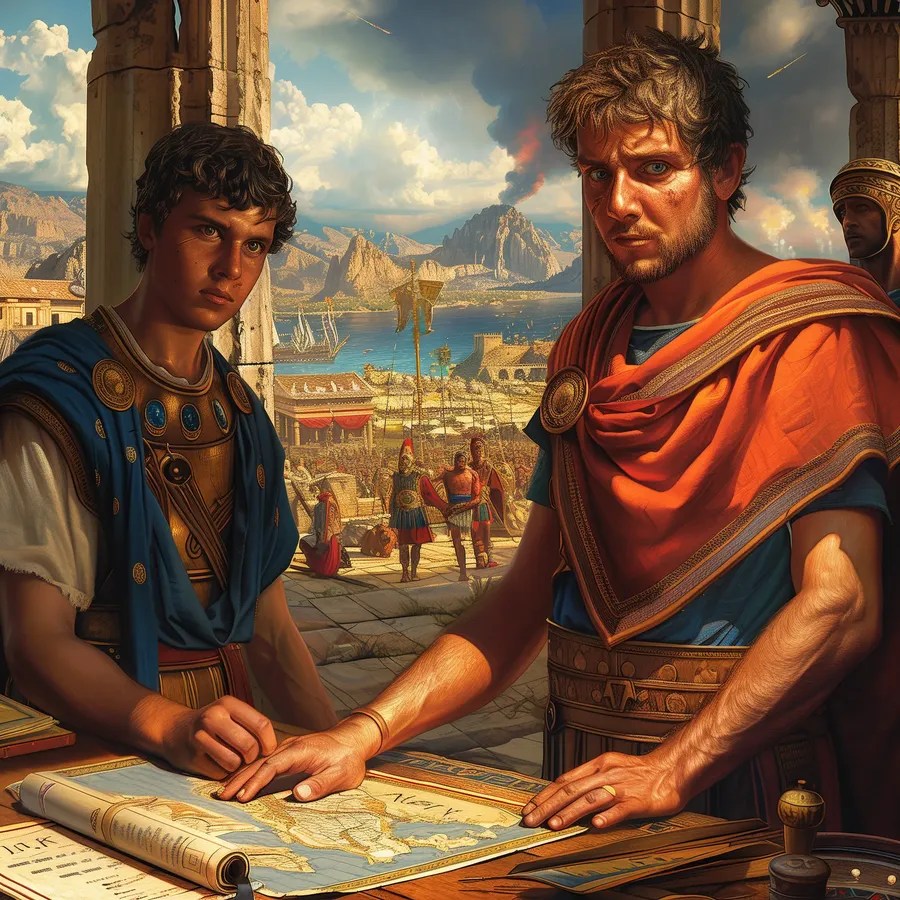
In the annals of history, great leaders often stand tall on the shoulders of even greater companions. While the name of Alexander the Great reverberates through time, one figure who played a pivotal role in his conquests remains relatively unknown to many: Haphaestion, the steadfast companion and confidant of the legendary conqueror.
Haphaestion’s story is one of loyalty, courage, and unwavering support. As Alexander’s childhood friend and trusted general, he stood by the king’s side through triumphs and tribulations, shaping the course of history with his strategic acumen and unyielding dedication.
While the exploits of Alexander have been well-documented, Haphaestion’s contributions have often been overshadowed by his more flamboyant counterpart. However, recent research and historical reevaluations are shedding new light on this enigmatic figure, highlighting his crucial role in shaping the Macedonian Empire.
One particularly fascinating aspect of Haphaestion’s legacy is his influence on Alexander’s military campaigns. While the king’s daring strategies and battlefield prowess are well-known, it was often Haphaestion’s meticulous planning and logistical expertise that ensured the success of their conquests. His ability to coordinate troops, supplies, and communication channels was instrumental in maintaining the cohesion of the army and securing key victories.
Moreover, Haphaestion’s unwavering support for Alexander extended beyond the battlefield. As a trusted advisor and confidant, he played a crucial role in shaping the king’s policies and decisions, offering counsel that was grounded in pragmatism and foresight. Their relationship was more than just a friendship; it was a partnership based on mutual respect, shared goals, and a deep understanding of each other’s strengths and weaknesses.
In many ways, Haphaestion embodied the qualities of a true leader: selfless devotion, strategic vision, and a steadfast commitment to his cause. While history may have overlooked his contributions, modern scholars are beginning to recognize the pivotal role he played in the rise of the Macedonian Empire.
Recent Academic Insights: In recent years, a resurgence of interest in Haphaestion’s role within Alexander the Great’s campaigns has been evident through scholarly articles found in databases such as JSTOR and Google Scholar. This scholarly reevaluation goes beyond the traditional view of Haphaestion as merely a companion in arms, highlighting his sophisticated understanding of military logistics and strategic deployment of resources. Studies have pointed out that his expertise in these areas was crucial to the rapid movement and sustained supply lines that were hallmarks of Alexander’s success.
For example, a 2020 analysis published in the Journal of Ancient Military History discusses how Haphaestion’s logistical strategies enabled Alexander’s army to execute prolonged campaigns far from their bases of supply, particularly during the critical phases of the Indian campaign. The paper illustrates how Haphaestion coordinated the collection and distribution of supplies, managed the assembly and transport of siege machinery, and oversaw the establishment of supply depots along key routes, ensuring the Macedonian army could operate effectively in diverse and often hostile terrains.
Furthermore, a 2022 study from the Classical Studies Quarterly explores Haphaestion’s role in the integration of newly conquered territories into Alexander’s empire, a task that required both military acumen and diplomatic skill. The study argues that Haphaestion’s management of these territories was instrumental in maintaining the stability of supply lines and the loyalty of local populations, which were critical to the Macedonian army’s ongoing operations.
These academic insights emphasize that Haphaestion’s contributions were not just supplementary but integral to the strategic planning and execution of military operations. His ability to navigate the complexities of logistics and territory management contributed significantly to the sustainability and expansion of Alexander’s conquests. This body of research not only sheds light on his military prowess but also enriches our understanding of the logistical underpinnings that supported one of history’s most formidable military campaigns.
Voices from the Past: Primary sources such as Arrian’s Anabasis Alexandri and Plutarch’s Life of Alexander are indispensable for understanding Haphaestion’s multifaceted role in the context of Alexander the Great’s campaigns. These ancient texts reveal that Haphaestion was much more than a military aide; he was an integral part of Alexander’s inner circle, serving as a trusted advisor whose counsel was crucial in both war and peace.
Arrian’s account, for example, provides detailed descriptions of Haphaestion’s involvement in major military actions, such as the Battle of Gaugamela, where his tactical decisions played a significant role in the Macedonian victory. Arrian portrays Haphaestion not only as a competent general but also as a key figure in the logistical organization that supported the army’s vast movements across the Persian Empire.
Plutarch’s writings further illuminate Haphaestion’s personal relationship with Alexander, emphasizing their close bond from childhood. This connection afforded Haphaestion a unique influence in the Macedonian court, where his advice often swayed Alexander’s decisions on matters ranging from governance to military strategy. Plutarch recounts episodes where Haphaestion’s diplomatic tact was pivotal, such as during negotiations with the various city-states and tribal leaders whose allegiance was vital to securing Alexander’s flanks during his campaign.
Moreover, these primary sources underscore Haphaestion’s role in softer aspects of conquest, such as cultural integration and administration of the newly acquired territories. For instance, after the death of the Persian king Darius III, Haphaestion was instrumental in managing the transition of power, which involved intricate negotiations with Persian nobles and local governors—a testament to his diplomatic finesse and understanding of imperial administration.
Contemporary Scholarly Analysis: Modern historians such as Robin Lane Fox, Peter Green, and Ian Worthington have significantly contributed to our understanding of Haphaestion’s role in Alexander the Great’s military campaigns. Their detailed analyses provide a nuanced view of his strategic input, which was crucial during various critical moments, including the Siege of Tyre and the expedition through the Hindu Kush.
Robin Lane Fox, in his landmark study “Alexander the Great,” emphasizes Haphaestion’s logistical genius, particularly during the Siege of Tyre, one of the most formidable sieges in ancient warfare. Fox describes how Haphaestion’s oversight of the engineering teams and his coordination of naval blockades were vital to isolating the city and preparing for a prolonged siege, ultimately leading to Alexander’s victory. This event not only demonstrated Haphaestion’s military acumen but also his ability to execute complex strategic plans under pressure.
Peter Green, in “Alexander of Macedon,” highlights Haphaestion’s role during the challenging march through the Hindu Kush mountains. Green points out that Haphaestion’s management of the supply lines and his ability to maintain morale among troops were critical in navigating this difficult terrain. His work ensured that the army did not just survive but was also ready to conduct effective warfare upon reaching the other side.
Ian Worthington, in his book “Alexander the Great: Man and God,” focuses on Haphaestion’s diplomatic skills. He discusses how Haphaestion was often entrusted with delicate missions, such as forging alliances with local tribes and managing newly conquered populations in a way that facilitated Alexander’s broader imperial ambitions. Worthington argues that these contributions were indispensable in securing the loyalty and cooperation of diverse peoples, which was essential for the sustainability of Alexander’s vast empire.
Specific Contributions: Haphaestion’s strategic role in Alexander the Great’s military campaigns was multifaceted, encompassing both tactical field operations and the broader logistical coordination that underpinned the Macedonian army’s operations across vast territories. His expertise in logistical planning and military strategy was not just supportive but often pivotal to the success of Alexander’s endeavors.
One of the most notable examples of Haphaestion’s logistical acumen was during the campaigns across the Persian Empire, where he orchestrated the construction of pontoon bridges across major rivers like the Euphrates and Indus. This task required not only engineering skill but also a deep understanding of the terrain and the timing of troop movements. The ability to swiftly move thousands of soldiers and equipment across such natural barriers without significant delays was critical to maintaining the momentum of Alexander’s offensive.
Moreover, Haphaestion’s role in provisioning the army cannot be overstated. During the long and arduous march through areas like the Gedrosian Desert, he was responsible for ensuring that supply lines remained secure and efficient. This involved coordinating with local suppliers, setting up supply depots, and even implementing emergency rationing measures when necessary. His foresight in these logistical operations ensured that Alexander’s army remained well-equipped and fed, a factor that was crucial in maintaining morale and combat readiness under harsh conditions.
In addition to his logistical capabilities, Haphaestion also played a key role in the strategic deployment of the Macedonian phalanx and cavalry during major battles. His understanding of military formations and his ability to adapt these to the challenges of diverse battlefields supported Alexander’s tactical innovations. For example, during the battle at Hydaspes, Haphaestion’s coordination of the cavalry units was instrumental in outflanking the enemy, showcasing his tactical prowess in real-time combat scenarios.
Haphaestion’s contributions were thus essential not only in direct combat but in the broader strategic context of sustaining Alexander’s campaigns across diverse and often hostile landscapes. His ability to manage both the macro and micro aspects of military logistics highlights his indispensable role in the Macedonian military machine. By examining these specific contributions, we can appreciate Haphaestion not just as a companion of Alexander but as a master strategist whose efforts were vital to the creation and maintenance of one of history’s greatest empires.
Beyond Companionship: The Deep Bond Between Alexander and Haphaestion
In the annals of history, few relationships have intrigued scholars and laypeople alike as much as that between Alexander the Great and his closest confidant, Haphaestion. Ancient sources, notably those by Plutarch and Arrian, hint at a bond that transcended the typical friendships of their time, suggesting a profound personal intimacy. Plutarch, in his Life of Alexander, describes moments where Alexander’s reliance on Haphaestion’s judgment and companionship appears to go beyond mere friendship or military camaraderie, indicating a deep emotional, if not spiritual, connection.
Modern interpretations, such as the portrayal in Oliver Stone’s 2004 film Alexander, reflect these ancient narratives, depicting their relationship as intensely close, potentially romantic. While the film takes artistic liberties, it has played a significant role in shaping the public’s understanding of Alexander and Haphaestion’s relationship, emphasizing its possible romantic nature. This interpretation resonates with some modern scholarly views that, influenced by contemporary understandings of sexuality and intimacy, re-examine the nature of their connection.
The historical evidence for a romantic relationship, however, remains speculative. Ancient Greek texts do not explicitly ascribe modern sexual orientations to their subjects, but the documented intensity of Alexander and Haphaestion’s relationship is clear. In Greek culture, particularly within elite circles of warriors and leaders, deep emotional bonds often included elements of physical intimacy, which were seen as strengthening trust and loyalty.
- Cultural Interpretations
- Cultural depictions like Stone’s Alexander contribute significantly to the discourse about historical figures, particularly in how they adapt and interpret ancient sources for modern audiences. The film’s exploration of Alexander and Haphaestion’s relationship underscores a broader cultural interest in the personal lives of historical figures, reflecting contemporary values and questions about identity and expression.
- Historical Evidence
- While definitive evidence of a sexual dimension to their relationship is lacking, the significance of their bond is undeniable in the strategic and personal decisions Alexander made. For instance, Arrian’s Anabasis Alexandri illustrates several instances where Haphaestion undertook roles that were both politically and personally significant, often acting as Alexander’s proxy in sensitive situations, which may indicate the immense trust Alexander placed in him.
The Dual Legacy Through Haphaestion’s Eyes: The Architect Behind the Conqueror
While the grandeur of Alexander the Great’s conquests often takes center stage in historical narratives, Haphaestion’s role as the backbone of these campaigns presents a different perspective on their impact on Greece itself. This section explores how Haphaestion, Alexander’s steadfast companion and strategist, influenced the trajectory of these conquests and their repercussions on Greek civilization.
Haphaestion’s involvement in Alexander’s campaigns was not merely supportive; he was integral to the planning and execution of military strategies and logistics. As Alexander pushed the boundaries of the Greek world across Asia and Egypt, Haphaestion managed the immense logistical demands required for such extensive campaigns. His role in marshaling resources, coordinating troop movements, and ensuring steady supply lines was critical. However, these demands also drew heavily from the Greek city-states, potentially weakening their economic and social structures at a time when stability was needed.
Furthermore, Haphaestion’s diplomatic engagements, often undertaken on Alexander’s behalf, helped to spread Hellenistic culture and influence across the conquered regions. While these efforts facilitated a cultural fusion that enriched the Hellenistic world, they did little to solidify the political stability back in Greece. The focus on empire-building and maintaining distant territories meant that governance at home was sometimes left in the hands of less capable deputies, leading to inefficiency and corruption.
Haphaestion’s premature death in 324 BC left Alexander without his most trusted advisor and friend, severely affecting him. The subsequent sudden death of Alexander in 323 BC, without a clear successor, led to the fragmentation of the empire. The Wars of the Diadochi that followed further drained Greek resources and exacerbated regional instability. This period of conflict intensified the political instability that Haphaestion had sought to manage through his strategic and administrative roles.
Why Were They So Hungry For Conquering? Why Haphaestion Agreed to Venture with Alexander:
- Friendship and Loyalty: Haphaestion and Alexander were close friends from a young age, having been educated together under the tutelage of Aristotle. This deep bond likely played a significant role in Haphaestion’s decision to join Alexander. Loyalty and dedication to Alexander were central to his participation.
- Political and Military Ambitions: As a member of the Macedonian nobility, Haphaestion had both the opportunity and the motivation to seek glory and success in military ventures. His role in the campaigns was not just that of a companion but also a key military commander and strategist, positions that offered significant power and prestige.
- Personal Ambition: Alongside his loyalty to Alexander, Haphaestion had personal ambitions. His participation in the conquests elevated his status and influence, securing him a place in one of the most significant historical narratives of all time.
Why Alexander was Driven to Conquer:
- Legacy of Philip II: Alexander inherited from his father, Philip II of Macedon, a powerful, well-organized kingdom and a highly capable army. Philip’s achievements set a foundation that Alexander was motivated to build upon, not just to maintain but to expand the Macedonian hegemony.
- Desire for Glory: Alexander was deeply influenced by the Homeric ideals of heroism and glory. The Iliad, with its tales of heroic deeds and the valor of warriors like Achilles, whom Alexander admired immensely, fueled his desire to achieve eternal fame.
- Political Consolidation: Conquering new lands was also a practical strategy to consolidate and secure his rule. By keeping his army engaged and expanding his empire, Alexander worked to unify the diverse regions under his control and prevent rebellion.
- Cultural Motivation: Alexander saw himself as a promoter of Greek culture and Hellenism. His conquests spread Greek ideas, language, and customs across the known world, creating a new cultural landscape that blended Greek and local elements.
Alexander’s ambitions for conquest and Haphaestion’s support thus intermingled personal desires with broader cultural and political objectives. Their partnership in these endeavors was built on a foundation of mutual respect, shared ambitions, and the unique historical circumstances of their time. Their joint ventures not only shaped the course of history but also the legacy of Greek culture far beyond the traditional borders of their homeland.
Beyond Modern Standard
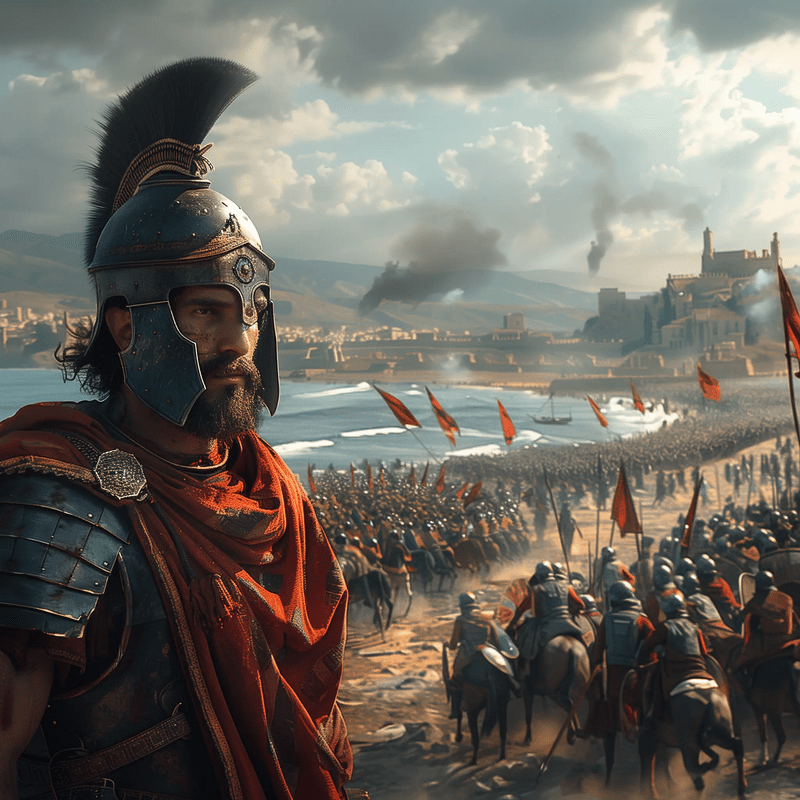
One of the most brutal conquests during Alexander the Great’s reign was undoubtedly the Siege of Tyre in 332 BC. This operation not only showcased Alexander’s strategic brilliance but also highlighted the crucial roles played by his closest aides, including Haphaestion, his steadfast companion and trusted general.
- The Siege of Tyre: Strategic Significance and Haphaestion’s Role
- The city of Tyre was pivotal for Alexander’s dominance over the Mediterranean and securing his supply lines following his campaigns in Asia Minor and Egypt. The refusal of Tyre to surrender and allow Alexander to sacrifice at the temple of Melqart provoked a determined and forceful response. In this crucial moment, Haphaestion’s involvement was instrumental, particularly in logistical coordination and the execution of the siege’s complex strategies.
- Execution of the Siege:
- Alexander’s strategy to conquer Tyre involved constructing a causeway to bridge the mainland to the island—a feat of engineering and logistical planning. Haphaestion’s role likely included overseeing the gathering and deployment of materials and resources, a task essential to the causeway’s completion despite fierce resistance from Tyre. His ability to manage these elements under pressure was critical to maintaining the siege’s momentum.
- When the Macedonians finally breached Tyre’s walls after months of intense combat, the city faced severe reprisals. Historical records suggest that approximately 8,000 Tyrians were killed, and 30,000 were enslaved. In these actions, Haphaestion’s military leadership was key, not only in battle tactics but also in the subsequent handling of the city’s population, reflecting the harsh realities of war at the time.
- Comparison to Modern Standards:
- From a modern perspective, the actions taken during the Siege of Tyre, including the intentional killing of civilians and mass enslavement, would be considered severe violations of the laws of war. The comprehensive destruction served as a warning to other cities about the consequences of resisting Alexander’s rule—a policy in which Haphaestion’s execution of orders played a significant role.
The Siege of Tyre as a Reflection of Ancient Warfare Realities
The Siege of Tyre, while demonstrating Alexander’s military genius, also underscores the brutal reality of ancient warfare, where the line between combatants and civilians was often blurred. Haphaestion’s participation in these events highlights his importance not just as a companion but as a key executor of military strategies that led to the establishment of one of history’s largest empires. His actions, driven by loyalty to Alexander and the strategic necessities of the time, played a pivotal role in shaping the Hellenistic world, albeit at a high human cost.
The Elusive Resting Places of Alexander the Great and Haphaestion
Alexander the Great: The final resting place of Alexander the Great, one of history’s most iconic leaders, remains one of the greatest unsolved mysteries in archaeology. Historical records indicate that Alexander’s body was initially interred in Memphis, Egypt, a common practice to honor pharaohs and prominent figures of the time. Later, his body was transported to Alexandria, a city that he founded and that became a center of Hellenistic culture and power. Despite this, the exact location of his tomb within Alexandria has eluded discovery. Over the centuries, numerous archaeological and historical investigations have sought to locate Alexander’s tomb in Alexandria, spurred by various claims and theories about its possible whereabouts. However, none of these efforts have conclusively identified the site, leaving the question of his final resting place open to speculation.
Haphaestion: Similarly, the burial site of Haphaestion, who was Alexander’s closest friend and confidant, is also unknown. Historical accounts detail that after Haphaestion’s death, Alexander arranged a funeral of significant honors, indicative of Haphaestion’s high status and the close personal bond he shared with Alexander. The grandeur of this funeral suggests that his tomb, wherever it might be, was intended to be a fitting tribute to his life and his service alongside Alexander. Yet, like with Alexander, there is no concrete evidence that definitively points to the location of Haphaestion’s tomb.
Archaeological Challenges: The search for the tombs of Alexander and Haphaestion highlights the challenges that archaeologists face when tracking down sites that are thousands of years old. Changes in landscape, urban development, and the decay over time all contribute to the difficulty of such tasks. The lack of physical evidence and definitive records complicates these efforts further.
Cultural Significance: The continued interest in locating their tombs underscores the enduring legacy of Alexander the Great and his era. These sites, if ever found, would not only be significant archaeological discoveries but would also offer deeper insights into the historical and cultural contexts of Alexander’s reign and the Hellenistic period that followed.
The mystery of where these two prominent figures of antiquity are laid to rest continues to captivate historians, archaeologists, and the public alike, serving as a reminder of the complexities of historical research and the lasting fascination with ancient civilizations.
Beyond the Shadow of Greatness: The Enduring Legacy of Haphaestion: As we delve deeper into the annals of ancient history, it is essential to uncover the stories of unsung heroes like Haphaestion, whose legacy continues to inspire and intrigue us to this day. Through his remarkable journey alongside Alexander the Great, he exemplified the timeless virtues of loyalty, courage, and unwavering dedication, leaving an indelible mark on the pages of history.
So, the next time we marvel at the conquests of Alexander the Great, let us also remember the name of Haphaestion, the unsung hero whose influence reverberates through the corridors of time, reminding us that behind every great leader stands an equally great companion.
Summary: Haphaestion, a steadfast companion and confidant of Alexander the Great, played a pivotal but often overlooked role in shaping the Macedonian Empire. His loyalty, courage, and strategic acumen were crucial to Alexander’s military campaigns, ensuring the success of conquests through meticulous planning and logistical expertise. As a trusted advisor and partner, Haphaestion influenced Alexander’s policies and decisions with pragmatism and foresight, embodying the qualities of a true leader. While history may have overshadowed his contributions, recent research is shedding light on his significant role in history, highlighting the importance of recognizing unsung heroes like Haphaestion in understanding ancient civilizations.

 EssayBoard
Leave a comment