
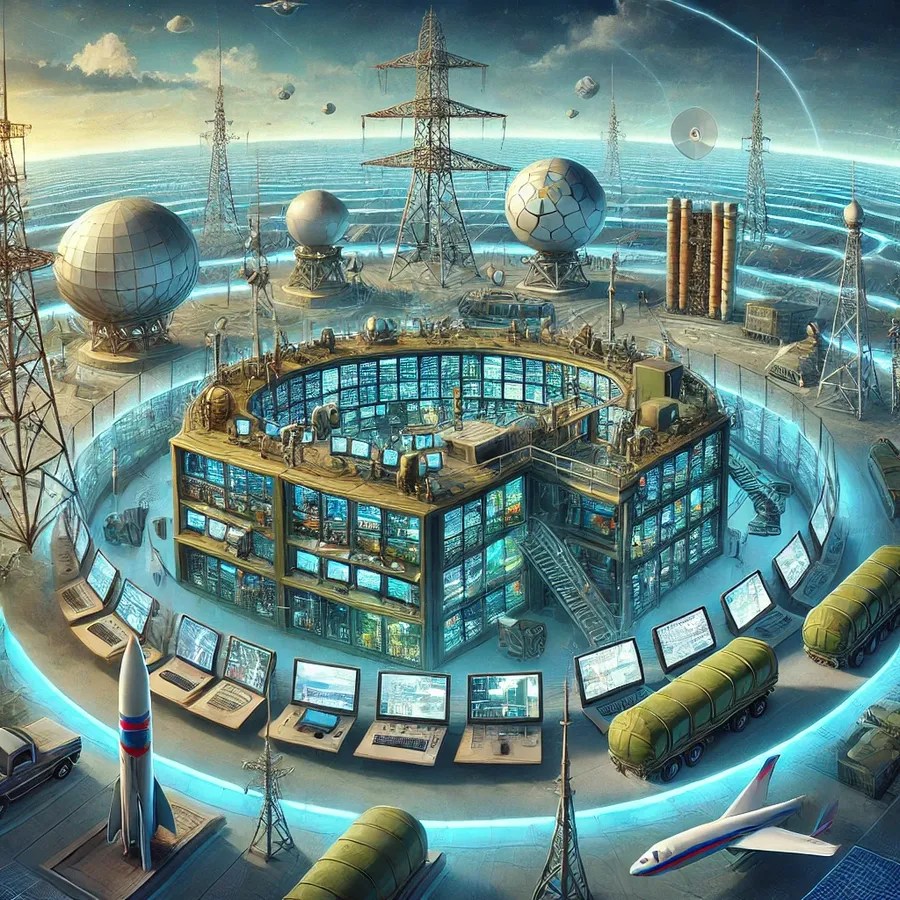
In the shadowy world of nuclear deterrence, few systems evoke as much fear and intrigue as Russia’s “Dead Hand.” Also known as “Perimeter,” this automated command-and-control system was designed to ensure a retaliatory nuclear strike, even if the entirety of the Soviet command structure was incapacitated. As geopolitical tensions rise and fall, understanding the mechanics, history, and implications of the Dead Hand system provides crucial insight into one of the most potent symbols of Cold War paranoia and modern deterrence theory.
The Birth of the Dead Hand
The Dead Hand system was conceived during the height of the Cold War, a period marked by intense rivalry and mutual suspicion between the United States and the Soviet Union. The concept was simple yet terrifying: in the event of a crippling first strike by the U.S. that decapitated the Soviet leadership, an automated system would ensure that the Soviet Union could still retaliate with nuclear force, thereby maintaining the principle of Mutually Assured Destruction (MAD).
The system’s development began in earnest in the late 1970s and early 1980s. Engineers created an intricate network of sensors capable of detecting seismic, radiation, and atmospheric pressure changes indicative of a nuclear explosion. These sensors, combined with communication networks and command posts buried deep underground, formed the backbone of the Dead Hand system (Wikipedia) (Russia Beyond).
How the Dead Hand Works
The Dead Hand is often shrouded in mystery, with much of its operation remaining classified. However, what is known paints a chilling picture. Upon activation by high-ranking officials during a crisis, the system goes into a semi-dormant state, constantly monitoring a series of predefined indicators for signs of a nuclear attack.
If these indicators suggest a nuclear strike—such as massive radiation spikes or significant seismic activity—the system checks for communication with the Soviet (now Russian) General Staff. If communications are still intact, the system remains dormant, assuming that surviving commanders can order a counterattack. However, if all communication links are severed, the system infers that the leadership has been neutralized and automatically launches a retaliatory strike via a command rocket (Wikipedia) (Russia Beyond).
Strategic Importance
The strategic importance of the Dead Hand cannot be overstated. During the Cold War, it served as the ultimate deterrent, ensuring that any first strike against the Soviet Union would be met with a devastating counterattack. This automatic assurance of retaliation aimed to dissuade any adversary from considering a nuclear first strike in the first place, thereby maintaining a precarious peace through the principle of MAD.
The existence of such a system also highlighted the extreme lengths to which nations would go to secure their survival. The Dead Hand epitomized the existential dread of the era, where the destruction of the planet could be triggered not by human decision, but by automated responses to perceived threats (Wikipedia) (Russia Beyond) (Nairaland).
Modern Relevance and the Ukraine Conflict
Even after the Cold War, the Dead Hand system reportedly remains in operation, albeit with numerous upgrades and modifications to reflect modern technological advancements. The system now includes advanced radar and satellite capabilities to detect missile launches and other threats from a greater distance and with higher accuracy. Additionally, there are plans to integrate hypersonic missile technology, further enhancing its retaliatory potential (Russia Beyond) (Nairaland).
The current conflict between Russia and Ukraine has brought the Dead Hand system back into focus. As Russia faces increasing international pressure and military challenges, the potential for escalation has worried many observers. NATO’s cautious approach, including its reluctance to attack Russian territory directly or support Ukrainian deep strikes into Russia, can be partially attributed to the existence of the Dead Hand system. The risk of inadvertently triggering a catastrophic response remains a significant deterrent against actions that could be perceived as existential threats to Russia.
In recent months, however, European countries like the UK and France have shown more support for Ukraine taking aggressive actions, including deeper strikes into Russian territory. This shift reflects a complex interplay of strategic calculations and the prolonged nature of the conflict. While these deeper strikes could theoretically increase the risk of triggering the Perimeter system, it is crucial to note that the system is designed to respond to large-scale nuclear attacks rather than isolated conventional strikes (Wikipedia) (Russia Beyond) (Nairaland).
Ethical and Practical Concerns
The Dead Hand system raises numerous ethical and practical concerns. The idea of an automated system possessing the capability to launch a nuclear strike without direct human intervention is profoundly unsettling. It places an immense amount of trust in technology, with the potential for malfunction or misinterpretation of data leading to catastrophic consequences.
Moreover, the system’s reliance on predetermined indicators and automated responses reduces the opportunity for de-escalation and diplomatic resolution in the heat of a crisis. In an era where cyber warfare and electronic interference are increasingly prevalent, the security and integrity of such a system are also of paramount concern. Ensuring that the Dead Hand cannot be tampered with or triggered by non-nuclear means is critical to preventing accidental escalation (Wikipedia) (Nairaland).
The Risk of Malicious Triggering
One particularly unsettling scenario is the possibility of bad actors attempting to trigger the Dead Hand system intentionally. While this might seem like the stuff of Hollywood thrillers, the potential for a rogue state, terrorist organization, or even a sophisticated cyberattack to exploit vulnerabilities in the system is a genuine concern.
The Dead Hand system is designed with multiple layers of verification and cross-referencing among various types of sensors to prevent false alarms. This includes distinguishing between seismic activity caused by nuclear explosions and other disturbances. Despite these safeguards, the system’s reliance on automated processes and complex algorithms introduces a non-zero risk of malfunction or deliberate interference (Wikipedia) (Russia Beyond).
In the realm of cyber warfare, where state and non-state actors constantly seek to exploit vulnerabilities in critical infrastructure, the risk of someone attempting to provoke a catastrophic response cannot be entirely dismissed. The integration of advanced technologies and continuous upgrades aim to mitigate these risks, but the potential for unforeseen loopholes remains.
The Global Context
The existence of the Dead Hand system must be understood within the broader context of global nuclear deterrence strategies. Other nuclear-armed nations, including the United States, China, and India, also maintain robust second-strike capabilities designed to ensure retaliation in the event of a first strike. These strategies collectively contribute to the delicate balance of power that has, thus far, prevented the use of nuclear weapons since World War II.
However, as new technologies emerge and geopolitical dynamics shift, the challenges of maintaining this balance become ever more complex. Hypersonic missiles, cyber warfare capabilities, and advances in artificial intelligence all introduce new variables into the equation, potentially complicating traditional deterrence models and requiring continuous adaptation and vigilance (Nairaland).
Conclusion
The Russian Dead Hand system stands as a stark reminder of the lengths to which nations will go to protect themselves in an uncertain world. Born out of Cold War paranoia, it continues to serve as a powerful deterrent, underscoring the enduring principle of Mutually Assured Destruction. As technology advances and geopolitical tensions evolve, the ethical and practical challenges posed by such systems will remain at the forefront of global security discussions.
In a world where the potential for catastrophic conflict still looms, understanding the mechanisms and implications of systems like the Dead Hand is crucial. It serves as both a deterrent and a warning, highlighting the delicate balance that must be maintained to ensure peace and prevent the unthinkable.

 EssayBoard
Leave a comment