
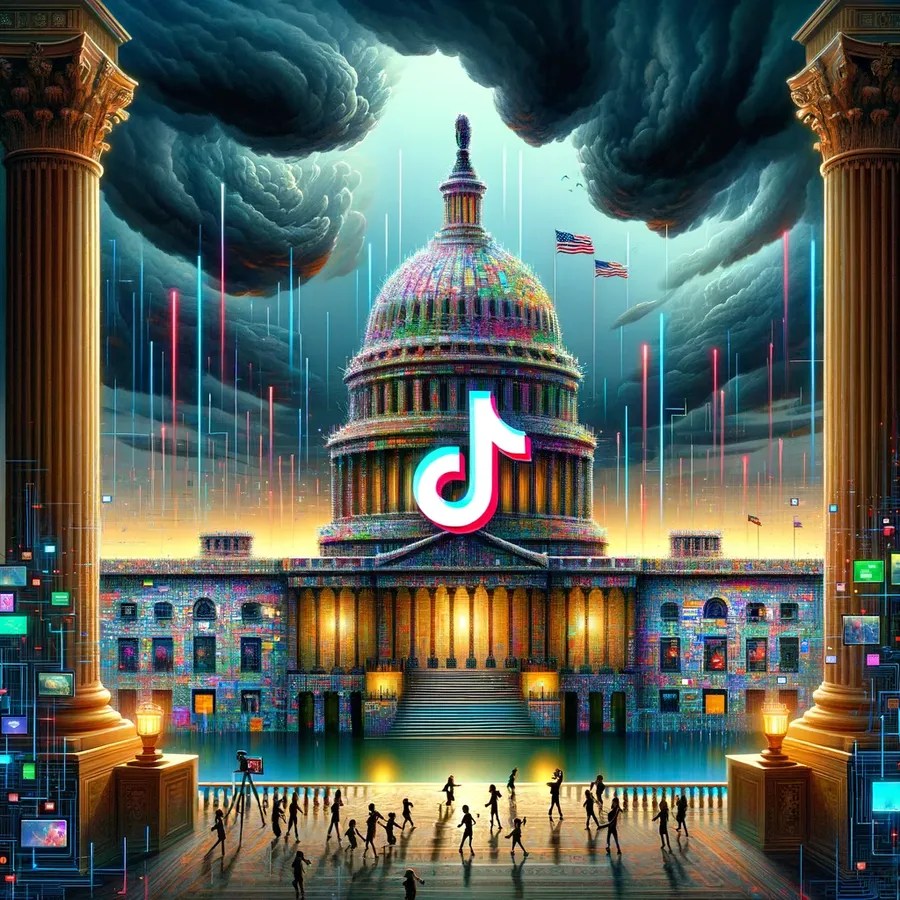
Introduction:
Recent legislative developments have significantly increased the likelihood that TikTok’s parent company, ByteDance, may be compelled to sell the popular app to a U.S. entity. This follows the passage of a bill by the U.S. House of Representatives aimed at mandating the divestment of TikTok’s U.S. operations by its Chinese owners. The bill arises from national security concerns, specifically fears that ByteDance could be forced under Chinese cybersecurity laws to share U.S. user data with the Chinese government, thereby posing a national security threat.
To understand the impact of such a legislative move, it’s important to consider TikTok’s current market presence and financial success. TikTok has rapidly ascended in the ranks of global social media platforms, boasting over 1 billion active users worldwide as of 2021. In the United States alone, TikTok reported over 100 million active users, capturing a significant portion of American teens and young adults. According to industry analysts, TikTok’s innovative algorithm and user engagement strategies have led to an average user session duration of 10.85 minutes, which outpaces competitors like Facebook and Instagram.
Financially, TikTok has become a powerhouse in digital advertising. In the year 2021, TikTok’s advertising revenue was estimated to be around $4 billion, and it is projected to reach upwards of $12 billion in 2022. This revenue growth highlights not only TikTok’s popularity but also its substantial impact on the digital advertising market. Advertisers value TikTok for its ability to engage younger demographics—nearly 50% of its global users are under the age of 30, making it an invaluable platform for brands targeting this age group.
Moreover, TikTok’s influence extends beyond mere entertainment. The platform has become a vital part of the ‘creator economy’, with millions of content creators relying on it for income through partnerships and sponsored content. This economic ecosystem supports not only individual creators but also a wide range of businesses and service providers in the digital marketing sector.
Getting back to the legislative development theme, the bipartisan support for this legislation highlights the growing unease within the U.S. government regarding the potential for foreign interference and data privacy violations. Lawmakers from both sides of the aisle have expressed apprehensions about TikTok’s ability to safeguard the data of American users from the Chinese government, spurred by the broad powers granted to Beijing under its national security framework, which obligates companies based in China to cooperate with state intelligence work.
Moreover, this move reflects a broader trend of increasing scrutiny over technology companies and their affiliations with foreign governments. The U.S. is not alone in its concerns; other countries have also begun to question the implications of their domestic data being controlled by companies with ties to foreign states. This situation places TikTok at the heart of a global debate over digital sovereignty and the geopolitics of technology, where national security priorities may necessitate significant corporate restructuring to align with regulatory expectations.
Senate Consideration:
The bill to potentially force ByteDance to divest TikTok’s U.S. operations has now advanced to the U.S. Senate, where its future remains uncertain. Several senators have voiced their concerns, highlighting issues related to free speech and the potential adverse effects on TikTok’s vast user base and content creators who rely on the platform for their livelihood. These concerns suggest potential delays and complex political negotiations ahead in the Senate’s review process. The divisions within the Senate showcase a deep concern over balancing national security interests with the principles of free expression and the economic impacts on the digital ecosystem.
This legislative effort has stirred a significant debate among lawmakers, reflecting a broader discourse on the role of government in regulating social media platforms and the potential overreach into the tech industry. Some senators argue that focusing solely on TikTok might ignore broader issues of data privacy that affect all social media platforms, suggesting the need for comprehensive federal privacy laws rather than targeted bans. This stance could lead to amendments that broaden the scope of the bill or push for more generalized legislation that addresses privacy concerns across all platforms.
Moreover, the international implications of the bill are not lost on the Senate. Some members are cautious of the global diplomatic repercussions, particularly with China, where TikTok’s parent company is based. The potential for retaliatory measures by Beijing could affect not only the tech sector but broader economic relations between the U.S. and China. As these discussions continue, the Senate faces the challenge of navigating this complex geopolitical landscape while ensuring the protection of American data and promoting a free and open internet.
Presidential Stance and Potential Outcomes:
Should the Senate pass the bill, President Joe Biden has expressed readiness to sign it into law. This would start a six-month countdown for ByteDance to divest its U.S. operations or face a complete ban. However, this timeline could be extended due to potential legal challenges from ByteDance and ongoing debates about the practicality of severing TikTok’s U.S. operations from its global network. This scenario is further complicated by the upcoming U.S. presidential election, which introduces a layer of uncertainty regarding the bill’s future.
As the presidential election approaches, the passage of the bill could become a focal point in the political debate. If the bill does not pass before the election, its fate could hinge on the outcome, with a new administration potentially revisiting or revising the current stance on TikTok. The electoral outcome could shift priorities and influence the legislative agenda, impacting how, or even if, the bill progresses. This uncertainty might lead to strategic delays in the Senate, as members may prefer to wait and align their actions with the forthcoming administration’s policy direction.
Moreover, if a new president is elected, they may have different views on technology management, cybersecurity, and international trade, which could alter the approach to TikTok and similar cases. A new administration might prioritize different aspects of national security or choose to focus on building stronger data privacy laws rather than enforcing company-specific bans. The stance of the new president will be crucial, as it will set the tone for how the U.S. addresses concerns related to foreign-owned technology companies operating within its borders.
Stakeholder Reactions: A Multifaceted Perspective:
The potential sale or ban of TikTok under U.S. legislation has elicited a wide range of reactions from various stakeholders, each group harboring distinct concerns and expectations regarding the future of the platform in the United States.
- TikTok Users and Content Creators: The user base of TikTok, particularly the content creators who rely on the platform for income and expression, have expressed significant anxiety over the bill. Many users see the platform as a critical space for creativity and community building. Content creators are particularly vocal, with some organizing online petitions and social media campaigns to lobby against the bill. Their main concerns revolve around losing a platform that not only provides entertainment but also supports livelihoods through brand partnerships and advertising revenue.
- U.S. Businesses and Advertisers: For businesses, especially those targeting the younger demographics, TikTok serves as a vital marketing tool. Advertisers are worried about losing access to a platform that allows them to reach millions of consumers effectively and affordably. Some industry reports suggest that businesses are considering alternative digital marketing strategies, but they remain concerned about the potential decline in engagement and reach compared to what TikTok offers.
- Civil Rights and Free Speech Advocates: Civil rights organizations and free speech advocates are deeply concerned about the implications of the proposed legislation on free expression. They argue that banning a platform like TikTok could set a precedent for government overreach into the digital realm, potentially stifling free speech. These groups are actively seeking to influence the debate by submitting testimonies and legal challenges that emphasize the importance of protecting First Amendment rights in the context of digital platforms.
- Legal and Privacy Experts: Experts in legal and privacy fields are closely monitoring the situation, with some raising concerns about the implications for data privacy and security. They question whether the forced sale could indeed safeguard user data or simply reshuffle the control of that data. Others highlight the potential complications involved in segregating TikTok’s U.S. operations from its global network, emphasizing the technical and legal challenges of such a move.
Economic and Technical Considerations of TikTok’s Potential Divestiture:
The potential forced sale or ban of TikTok by ByteDance due to legislative pressures presents both significant economic impacts and technical challenges, each of which could determine the platform’s continued success in the U.S. market.
- Economic Impact: The forced sale of TikTok could have profound implications for the digital advertising market and the creator economy. TikTok has become an essential platform for advertisers, particularly those targeting younger demographics who are less reachable through traditional media channels. The uncertainty surrounding its operations could lead advertisers to pull back, awaiting resolution, which might destabilize the current advertising dynamics. Moreover, the creator economy, heavily reliant on TikTok for revenue through brand partnerships and promotions, could see a substantial disruption. This potential sale might also affect tech industry valuations broadly, as investors reassess the stability and predictability of the regulatory environment in the U.S., which could make investments in tech startups and established platforms appear riskier.
- Technical Challenges: Separating TikTok’s U.S. operations from its global network poses daunting technical hurdles. The process would likely involve creating entirely separate infrastructures for data storage and management to comply with U.S. data privacy standards, a task complicated by the integrated nature of modern app architectures. This segregation would not only require substantial time and investment but could also lead to diminished functionality and user experience due to potential limitations in how the U.S. version of the app interacts with the global network. The success of a standalone U.S. TikTok would depend heavily on the technical execution of this separation, maintaining the app’s performance and user engagement levels without the direct support and innovation pipeline of ByteDance’s global resources.
- Likelihood of Success Post-Sale: The success of TikTok post-sale would largely hinge on how well these economic and technical challenges are navigated. If a U.S. buyer could effectively manage the transition, ensuring data privacy compliance while maintaining the app’s core functionality and user engagement, TikTok could continue to thrive. However, any significant disruption in service or capabilities could alienate users and advertisers, potentially eroding the platform’s market position swiftly. Thus, the economic sense and technical feasibility of operating a segregated version of TikTok are critical factors that would determine its enduring success or gradual decline in the competitive social media landscape.
Global Implications of U.S. Actions on Foreign Tech Investments:
The potential forced sale of TikTok by ByteDance under U.S. government pressure could have broader implications for international tech companies considering expansion into the U.S. market. This situation serves as a pivotal case study for foreign companies about the risks associated with geopolitical tensions and regulatory scrutiny.
Deterrence of Foreign Investment: The U.S. forcing ByteDance to divest TikTok might be perceived as a warning signal by other foreign tech firms. Companies headquartered outside the U.S. might view this action as indicative of a potentially hostile or unstable business environment, where foreign investments are subject to abrupt policy changes driven by national security concerns. This perception could make them think twice about entering the U.S. market, fearing similar forced divestitures or stringent regulatory challenges.
Risk Assessment and Strategic Planning: Future foreign companies may increase their risk assessments and seek to bulletproof their investment strategies against similar scenarios. This might involve structuring their U.S. operations in a way that minimizes exposure to forced sales or bans, possibly by ensuring data handling and storage comply strictly with U.S. standards from the outset. Additionally, these companies may also consider establishing more robust legal and lobbying frameworks to navigate the U.S. regulatory environment more effectively.
Long-term Economic Consequences: The reluctance of foreign companies to enter the U.S. market could have long-term economic consequences. It could reduce the diversity of tech innovations and services available in the U.S., potentially slowing the pace of technological advancement and reducing competition, which generally benefits consumers. Moreover, it could impact the U.S. economy by limiting direct foreign investments, which often bring not only capital but also jobs, enhanced skill sets, and additional tax revenues.
Conclusion: Navigating the Crossroads of Innovation and Regulation
As the world grapples with the evolving challenges of digital sovereignty and data security, TikTok’s potential sale under U.S. pressure exemplifies the complex interplay between technology, politics, and international business ethics. The legislative journey through the U.S. Congress not only highlights the dynamic nature of tech regulation but also casts a spotlight on how major powers address cybersecurity and foreign control within their borders.
The outcome of this legislative process—whether it results in a forced sale, operational modifications, or other resolutions—will likely influence global tech policy and the strategic decisions of multinational corporations. The case of TikTok serves as a critical bellwether for future U.S. approaches to technology management, particularly concerning foreign-owned enterprises operating within its jurisdiction. As policymakers navigate these waters, their decisions will set important precedents for how democratic societies balance national security concerns with the imperatives of a free and vibrant digital economy.
Looking ahead, the resolution of this issue could have implications far beyond the immediate stakeholders. It will shape international relations and could redefine the global tech landscape, impacting not just market dynamics but also international tech policy. Stakeholders from government, business, and civil society are closely monitoring these developments, understanding that the U.S.’s actions may prompt a broader reevaluation of privacy, security, and freedom of expression across the digital world.

 EssayBoard
Leave a comment