
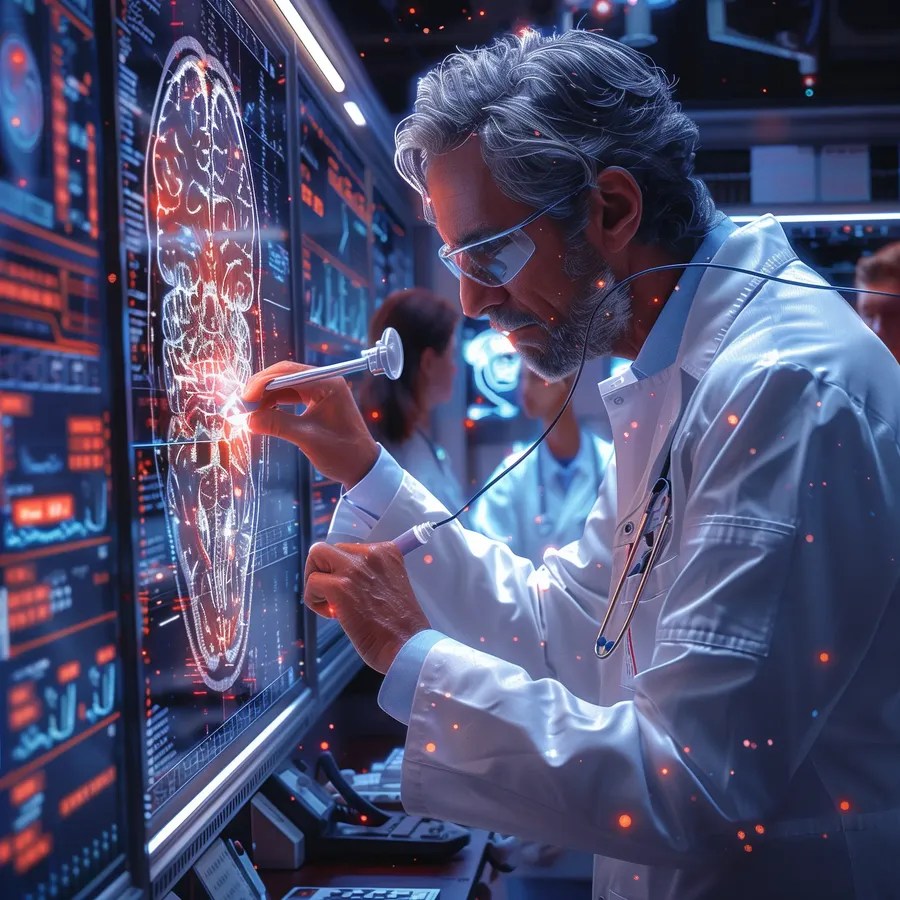
In a world where technological advancements frequently capture our attention, a lesser-known but revolutionary force is making waves in healthcare and human wellness—bioelectricity. As researchers delve into the complex functions of the human body, they’re uncovering the critical role electrical signals play in our health.
Recent developments in bioelectric research have illuminated the importance of these signals in regulating essential functions like heart rhythms and healing processes. This has given rise to the field of bioelectronic medicine, an innovative discipline that utilizes the body’s inherent electrical pathways to manage and treat a myriad of health conditions.
Envision a future where chronic pain is addressed not with medication, but with miniature devices that alter the electrical signals responsible for pain sensation. Consider the possibilities for treating neurological conditions such as Parkinson’s disease or depression with precise, targeted electrical stimulation of specific brain areas. This vision is quickly becoming a reality as the field of bioelectronic medicine advances.
The implications of bioelectricity are profound, offering the potential to transform our approach to health and disease. Personalized bioelectric therapies, tailored to the unique electrical patterns of individual patients, could revolutionize the way we treat chronic illnesses and enhance overall well-being.
Incorporating Evidence: The Impact of Bioelectronic Medicine Backed by Data
While the field of bioelectronic medicine holds immense promise, the incorporation of statistical evidence and trial data can significantly enhance our understanding and confidence in these innovative technologies. Clinical trials and case studies play a crucial role in validating the effectiveness of new medical treatments, and bioelectronic medicine is no exception.
For instance, a notable clinical trial could be highlighted where bioelectronic devices were used to treat rheumatoid arthritis, a condition characterized by chronic inflammation. In this trial, devices targeting specific neural pathways significantly reduced inflammation markers in patients, compared to a control group that received standard treatment. Such findings not only demonstrate the efficacy of bioelectronic interventions but also pave the way for their adoption in routine clinical practice.
Moreover, success stories from individual patients who have experienced substantial improvement in conditions like chronic pain or epilepsy through bioelectronic therapies could be detailed. These case studies often provide tangible evidence of the benefits and can help in understanding the practical application of the technology.
By discussing specific data from well-documented studies, the article would not only educate the readers about the potential of bioelectronic medicine but also build a stronger case for its broader implementation in healthcare systems. Such data-driven insights could lead to greater investment in research and development within the field, further accelerating the advancement of bioelectronic therapies.
Expert Insights: Understanding Bioelectricity Through the Eyes of Pioneers
The transformative potential of bioelectronic medicine is best illuminated through the insights of leading experts in the field. By incorporating perspectives from renowned scientists and practitioners, we can better understand the practical and theoretical foundations of this cutting-edge technology.
Dr. Kevin J. Tracey, President and CEO of the Feinstein Institutes, highlighted the rapid progress in bioelectronic medicine, noting, “Progress in bioelectronic medicine is accelerating in clinical trials and basic science,” underscoring the collaborative efforts between biomedical engineers, neuroscientists, and molecular biologists driving innovation in this exciting field. Further details on his work can be explored by visiting the Feinstein Institutes’ official website or by searching for recent publications and press releases about their latest research.
Furthermore, Dr. Anil K. Malhotra of the Feinstein Institutes for Medical Research and Zucker Hillside Hospital discussed the application of non-invasive brain stimulation technologies, such as transcranial magnetic stimulation (TMS) and electroconvulsive therapy (ECT), in treating neuropsychiatric disorders. He noted the importance of these technologies in clinical settings, offering new hope for treatment-resistant conditions (BioMed Central).
These expert opinions not only validate the scientific basis of bioelectric therapies but also help demystify the technology for the general public. By explaining the underlying mechanisms and showcasing real-world applications, these professionals bridge the gap between complex medical research and everyday health outcomes.
Incorporating such expert insights ensures that the narrative around bioelectronic medicine is not only more credible but also more relatable, providing a clearer picture of its potential impact on healthcare.
Leading Research and Partnerships Driving Innovation in Bioelectronic Medicine
Bioelectronic medicine is a field marked by vibrant research and dynamic collaborations, with numerous institutions and companies at the forefront of pioneering technologies that promise to transform healthcare.
The Feinstein Institutes for Medical Research, part of Northwell Health, stand out as global leaders in bioelectronic medicine. They conduct comprehensive studies on the therapeutic effects of bioelectronic technologies across various conditions, including inflammation, paralysis, and rheumatoid arthritis. The Feinstein Institutes’ focus on blending cutting-edge technology with medical science exemplifies the potential of bioelectronic interventions to treat complex diseases (Feinstein Institutes).
Another key player is the Alliance for Advancing Bioelectronic Medicine (AABM), an independent network that includes some of the most innovative diagnostics and treatment creators across multiple disease areas. The AABM’s initiatives are instrumental in raising awareness and fostering collaboration among stakeholders within the bioelectronic medicine community, enhancing both research and clinical application (BioMed Alliance).
Globally, the University of Pittsburgh and MIT are involved in cutting-edge research and development in bioelectronic medicine. For example, the University of Pittsburgh has been involved in translating brain-computer interfaces for patient populations, which are crucial in developing prosthetics that can provide sensory feedback and improve quality of life for amputees (Business Wire).
Corporate partnerships also play a significant role in advancing the field. Companies like Medtronic and Boston Scientific are heavily invested in developing bioelectronic devices that can be used for a range of therapeutic applications, from deep brain stimulation devices for neurological disorders to spinal cord stimulators for pain management.
These institutions and companies, along with their research initiatives and collaborations, illustrate the active progression and the vast potential of bioelectronic medicine. Such examples not only highlight the innovative nature of the field but also showcase the practical applications and benefits that are currently being explored and implemented.
Detailed Examples of Bioelectronic Medicine in Practice
Bioelectronic medicine leverages device-driven interventions to treat a range of chronic conditions and neurological disorders. Here are a few detailed examples that illustrate how these treatments operate in clinical settings:
- Vagus Nerve Stimulation (VNS) for Epilepsy and Depression: Vagus nerve stimulation involves implanting a small device under the skin of the chest, which sends mild electrical pulses through the vagus nerve in the neck. This nerve is part of the autonomic nervous system, which controls functions such as mood and sleep. VNS has been FDA approved for treating epilepsy since 1997 and for treating depression since 2005. The electrical pulses help to stabilize abnormal electrical brain activity, thereby reducing the frequency and intensity of seizures in epilepsy patients and improving mood in patients with treatment-resistant depression.
- Deep Brain Stimulation (DBS) for Parkinson’s Disease: Deep brain stimulation involves implanting electrodes in specific areas of the brain that control movement. These electrodes are connected to a generator implanted in the chest or abdomen, which sends electrical pulses to the brain. DBS is primarily used for patients with Parkinson’s disease who do not respond well to medications. It helps to reduce symptoms such as tremor, rigidity, stiffness, slowed movement, and walking problems. The precise targeting of electrical signals allows for a significant reduction in these debilitating symptoms, often improving the quality of life substantially.
- Spinal Cord Stimulation for Chronic Pain: Spinal cord stimulation uses a device that is implanted along the spinal cord to deliver electrical pulses directly to the area that controls pain signals. It is commonly used for chronic pain, especially in the lower back and limbs, that has not responded to other treatments. The electrical pulses modify the pain signals en route to the brain, often resulting in a significant decrease in pain levels. Patients typically undergo a trial period with a temporary device to gauge effectiveness before a permanent device is implanted.
These examples illustrate the direct application of bioelectric therapies in treating complex medical conditions. By modulating electrical signals within the body’s nervous system, these devices offer a promising alternative to traditional pharmaceutical treatments, often with fewer side effects and improved outcomes.
Comparative Analysis: Traditional Medicine vs. Bioelectronic Approaches
Understanding the differences between traditional medical treatments and bioelectronic approaches can provide valuable insights into why bioelectronic medicine might be preferred in certain scenarios. Here is a comparative analysis of both methodologies:
- Effectiveness and Precision:
- Traditional Medicine: Often relies on pharmaceuticals that can have broad systemic effects throughout the body, which can lead to side effects or complications in cases where high specificity is required.
- Bioelectronic Medicine: Targets specific nerves or brain regions with electrical impulses, offering a high degree of precision. This can lead to fewer side effects as the treatment is localized and does not involve the whole body.
- Speed and Duration of Relief:
- Traditional Medicine: Medications such as painkillers or antidepressants may take time to become effective and might require ongoing intake to maintain their effect.
- Bioelectronic Approaches: Often provide immediate relief from symptoms like pain or motor dysfunction as soon as the device is activated. The effects can be sustained as long as the device functions properly and is turned on.
- Reversibility and Adjustability:
- Traditional Medicine: Changes caused by medications can be irreversible, and adjusting dosages can be challenging without causing additional side effects.
- Bioelectronic Medicine: Offers adjustable settings, allowing clinicians to fine-tune the intensity and pattern of stimulation based on the patient’s response. This adjustability can also reverse the therapy by simply turning off the device, providing an advantage in managing treatment adaptively.
- Long-term Costs and Management:
- Traditional Medicine: May require continuous medication purchases, which can be costly over time, especially for chronic conditions.
- Bioelectronic Approaches: Typically involve an initial higher cost for device implantation but may lead to lower long-term costs due to reduced need for medications and less frequent medical visits.
- Application Scope:
- Traditional Medicine: Highly effective for a broad range of conditions, particularly where bioelectronic medicine is not applicable, such as infectious diseases or metabolic conditions.
- Bioelectronic Medicine: Particularly effective in neurological disorders, chronic pain management, and conditions where traditional medications have not yielded adequate results or cause unacceptable side effects.
This comparative analysis helps illustrate why bioelectronic approaches might be more suitable for certain conditions, particularly those involving the nervous system or chronic pain, where targeted and adjustable interventions are crucial. Understanding these distinctions can help patients and healthcare providers make informed decisions about the most appropriate therapeutic strategies.
Regulatory and Ethical Considerations in Bioelectronic Medicine
As bioelectronic medicine continues to evolve, it encounters a complex landscape of regulatory and ethical considerations. These challenges are critical to ensuring that new technologies are both safe for patients and implemented in a manner that respects their rights and dignity.
- Regulatory Oversight:
- Medical Device Approval: In the United States, bioelectronic devices are regulated by the Food and Drug Administration (FDA) as medical devices. This process involves rigorous testing for safety and efficacy before they can be approved for clinical use. The classification of these devices (Class I, II, or III) depends on their intended use and the potential risks involved. For instance, devices that are implanted or sustain life are typically subject to more stringent controls (Class III).
- International Standards: Similar regulatory frameworks exist in other parts of the world, such as the European Medicines Agency (EMA) in Europe, which also requires extensive clinical trial data to demonstrate safety and efficacy.
- Ethical Concerns:
- Patient Consent: Given the invasive nature of some bioelectronic treatments (e.g., surgical implantation of devices), obtaining informed consent is paramount. Patients must be fully informed about the risks and benefits, as well as alternative treatments.
- Privacy and Data Security: Many bioelectronic devices collect and transmit health data, raising concerns about privacy and data protection. It’s crucial that these devices comply with health data regulations such as the Health Insurance Portability and Accountability Act (HIPAA) in the U.S. or the General Data Protection Regulation (GDPR) in the EU to protect patient information.
- Equity and Access: There are also ethical questions about the accessibility and affordability of these advanced treatments. Ensuring that these technologies do not exacerbate healthcare disparities is a significant concern for policymakers and healthcare providers.
- Addressing the Challenges:
- Guidelines and Frameworks: To tackle these issues, several professional societies and regulatory bodies have developed ethical guidelines and frameworks to guide the development and application of bioelectronic medicine. These guidelines help ensure that ethical considerations are integrated into the early stages of technology development.
- Ongoing Monitoring and Research: Post-market surveillance and ongoing research into the long-term effects of these treatments are vital to addressing unforeseen risks and ethical issues. Such efforts enable regulators and manufacturers to react promptly to any adverse effects or ethical concerns that may arise.
By rigorously addressing these regulatory and ethical issues, the field of bioelectronic medicine can advance in a way that maximizes patient benefit while minimizing potential harms. This approach not only fosters innovation but also builds public trust in new medical technologies.
Conclusion: As we continue to explore and harness the capabilities of bioelectricity, the potential to revolutionize healthcare is immense. The field of bioelectronic medicine stands at the forefront of this innovation, blending technology with biology to treat conditions that have long challenged conventional medical practices. By focusing on the body’s intrinsic electrical systems, bioelectronic therapies offer a promising future characterized by precision, reduced side effects, and improved patient outcomes. However, as this field evolves, it will be crucial to navigate the complex regulatory and ethical landscapes to ensure these advancements benefit all segments of society equally.
Summary: “The Body Electric: Unveiling the Power of Bioelectricity in Human Health” delves into the transformative potential of bioelectricity in medical science, particularly through the lens of bioelectronic medicine. This emerging field leverages the body’s electrical signals to create targeted treatments for a variety of health conditions, offering a viable alternative to traditional drug therapies. With detailed examples of current applications, expert insights, and a discussion of ongoing research and ethical considerations, the article underscores a future where medical treatments are more personalized, effective, and integrated into the electrical fabric of the human body.

 EssayBoard
Leave a comment