
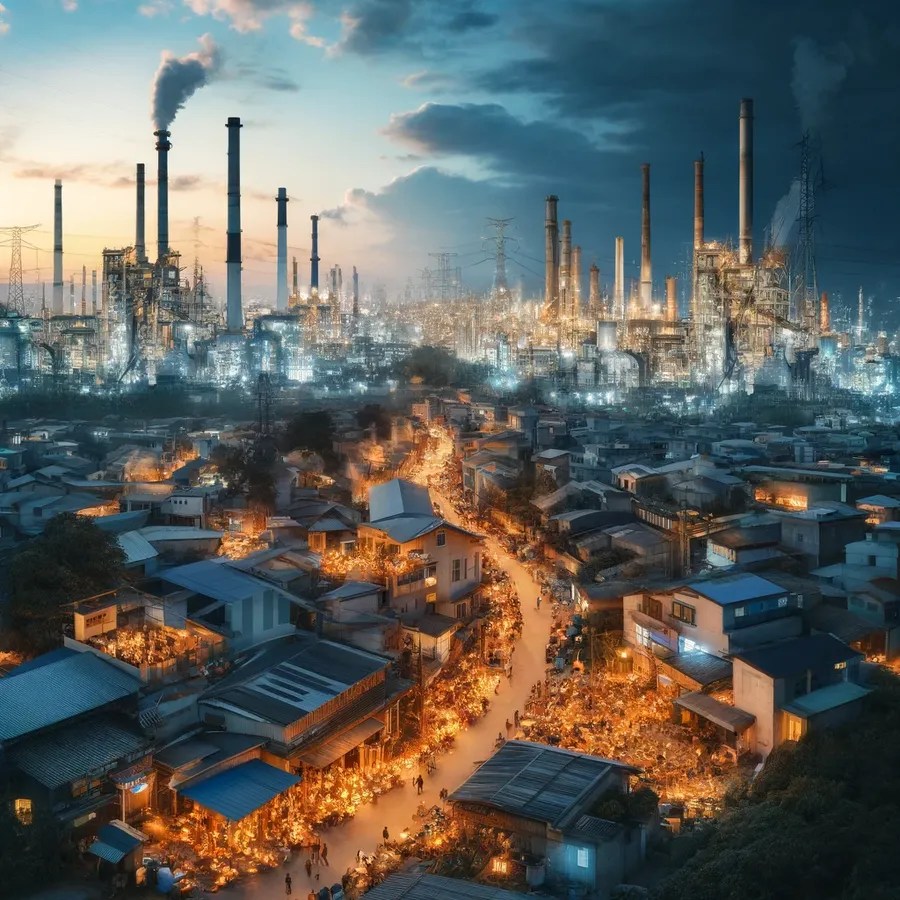
Vietnam, a nation celebrated for its rapid economic growth and burgeoning industrial sector, is grappling with a significant power shortage crisis that threatens to hamper its development. As the summer of 2024 progresses, the country is under immense pressure to manage its electricity supply effectively to sustain its economic momentum and avoid the severe disruptions experienced last year.
The Economic Boom and Energy Crisis
Vietnam’s economy has been on an impressive growth trajectory, attracting substantial foreign investment and establishing itself as a key player in global manufacturing. Major corporations, including tech giants like Apple and Samsung, have set up extensive manufacturing operations in the country, fueling economic expansion and job creation (KPMG). The influx of these global giants has not only bolstered Vietnam’s GDP but also transformed the industrial landscape, making Vietnam a vital cog in the global supply chain for electronics and other high-value goods.
This rapid industrial growth, however, has led to a steep increase in electricity demand, straining the nation’s aging and inadequate power infrastructure (Vietnam Economic Times | VnEconomy). The energy needs of these large-scale manufacturing operations are immense, requiring a stable and reliable power supply to maintain production levels and meet international market demands. Unfortunately, Vietnam’s current power infrastructure has struggled to keep pace with this surge in demand.
In 2023, Vietnam faced one of its most severe power shortages in history, particularly in the northern regions. The high temperatures and extreme heatwaves exacerbated the situation, leading to widespread power cuts that disrupted daily life and industrial operations. Factories were forced to halt production, affecting not only their output but also their ability to meet contractual obligations and maintain employment levels. The Vietnamese government was forced to implement rolling blackouts and ask major industrial users to reduce their power consumption, significantly impacting production (TradeGov) (Vietnam Economic Times | VnEconomy).
The power shortages have underscored the critical need for Vietnam to upgrade its energy infrastructure. The existing grid, plagued by operational inefficiencies and delays in project completion, could not handle the increased load, leading to frequent outages and instability. The consequences of these power cuts were felt across the economy, from the loss of productivity in factories to the discomfort of residents enduring heatwaves without air conditioning (Crisis24).
Moreover, the power crisis has highlighted the fragility of Vietnam’s industrial boom. While the country has made significant strides in attracting foreign investment and boosting its manufacturing capabilities, these gains are at risk if the energy infrastructure cannot support sustained growth. The recurring power shortages have the potential to deter future investment, as companies seek more stable environments for their operations (East Asia Forum).
As Vietnam continues to navigate its path towards becoming a leading global manufacturing hub, addressing the power shortage crisis is imperative. The government has recognized this and is taking steps to enhance the capacity and reliability of its power grid. This includes accelerating the completion of critical transmission projects and diversifying the energy mix to include more renewable sources (Hanoi Times) (Home | White & Case LLP). However, the challenge remains significant, requiring coordinated efforts and substantial investment to secure a stable energy future for Vietnam’s booming economy.
Government Measures and Strategic Initiatives
In response to last year’s crisis, the Vietnamese government has taken several proactive measures to prevent a repeat of the situation in 2024. Prime Minister Pham Minh Chinh chaired a critical meeting in April 2024, emphasizing the importance of ensuring a stable electricity supply throughout the peak demand months (Vietnam Economic Times | VnEconomy). The government has directed relevant ministries and regional authorities to develop comprehensive plans that can address even the most extreme scenarios, focusing on enhancing the existing electricity transmission infrastructure and ensuring adequate fuel reserves for power generation (Vietnam Economic Times | VnEconomy).
To bolster its energy resilience, Vietnam is expediting the completion of key transmission projects, such as the 500 kV Quang Trach – Pho Noi line, and exploring the import of electricity from neighboring countries like Laos (Vietnam Economic Times | VnEconomy) (Hanoi Times). Additionally, the Ministry of Industry and Trade has been tasked with creating and monitoring a dedicated electricity supply plan specifically for the high-demand dry season months (Vietnam Economic Times | VnEconomy).
Impact on the Economy and Industrial Production
Despite the Vietnamese government’s proactive measures to address the power crisis, the persistent power shortages pose a significant threat to the country’s economic stability. The recent request for major industrial players like Foxconn, a key supplier for Apple, to voluntarily cut their power consumption by 30% highlights the severity of the situation (TradeGov). Such drastic measures, although essential to manage the immediate crisis, have profound and far-reaching implications for industrial production and exports.
When power availability is reduced, manufacturing operations are inevitably affected. Factories cannot maintain full production schedules, leading to decreased output across various sectors. This reduction in manufacturing capacity has a cascading effect on the economy. Lower production volumes mean fewer goods are available for export, directly impacting revenue streams from international markets (Vietnam Economic Times | VnEconomy) (KPMG).
Vietnam’s economic model is heavily reliant on its manufacturing and export capabilities. The country has positioned itself as a critical hub for global supply chains, particularly in electronics and textiles. Any disruption in production not only affects domestic economic growth but also undermines Vietnam’s reputation as a reliable manufacturing base. Delays and reductions in output can lead to missed deadlines, contractual penalties, and loss of business to competitors with more stable energy supplies (KPMG) (East Asia Forum).
The economic impact of the power shortages extends beyond the immediate loss of production. Companies facing unreliable power supplies may reconsider their investment plans in Vietnam. The uncertainty and potential for repeated disruptions could deter foreign direct investment, which has been a significant driver of Vietnam’s economic growth. Investors seek stability and predictability, and the current power crisis casts a shadow over Vietnam’s attractiveness as an investment destination (Crisis24).
Furthermore, the power cuts have social and economic repercussions that ripple through the economy. Workers in affected factories may face reduced hours or temporary layoffs, affecting household incomes and consumer spending. This, in turn, can dampen domestic economic activity, as reduced consumer spending leads to lower demand for goods and services (TradeGov) (KPMG).
To mitigate these impacts, Vietnam is accelerating efforts to diversify its energy sources and enhance grid infrastructure. The government is pushing for the completion of critical transmission projects and increasing investments in renewable energy sources like wind and solar. These efforts are crucial for building a resilient energy infrastructure that can support Vietnam’s ambitious economic goals (Home | White & Case LLP) (Hanoi Times).
The power shortage crisis underscores the need for Vietnam to balance its rapid industrial growth with sustainable energy solutions. Ensuring a stable and reliable power supply is not just about maintaining current production levels but also about securing the country’s long-term economic future. As Vietnam navigates this challenging period, the government’s commitment to infrastructure investment and energy diversification will be pivotal in overcoming the immediate crisis and laying the foundation for continued economic growth.
Long-term Solutions and China’s Role
Addressing Vietnam’s power shortage issue demands a multifaceted approach, combining short-term mitigations with long-term infrastructure investments. Vietnam’s Power Development Plan VIII (PDP8) outlines an ambitious strategy to diversify and expand the country’s energy mix. This plan is essential for transitioning from a dependency on traditional energy sources to embracing renewable alternatives. PDP8 includes substantial investments in wind, solar, and Liquefied Natural Gas (LNG), aiming to transform Vietnam’s energy landscape by 2030 (EIA Website) (Home | White & Case LLP).
By significantly boosting its renewable energy capacity, Vietnam hopes to enhance its energy security and reduce reliance on coal. This shift is crucial for meeting the increasing energy demands of its growing industrial sector and mitigating the impacts of climate change. The government plans to increase wind power capacity from a mere 0.54 GW in 2020 to 27.88 GW by 2030, including 6 GW of offshore wind. Similarly, solar power installations are expected to rise dramatically, contributing to a more sustainable and resilient energy infrastructure (EIA Website) (Global Energy Monitor).
In addition to developing renewable energy, Vietnam is investing in LNG infrastructure to ensure a stable and reliable energy supply. The country’s first LNG import terminal, recently completed by PetroVietnam Gas, marks a significant milestone in this transition. By 2030, LNG and natural gas capacity are projected to reach 37.33 GW, positioning LNG as a cornerstone of Vietnam’s energy strategy (Home | White & Case LLP).
China has emerged as a crucial partner in helping Vietnam navigate its power crisis. With extensive experience in managing large-scale power generation and transmission projects, China offers valuable technological expertise and resources. During Vietnam’s peak power crisis last year, China supplied Vietnam with 30 million kilowatt-hours of electricity per month, highlighting the potential for regional cooperation in addressing energy shortages (Vietnam Economic Times | VnEconomy) (Crisis24).
China’s support extends beyond electricity exports. The collaboration between the two countries encompasses knowledge transfer and technological innovation, particularly in areas such as ultra-high voltage (UHV) transmission technology. China’s successful implementation of UHV transmission lines, capable of transmitting large capacities of electricity over long distances with minimal loss, serves as a model for Vietnam. Adopting similar technologies could significantly enhance Vietnam’s grid stability and efficiency (Home | White & Case LLP).
The bilateral cooperation also includes joint efforts to develop renewable energy projects. China’s expertise in solar and wind power can help accelerate Vietnam’s renewable energy initiatives. Moreover, China’s involvement in infrastructure development, such as building new transmission lines and upgrading existing ones, is critical for integrating renewable energy into Vietnam’s national grid (Hanoi Times) (Crisis24).
Vietnam’s commitment to resolving its power shortage crisis is evident in its proactive approach and strategic investments. The government’s focus on diversifying energy sources and upgrading infrastructure aligns with its broader economic goals. By securing a stable and sustainable energy supply, Vietnam can sustain its industrial growth, attract further foreign investment, and maintain its competitive edge in the global market.
Conclusion
Vietnam stands at a critical juncture, balancing its impressive economic growth with the urgent need to upgrade its power infrastructure. While the government’s proactive measures and strategic partnerships, particularly with China, are steps in the right direction, the road ahead requires sustained investment and innovation in the energy sector. Ensuring a stable and reliable electricity supply is not just about powering industries; it’s about sustaining Vietnam’s economic momentum and securing its place in the global economy.
In the face of these challenges, Vietnam’s resilience and strategic planning will be key to overcoming the power crisis and continuing its trajectory of growth and development. The government’s commitment to diversifying energy sources and enhancing infrastructure will be pivotal in mitigating the risks associated with power shortages and ensuring a stable economic future for the nation.

 EssayBoard
Leave a comment