
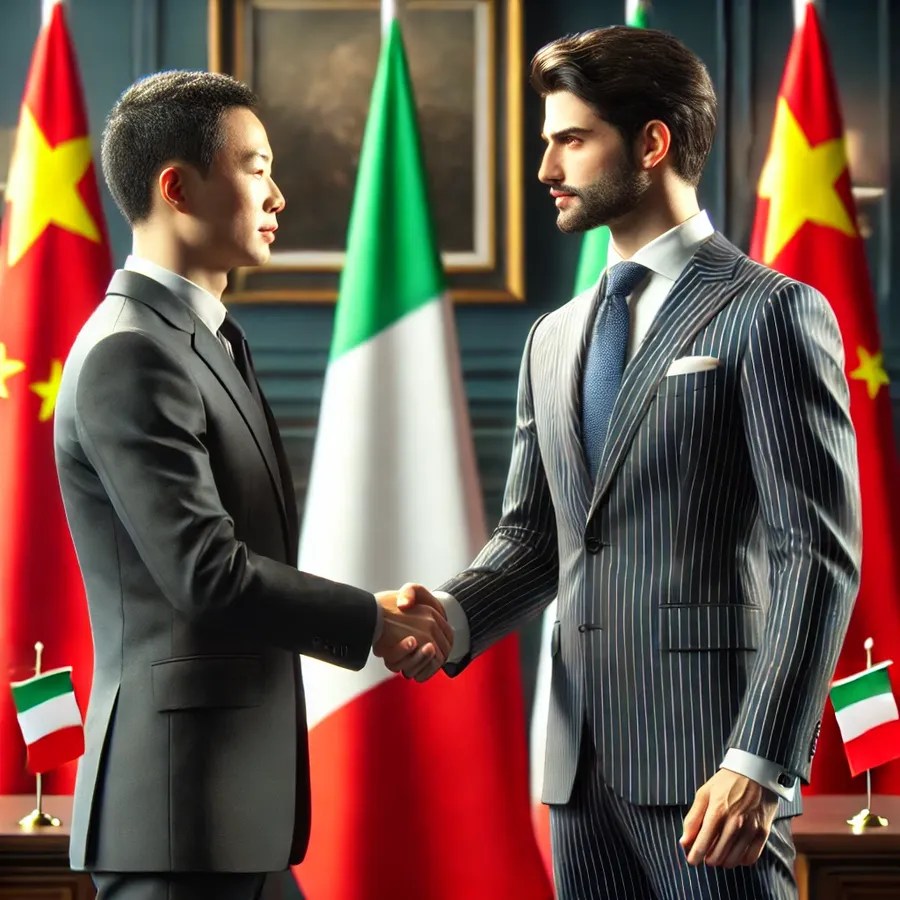
Italy’s recent diplomatic maneuvers to bolster ties with China have sparked significant discussion and speculation in the international community. Prime Minister Giorgia Meloni’s visit to China signifies a strategic effort to reset and strengthen Italy’s economic and political relations with the Asian giant. This article delves into the motivations behind Italy’s actions, the agreements signed, their potential impacts, and the reactions from NATO allies and the United States, including the implications of a potential re-election of Donald Trump.
Italy’s Strategic Recalibration
Prime Minister Giorgia Meloni’s visit to China is part of a broader strategy to enhance bilateral relations and explore new economic opportunities. This visit marks a significant shift from Italy’s previous decision to withdraw from the Belt and Road Initiative (BRI), a move that was seen as aligning with Western concerns over China’s expanding influence.
Key Agreements Signed
During her visit, Meloni signed several key agreements aimed at boosting cooperation in various sectors:
- Green Technology and Electric Mobility: Italy and China agreed to collaborate on developing green technologies and electric vehicles. This includes investments in Italian green technology firms and joint ventures to produce electric cars, leveraging China’s advanced technology and Italy’s engineering expertise (Decode39) (RBC Ukraine).
- Industrial Cooperation: The two countries will enhance industrial cooperation, focusing on sectors such as machinery, robotics, and manufacturing. This agreement aims to boost Italy’s industrial output and technological capabilities by integrating advanced Chinese manufacturing technologies (Decode39).
- Intellectual Property Agreements: To facilitate smoother business operations and protect innovations, Italy and China have signed agreements on intellectual property rights. This is crucial for fostering a stable business environment and encouraging mutual investments (RBC Ukraine).
Potential Benefits for Italy
- Economic Growth: These agreements could lead to substantial economic growth. Investments in green technology and electric mobility align with Italy’s goals of reducing carbon emissions and transitioning to a sustainable economy. Industrial cooperation could rejuvenate Italy’s manufacturing sector, creating jobs and boosting GDP (Decode39) (RBC Ukraine).
- Technological Advancements: Collaborations in green technology and manufacturing could spur technological advancements in Italy. Access to Chinese technology, combined with Italian innovation, could place Italy at the forefront of technological development in Europe (RBC Ukraine).
- Market Expansion: Strengthening ties with China opens up new markets for Italian goods and services. This is particularly beneficial for Italy’s luxury goods, automotive, and machinery sectors, which can find significant demand in China (Decode39) (RBC Ukraine).
Potential Risks and Challenges
- Economic Dependence: Increased reliance on Chinese investments could expose Italy to economic vulnerabilities, particularly if geopolitical tensions rise. Over-dependence on China for technology and investments might undermine Italy’s strategic autonomy (South China Morning Post) (RBC Ukraine).
- Geopolitical Tensions: Strengthening ties with China could strain Italy’s relationships with NATO allies, particularly the United States. NATO has expressed concerns about China’s strategic intentions, and Italy’s move might be perceived as undermining the alliance’s collective stance on China (South China Morning Post) (RBC Ukraine).
Reactions from NATO Allies
NATO allies are likely to have mixed reactions to Italy’s deepening ties with China.
- European Allies: Countries like Germany and France might view Italy’s move with caution. While these countries also engage economically with China, they are wary of any actions that could destabilize the strategic balance within the EU and NATO (China Briefing) (South China Morning Post).
- Eastern European Countries: Countries like Poland and the Baltic states, which are more reliant on U.S. security guarantees, might be more critical of Italy’s actions. They fear that closer ties with China could weaken NATO’s cohesion and resolve in confronting shared security threats (South China Morning Post) (RBC Ukraine).
U.S. Reaction
The United States, under the Biden administration, has taken a firm stance on countering China’s influence globally. Italy’s move to strengthen ties with China might be met with concern and skepticism in Washington.
- Strategic Concerns: The U.S. views China as a strategic competitor and has implemented policies to decouple from Chinese technology, such as the CHIPS Act and tariffs on Chinese goods. Italy’s rapprochement with China might be seen as counterproductive to these efforts (Decode39) (South China Morning Post).
- Diplomatic Pressure: The U.S. might exert diplomatic pressure on Italy to reconsider or limit its engagements with China. This could involve emphasizing the security risks and potential long-term strategic implications of deepening ties with Beijing (South China Morning Post) (RBC Ukraine).
Impact of Trump’s Potential Re-Election
Donald Trump’s potential re-election in 2024 adds another layer of complexity to this scenario. Trump’s presidency was marked by a transactional approach to international relations and skepticism towards multilateral alliances like NATO.
- Impact on NATO Dynamics: If Trump were re-elected, his approach could further strain NATO’s cohesion. His previous criticisms of NATO and demands for greater financial contributions from allies could lead to renewed tensions within the alliance (Decode39) (South China Morning Post).
- China Policy: Trump’s administration was characterized by aggressive policies towards China, including high tariffs and efforts to curtail Chinese technological influence. A return to the White House might see a resurgence of these policies, complicating Italy’s efforts to engage economically with China (Decode39) (South China Morning Post) (RBC Ukraine).
- European Autonomy: In anticipation of potential U.S. policy shifts under a second Trump administration, European countries might seek to enhance their strategic autonomy. This could involve balancing relations with both the U.S. and China to safeguard their economic and security interests (Decode39) (South China Morning Post).
Future Prospects and Predictions
Given the evolving geopolitical landscape, Italy’s move to strengthen ties with China could have significant long-term implications.
- Economic Gains vs. Strategic Risks: While Italy stands to gain economically from its agreements with China, it must carefully manage the strategic risks. Balancing economic interests with security commitments will be crucial to maintaining a stable and prosperous relationship with both China and NATO allies (Decode39) (South China Morning Post) (RBC Ukraine).
- NATO Cohesion: Italy’s actions might prompt other NATO members to reassess their own relationships with China. This could lead to a more fragmented NATO if member states pursue divergent paths in their foreign policies. Ensuring NATO’s cohesion while accommodating individual economic interests will be a key challenge (South China Morning Post) (RBC Ukraine).
- U.S.-Europe Relations: The future of U.S.-Europe relations will significantly influence Italy’s strategic decisions. Whether under Biden or a potential second Trump administration, the U.S. will likely continue to play a pivotal role in shaping the strategic dynamics within NATO and influencing European policies towards China (Decode39) (South China Morning Post).
Conclusion
Italy’s recent efforts to strengthen ties with China through Prime Minister Giorgia Meloni’s visit reflect a complex interplay of economic ambitions and strategic calculations. The agreements signed have the potential to boost Italy’s economy, particularly in green technology and industrial sectors. However, these moves also carry significant risks, including potential strains within NATO and tensions with the United States. As global politics continue to evolve, Italy’s actions will be closely watched by allies and competitors alike, shaping the future of international relations in a multipolar world.

 EssayBoard
Leave a comment