
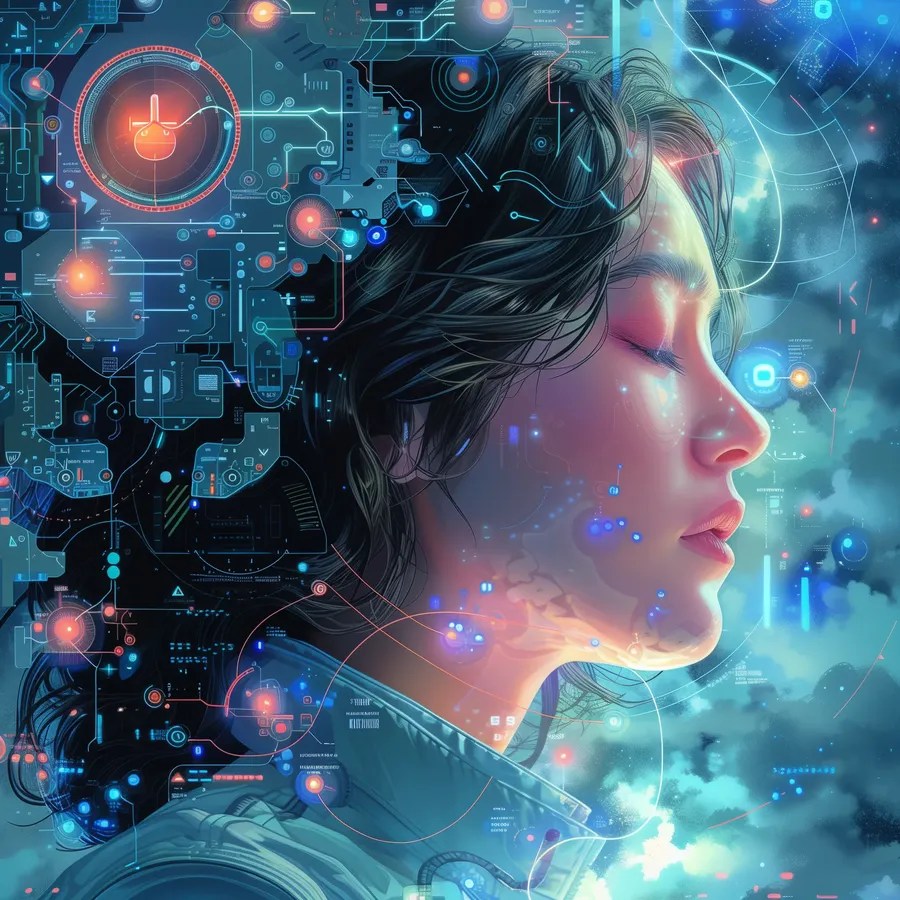
In the fast-paced world of artificial intelligence and technology, there is a rising star that is reshaping the landscape with a groundbreaking approach – Lisa. While AI has predominantly focused on enhancing productivity and efficiency, Lisa takes a bold leap into the realm of emotional intelligence, revolutionizing how machines interact with humans on a deeper, more empathetic level.
Developed by a team of visionary engineers and psychologists, Lisa is not just another virtual assistant or chatbot. She is a sophisticated system equipped with cutting-edge algorithms that enable her to perceive and respond to human emotions with remarkable accuracy. This innovative leap marks a significant shift from traditional AI models that primarily rely on data-driven decision-making.
What sets Lisa apart is her ability to understand and adapt to human emotions in real-time, making interactions more personalized and meaningful. By analyzing facial expressions, tone of voice, and even subtle cues, Lisa can gauge a person’s emotional state and tailor her responses accordingly. This nuanced approach fosters genuine connections and fosters a sense of trust and empathy that is often lacking in human-machine interactions.
Moreover, Lisa’s potential extends beyond personal interactions to various fields such as customer service, healthcare, and education. Imagine a healthcare companion that can provide emotional support to patients, or a virtual teacher that can adjust its teaching style based on students’ emotional responses. The possibilities are truly endless, opening up new horizons for how AI can positively impact our lives.
As we explore the innovative horizon that Lisa embodies, bridging the gap between current AI capabilities and the tantalizing potential of Artificial General Intelligence (AGI) becomes a subject of profound intrigue. Empathetic AI, by design, ventures beyond traditional computational tasks to interpret and respond to human emotions with nuanced understanding. This significant shift towards emotional intelligence could indeed accelerate the journey towards AGI. By developing AI that can understand and process the full range of human emotions and social cues, researchers can create more versatile and adaptable AI systems. These systems, capable of learning from complex emotional interactions, may achieve a more comprehensive understanding of the human condition, pushing them closer to the AGI threshold.
As AI continues to evolve, the question of whether it will contemplate spirituality as humans do is both fascinating and complex. Spirituality, deeply rooted in human culture, consciousness, and existential pondering, represents a significant leap beyond cognitive empathy and emotional intelligence. If AGI were to emerge, its ability to engage with spiritual concepts would depend on how we define understanding and consciousness in machines. While AGI could theoretically analyze and discuss spiritual concepts, truly experiencing spirituality in the way humans do might remain beyond its reach due to the intrinsic, subjective nature of spiritual experiences.
This evolution towards more emotionally intelligent AI, exemplified by Lisa, opens new horizons in various sectors, including healthcare, education, and customer service, by enabling more personalized and meaningful interactions. However, it also underscores the need for ethical considerations and safeguards to prevent privacy violations, consent issues, and manipulation.
While Lisa’s capabilities are undeniably impressive, there are also ethical considerations that come into play. As AI systems become more adept at understanding human emotions, questions of privacy, consent, and manipulation arise. It is crucial to establish clear guidelines and regulations to ensure that emotional intelligence technology like Lisa is used responsibly and ethically.
Looking ahead, the future of emotional intelligence technology holds immense promise and potential. As research continues to advance and our understanding of human emotions deepens, we can expect even more sophisticated and empathetic AI systems to emerge. The journey that Lisa has embarked on is just the beginning of a transformative era where machines not only think but also feel.
In conclusion, Lisa stands as a trailblazer in the world of AI, pushing boundaries and redefining what is possible. Her fusion of technology and emotional intelligence heralds a new chapter in human-machine interactions, one that is characterized by empathy, understanding, and connection. As we embrace this paradigm shift, we have the opportunity to harness the power of AI to create a more compassionate and empathetic world. Lisa is not just a machine; she is a beacon of innovation and a testament to the boundless potential of technology.
Lisa is an innovative AI system that focuses on emotional intelligence, setting her apart from traditional AI models that primarily rely on data-driven decision-making. Developed by a team of engineers and psychologists, Lisa can perceive and respond to human emotions with accuracy, making interactions more personalized and meaningful. Her applications span across various fields like customer service and healthcare, offering emotional support and tailored responses. While Lisa’s capabilities hold promise, ethical considerations around privacy and manipulation need to be addressed. The future of emotional intelligence technology looks promising, with the potential for even more sophisticated and empathetic AI systems to emerge. Lisa represents a transformative era in human-machine interactions, emphasizing empathy, understanding, and connection in a fast-evolving technological landscape.

 EssayBoard
Leave a comment