
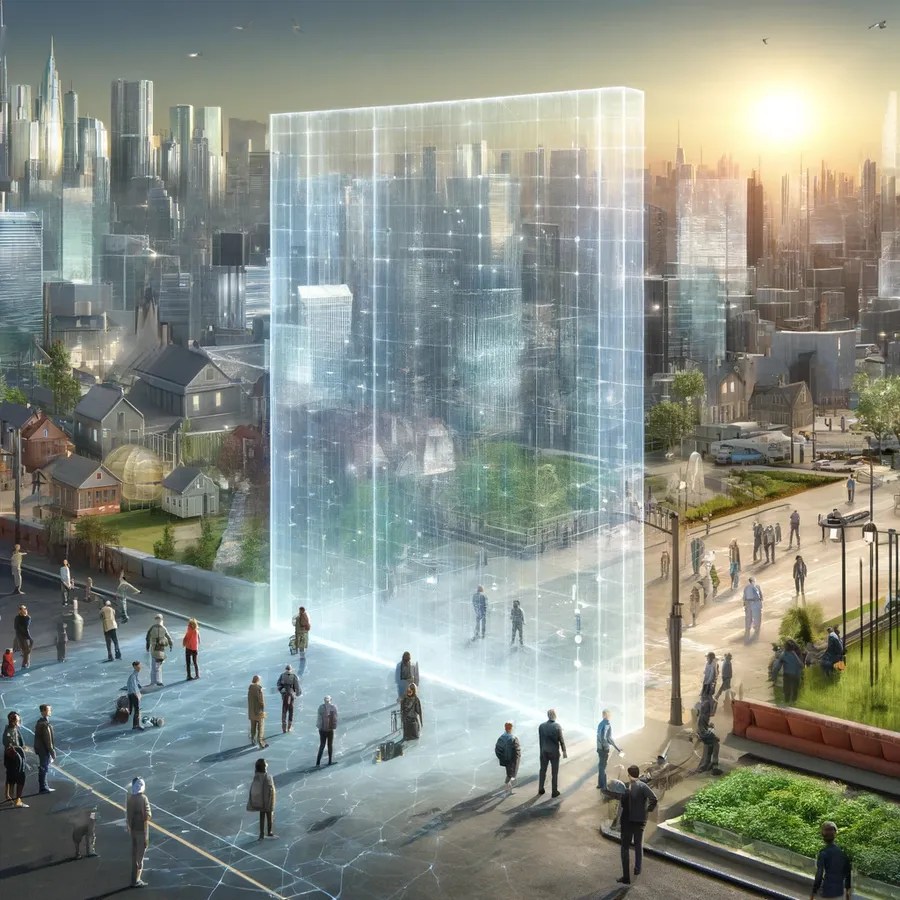
In this ever-evolving world, our understanding of barriers has undergone a transformative shift. From concrete blockades to metaphysical partitions, barriers have an uncanny ability to shape our physical and mental landscapes. Yet, a recent wave of innovative solutions is challenging the traditional concept of barriers, promising a future where permeability and adaptability are the new norms.
Breaking the Mold
The walls we build, both literal and figurative, are often reflective of our instincts to protect and insulate. But what if the very barriers we erect are the ones holding us back? This question has sparked a revolution in the way we perceive and apply barriers across multiple domains, from urban planning to psychology.
Urban planning is witnessing a shift towards permeable barriers, which not only protect but also enrich their surroundings. Permeable paving, for example, is a technique that uses sustainable materials to absorb and filter rainwater, reducing flood risks and promoting biodiversity. This innovative approach acknowledges the barrier’s traditional role while adding a new layer of functionality, merging protection with sustainability.
The Future is Permeable
Moving beyond the physical realm, the concept of permeable barriers is also reshaping our understanding of mental health. Traditionally, psychological barriers were seen as rigid constructs that impede progress. However, a growing body of research suggests these barriers can be porous, allowing for the flow of thoughts, emotions, and experiences in a controlled environment.
This shift from rigid to permeable barriers is a game-changer. Instead of promoting avoidance strategies, psychologists are now encouraging individuals to interact with their mental barriers. This paradigm shift is heralding a new era of vulnerability and resilience, where confronting and understanding our limitations becomes a source of strength, not weakness.
The Power of Permeability
The permeability concept is also gaining traction in the digital world, especially in the realm of cybersecurity. Traditionally, firewalls were rigid barriers designed to block any potential threats. However, this approach often resulted in a false sense of security, as it ignored the sophisticated nature of modern cyber threats.
In response, cybersecurity experts are developing ‘permeable firewalls’ that allow for controlled interaction with potential threats. This approach enables the system to learn from these interactions, evolving its defenses to ward off similar threats in the future. It’s a fascinating blend of offense and defense that promises a dynamic and adaptable line of defense in the cyber realm.
In Conclusion
The era of rigid, impenetrable barriers is giving way to a future where permeability reigns supreme. From urban planning and psychology to cybersecurity, the concept of permeable barriers is promoting a new understanding of protection, one that embraces interaction, adaptability, and sustainability.
As we continue to break down old notions and build up new understandings, one thing is clear: the future of barriers is not about exclusion, but inclusion. It’s not about blocking out, but letting in. And in this delicate balance between protection and permeability, we find a new path forward – a path that promises a more resilient, adaptable, and inclusive future.
Summary
In a rapidly changing world, traditional barriers are being reimagined as permeable structures that offer protection while promoting interaction, adaptability, and sustainability. This shift is evident in urban planning, mental health practices, and cybersecurity, where the concept of permeability is challenging conventional notions of security and defense. Embracing permeable barriers allows for controlled interaction with threats, fostering resilience and innovation across various domains. This evolution signifies a move towards a more inclusive and dynamic future where barriers serve as gateways rather than obstructions.

 EssayBoard
Leave a comment